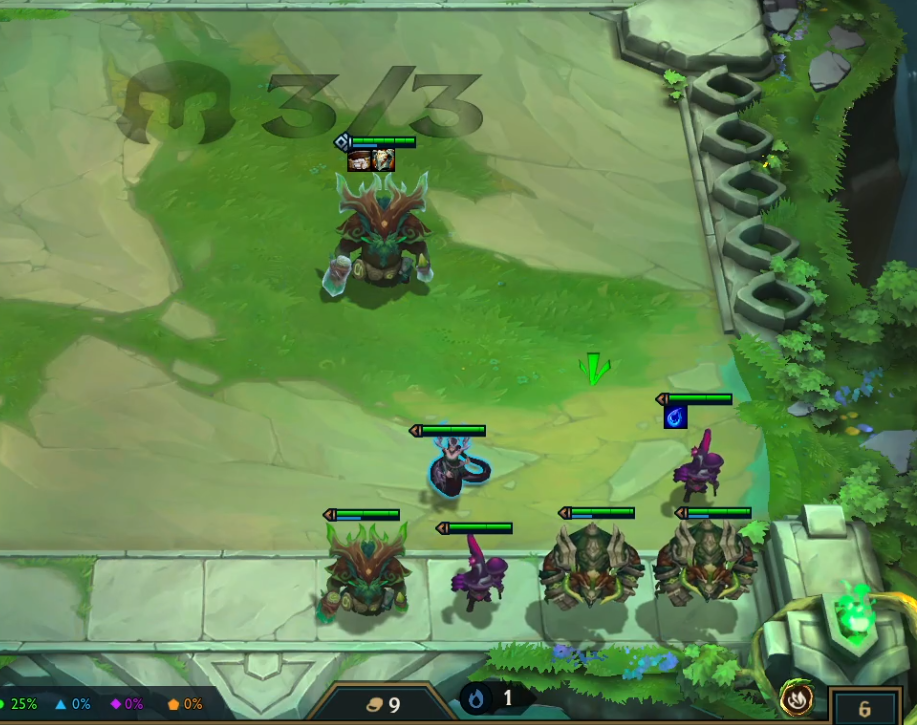
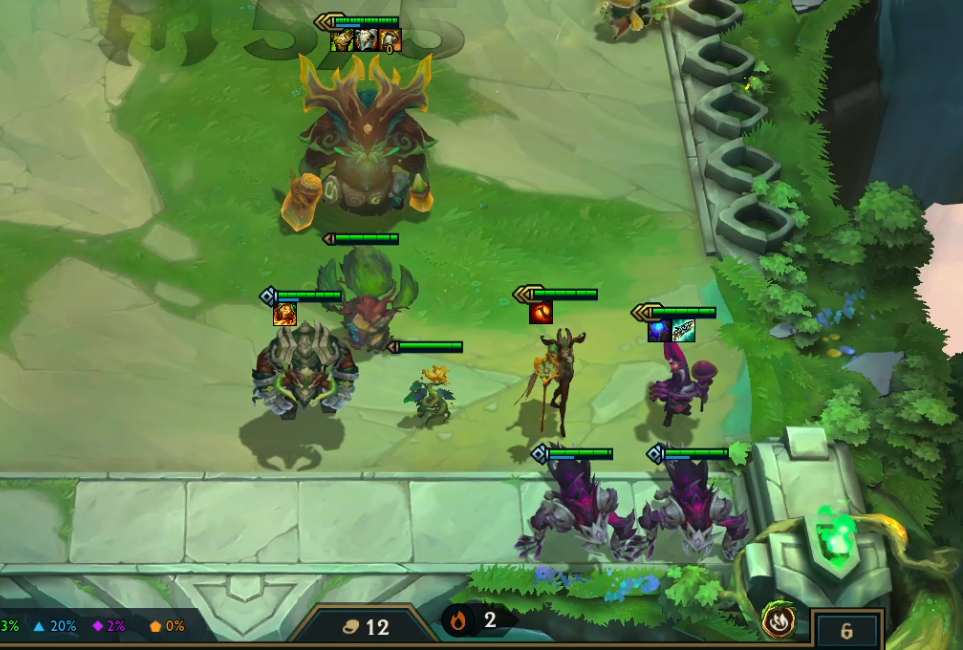
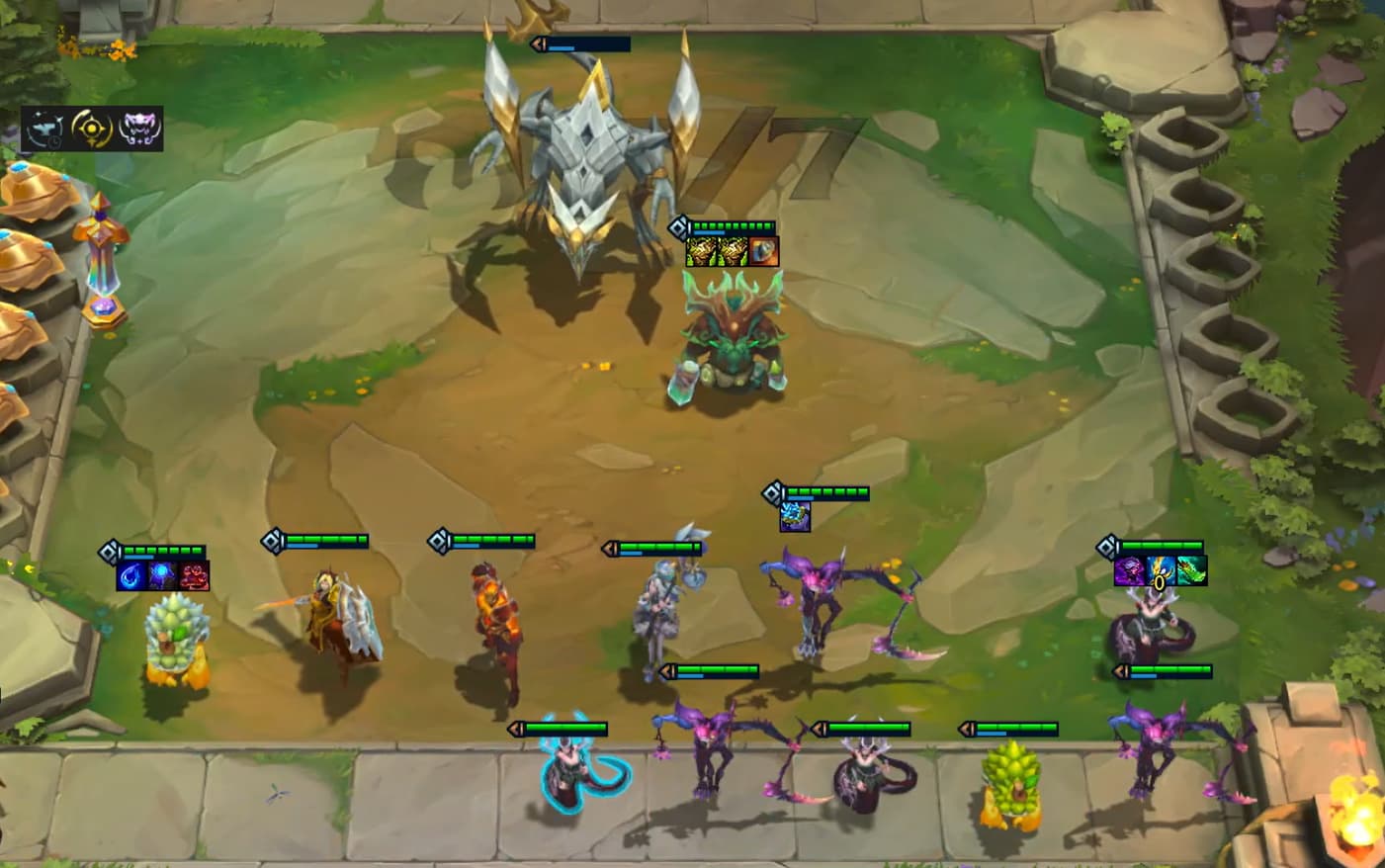
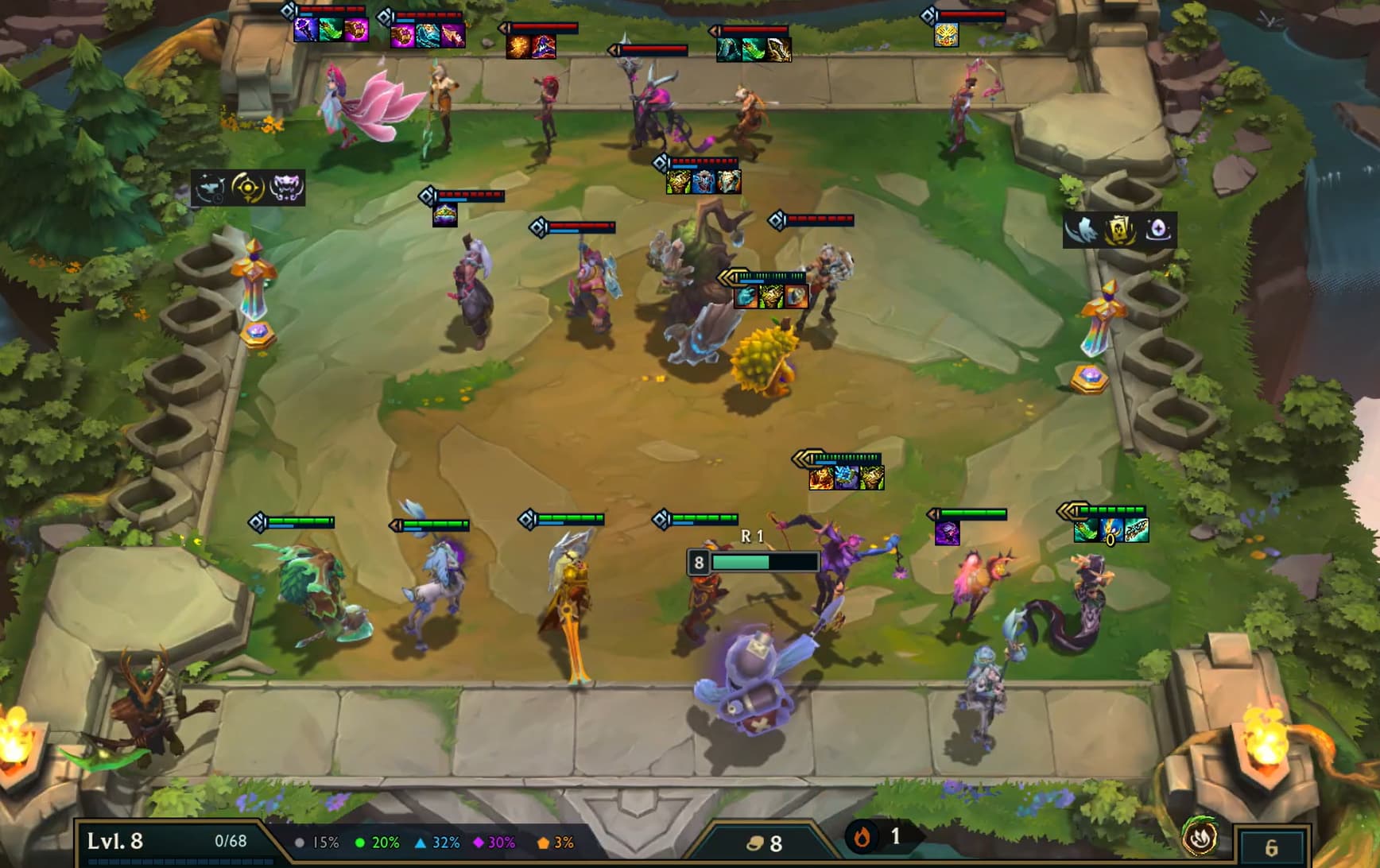
Reroll comps in TFT focus on three-starring your main carry and, often, a tank or second damage dealer. You spend more gold finding copies of those champions, which usually means staying at a lower level while other players add units to their boards.
In this guide, we'll cover how to play one-cost, two-cost and three-cost reroll comps, when to slow roll, and when you need to spend more to keep your board competitive. For current builds, items and positioning, check our TFT Set 18 team comps.
How Reroll Comps Work
A standard three-star champion takes nine copies to make, three copies combine into a two-star, then three two-stars combine into a three-star. Your aim is to find those copies at a level where the shop gives you good odds of seeing that champion's cost.
The usual rolling levels are:
One-cost carries: Slow roll at level 5, with the option to roll earlier at level 4.
Two-cost carries: Roll at level 6.
Three-cost carries: Roll at level 7.
These are starting points. A comp with carries at different costs may need to roll at more than one level, and some boards need an extra unit badly enough to level before finishing every upgrade.
Slow Rolling and Rolling Down
Slow rolling means spending the gold above 50 on shop refreshes and champions while keeping your interest income. Under normal rules, every 10 gold saved earns one extra gold per round, up to five at 50 gold.
Remember that buying champions comes out of that budget too. If you spend every spare gold refreshing the shop, you may have to dip below 50 to buy what you find.
Rolling down means spending more of your savings in one turn to improve your team. You might stop after upgrading your carry and tank, or keep going if you're close to a three-star and need it to survive.
There isn't a correct amount to spend in every game. Slow roll while your board can afford to wait. spend more when the health or streak you're losing makes waiting too expensive.
When to Commit to a Reroll Comp
A good reroll start usually gives you several reasons to play the board:
Multiple early copies of the champions you want to three-star.
Items that suit your carry and frontline.
An augment, Artifact or Emblem that supports the comp.
A strong board and an early economy or XP augment can also give you a reason to push levels. Our Set 18 Fast 9 guide explains the resources you need before committing to that plan.
How to Play One-Cost Reroll Comps
For one-cost reroll, you generally save through Stage 2 and do most of your rolling at level 5. Rolling at level 4 on 3-1 is an option when you're already close to an important upgrade.
Stage 2 — Save Gold and Hold Your Copies
Avoid buying XP while you're committed to one-cost reroll. Lower levels give you better one-cost shop odds, and the gold you save helps you reach your interest thresholds sooner.
Play your strongest affordable board, hold your reroll targets, and sell units you don't need when that earns another point of interest. Be careful about filling your bench with other units that can delay your economy.
You can play from a win streak or a loss streak. If your natural upgrades are winning, keep using them. If your opener is weak, a consistent loss streak can help fund your rolls, but try to kill enough enemy units to keep yourself healthy.
Stage 3 — Decide Whether to Roll on 3-1
Without extra XP, 3-1 is your last round at level 4 before naturally reaching level 5 on 3-2. That makes it a useful window to roll for one-costs, especially if you already have most of the copies you need.
You don't have to roll down just because it's 3-1. If you're healthy and still several copies away, keeping your economy and slow rolling at level 5 is often the better approach.
As you roll, pick up your main tank and any other important reroll units too. Upgrading your carry won't solve a frontline that dies before it can deal damage.
Stage 4 — Finish Your Core and Start Leveling
If you still haven't hit your three-stars then check your position around 4-1 as the lobby gets stronger. If you're taking heavy losses and still missing your main upgrades, spend more rather than waiting for a perfect slow roll.
Once your essential three-stars are finished, start saving for levels. Adding a useful trait or stronger support unit can do more for your board than chasing an unitemised three-star that barely changes your fights.
If your remaining priority is a two-cost champion, moving to level 6 improves your odds of finding it while giving you another unit slot.
How to Play Two-Cost Reroll Comps
Two-cost reroll usually aims to reach level 6 around 3-2, then stays there to find its three-star carries. Level 6 gives the highest normal shop odds for two-cost champions.
Stage 2 — Build Your Economy
You have more freedom to level early than a one-cost reroll player. If buying XP lets you add a useful unit and protect a strong board, it can be worth doing.
If your opener is weak, save gold and collect your target units from natural shops. Avoid paying for levels that still leave you losing heavily.
You also don't need to decide on your final comp immediately. An item drop or several copies of a two-cost carry can give you a clearer direction as Stage 2 develops.
Stage 3 — Reach Level 6 and Upgrade Your Board
Level to 6 around 3-2 when your economy allows. If your carry, tank or supporting units are still one-star, roll enough to find useful two-star upgrades before settling into a slow roll.
A board that's already winning may need very little spending. A weak board with several pairs has more reason to roll now and rebuild its economy afterwards.
Once your team can compete, work back towards 50 gold and slow roll for your main three-stars. Keep checking your fights, reaching 50 doesn't mean you can ignore your board for the rest of the stage.
Stage 4 — Spend Before You Fall Too Far Behind
Reassess at the start of Stage 4, when opponents begin making larger upgrades. If you're close to your carry and losing badly, rolling below 50 can be the right decision.
Don't treat Stage 5 as the first time you're allowed to spend your savings. You need enough health left to benefit when you finally hit.
After finishing your main carry and the other three-stars the comp needs, move towards levels 7 and 8. You don't have to finish every champion on your bench before adding another unit.
How to Play Three-Cost Reroll Comps
Three-cost reroll normally rolls at level 7. The current shop odds for three-costs are 43% at level 7 and 32% at level 8, so leveling does make those copies harder to find.
Stages 2 and 3 — Reach Level 7 With a Playable Board
Use your strongest early units and give your items to suitable temporary holders while collecting your intended carries. You can replace those holders once your final units are ready.
Level 6 around 3-2 is a common checkpoint. Spend there if your board needs upgrades, but avoid chasing three-stars at level 6 when level 7 gives you better odds.
Aim to reach level 7 on 3-5 or around 3-7, depending on your economy and board strength. Reaching it earlier helps if you can still afford to buy and upgrade the units you find.
Level 7 — Roll for Your Carry and Frontline
If your board is weak, first roll for two-star upgrades. Once it can hold up in fights, slow roll towards your three-stars, collecting the useful supporting units you find along the way.
Defenders of the DoT is a current example: you roll at level 7 for Cassiopeia, Rammus and Fiddlesticks. Having several important three-cost targets gives more of your shops a chance to improve the board.
As with two-cost reroll, spend more when your health demands it. Waiting until you have one life left leaves you very little room for a bad shop or a difficult matchup.
When to Level to 8
Stay at level 7 when finishing your three-stars is the main way your comp gets stronger, especially if you're close to hitting.
Level 8 becomes more appealing when an extra unit completes an important trait, your board works well with a two-star carry, or your next upgrades are four-cost champions. Budget for the level, the new unit and any rolling you'll need afterwards.
You can still find three-costs at level 8. Just account for the lower odds when deciding whether that extra slot is worth delaying your three-star.
Getting More From Your Reroll Board
Scout Before Committing More Gold
All players draw champions from a shared pool, so check opposing boards and benches before spending heavily. Three-cost reroll is especially sensitive to being contested because there are fewer copies of each champion than there are of one-costs.
Look at how many copies each player owns and whether they've committed items and augments. Someone briefly holding your carry is a different problem from someone already close to three-starring it.
Being contested doesn't automatically mean you should abandon your comp. If you're well ahead on copies, continuing may be sensible. If you're far behind and your items fit another carry, consider changing direction before spending the rest of your gold.
Give Your Frontline Enough Items
Make useful items while you're rolling. Leaving components on the bench for several rounds can cost more health than the perfect build eventually saves.
Watch why you're losing. If your tank dies immediately, another damage item may not fix the fight. If the frontline survives but enemies aren't dying, your carry may need more help.
An Artifact can also give you a strong reason to play a particular carry. Check our Set 18 Artifact guide for suitable holders before building your board around one.
Choose Augments, Emblems and Wisps Around Your Plan
Gold, free rerolls and champion copies can help you finish upgrades, but you still need enough combat strength once you hit. Consider what your board is missing when choosing an augment.
An Emblem may strengthen your carry or let you replace a weaker trait unit with something more useful. Our Set 18 Emblem guide covers the holders and trait combinations to look for.
In Set 18, budget for Wisps alongside your rolls. Buy offers that help your board or economy, and check any conditions before paying. Be careful with XP rewards while you're trying to stay at a specific rolling level.
Later on, leave room for a useful combat Wisp when possible. Spending your last gold on another shop can be costly if you've passed an upgrade that would help you survive the next fight.
Stop Rolling When Your Next Upgrade Is a Level
Once your core three-stars are finished, check what the next level lets you add. A stronger tank, a second carry or an important trait can be worth more than another three-star support unit with no items.
Keep rolling if a remaining upgrade is essential or very close, but know what you're spending towards. Our common mistakes to avoid in TFT covers other habits that can hold back a strong board.
The aim is to give your reroll carry a team that can keep winning as the lobby improves. Finish the upgrades that matter, use the breathing room to rebuild your gold, and spend it on whatever your board needs next.