menu
MobalyticsUse your favourite features in-game with our Desktop App
Gamebase Guide

Elden Ring - How to Play the Heavy Knight

Updated on Sep 4, 2026
Sep 4, 2026

Overview

The Heavy Knight is one of the two new starting classes introduced with Elden Ring: Tarnished Edition. As its name suggests, the class is designed around a heavier melee playstyle, providing an excellent starting point for players who want to build around Strength, large weapons, high Poise, and powerful Heavy Attacks.

The Heavy Knight begins with the new Hefty Scimitar, giving you immediate access to a hard-hitting Curved Greatsword. While the Hefty Scimitar is a fun early-game weapon, you don't need to build your entire character around it. The Heavy Knight's starting attributes make the class well-suited to transitioning into many of Elden Ring's strongest Strength weapons as you progress.

This starter guide will therefore focus on developing the Heavy Knight into a general Strength build, rather than specifically creating a Hefty Scimitar build.

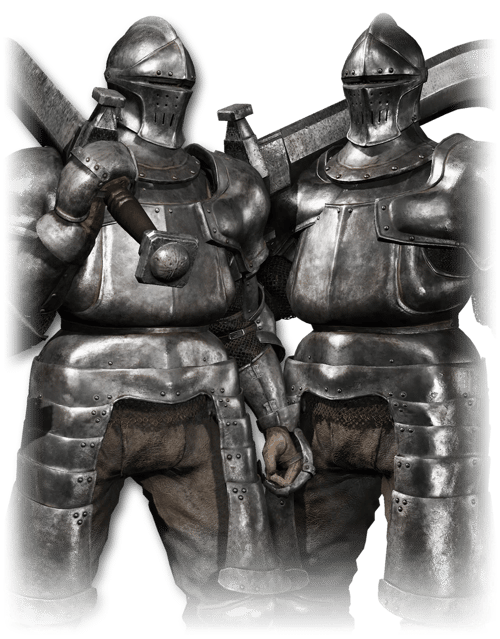
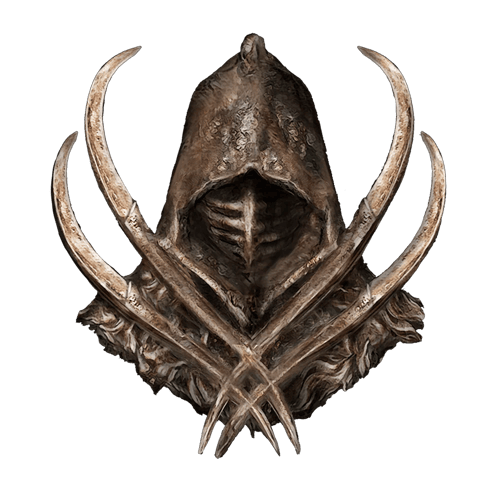
Heavy Knight Set

Heavy Knight Playstyle

The Heavy Knight trades some of the speed of lighter starting classes for high damage, stance pressure, and the ability to trade more effectively with enemies.

Heavy and charged Heavy Attacks should become an important part of your playstyle. Larger Strength weapons can deal enormous amounts of stance damage, allowing you to repeatedly break enemy stance and follow up with Critical Hits.

Strength builds also benefit heavily from two-handing their weapon. Two-handing effectively increases your Strength by 50% for meeting weapon requirements and relevant damage scaling, allowing the Heavy Knight to equip demanding Strength weapons earlier while also getting more value from its primary offensive attribute.

As you progress, you can choose between several different directions:

  • Greatswords provide an excellent balance between speed, reach, and stance damage.
  • Colossal Swords and Colossal Weapons sacrifice speed for enormous damage and stance pressure.
  • Great Hammers and Great Axes provide powerful Heavy Attacks without becoming quite as cumbersome as the heaviest weapons.

The Heavy Knight is therefore less about one specific weapon and more about giving you an excellent foundation for experimenting with Elden Ring's extensive selection of Strength weapons.

Strengths and Weaknesses

Strengths

  • Excellent starting point for a dedicated Strength build.
  • High damage per individual attack.
  • Excellent stance-breaking potential.
  • Two-handing provides substantial benefits.
  • Huge selection of viable weapons throughout the game.
  • Works extremely well with charged Heavy Attacks.
  • Can comfortably use heavier armor as Endurance increases.
  • Straightforward attribute progression without requiring several offensive stats.
  • Easy to transition away from the starting weapon.

Weaknesses

  • Larger Strength weapons generally have slower attack animations.
  • Poorly timed Heavy Attacks can leave you vulnerable.
  • Heavy equipment requires additional Endurance investment.
  • Stamina management becomes important when combining heavy attacks with dodging.
  • Some of the strongest weapons require substantial Strength investment.
  • The starting Hefty Scimitar is fun but isn't an especially strong long-term weapon.
  • Aggressive bosses can make slower weapons considerably harder to use.

The Heavy Knight ultimately works best as a starting point for a broader Strength build. Use the Hefty Scimitar while it remains useful, but don't be afraid to replace it as stronger Strength weapons become available.

From there, the class can develop into anything from a relatively mobile Greatsword build to a heavily armored character carrying one of the largest weapons in the game.

All Elden Ring Guides

Check Out Our Other Elden Ring Builds and Guides

Early Leveling Tips for the Heavy Knight

The Heavy Knight already provides a strong foundation for a Strength build, so your early levels should primarily focus on Vigor, Strength, and Endurance. You don't need to spread your attributes across several damage stats unless you're specifically trying to meet the requirements of a weapon you want to use.

Prioritize Vigor Early

While increasing Strength gives you more damage, weapon upgrades provide a much larger portion of your early-game damage than additional offensive stats.

Investing into Vigor first therefore gives you considerably more value during the opening areas of the game. Getting to around 20 Vigor early makes Limgrave and Stormveil much more forgiving, while 25–30 Vigor is a comfortable target as you progress toward Liurnia and Caelid.

You can still increase Strength along the way, but don't sacrifice a large amount of survivability just to gain a small amount of additional Attack Power.

Increase Strength for Weapon Requirements

Rather than immediately pumping every level into Strength, initially treat it as a way to unlock the weapons you want to use.

One major advantage of a Strength build is that two-handing effectively gives you 1.5× your Strength when determining weapon requirements. This means a weapon requiring 30 Strength can already be two-handed with 20 Strength.

Take advantage of this during the early game. Reach the requirement for your chosen weapon, then return to Vigor and Endurance before heavily investing into Strength for damage scaling.

Don't Neglect Endurance

Heavy Knight naturally wants to use larger weapons and potentially heavier armor, making Endurance more important than it is for many other starting classes.

However, you shouldn't overinvest into it immediately.

Add Endurance whenever you need additional Equip Load to maintain Medium Load, or when you notice that your Stamina is consistently preventing you from attacking and still having enough left to dodge.

Your weapon matters more than wearing the heaviest armor available, so don't spend ten levels on Endurance purely to equip a slightly heavier armor set.

Upgrade Your Weapon Before Chasing Damage Stats

One of the most important early-game priorities is upgrading your weapon.

Visit Limgrave Tunnels early to collect Smithing Stones and upgrade whichever Strength weapon you decide to use. A properly upgraded weapon will provide a much larger early damage increase than simply dumping levels into Strength.

This is especially important if you replace the starting Hefty Scimitar relatively quickly.

Don't hesitate to spend early Smithing Stones. You gain access to increasingly reliable sources of upgrade materials as you progress, so there's little reason to complete half the game with an underleveled weapon because you're saving every stone for a future weapon.

Keep Dexterity at the Minimum You Need

Many Strength weapons still have a small Dexterity requirement.

Invest enough Dexterity to equip the weapon you want, but don't continue leveling it for damage unless you're deliberately transitioning into a Strength/Dexterity hybrid.

For a standard Heavy Knight, Strength should remain your primary offensive attribute.

A Simple Early-Level Priority

If you're unsure where to spend your next level, use this general priority:

  • Meet weapon requirements → Vigor → enough Endurance for Medium Load → Strength

Once your survivability feels comfortable and your equipment requirements are covered, you can begin investing much more aggressively into Strength.

The Heavy Knight doesn't require complicated attribute management. Find a Strength weapon you enjoy, meet its requirements, keep your weapon upgraded, and build enough Vigor and Endurance to safely take advantage of its heavier attacks.

Best Early Game Weapons and Upgrades

The Hefty Scimitar is perfectly usable at the beginning of the game, but one of the Heavy Knight's biggest advantages is how easily it can transition into other Strength weapons.

You don't need to wait until the late game either. Several excellent Strength weapons are available throughout Limgrave and the Weeping Peninsula, giving you plenty of opportunities to replace the Hefty Scimitar before fighting Godrick.

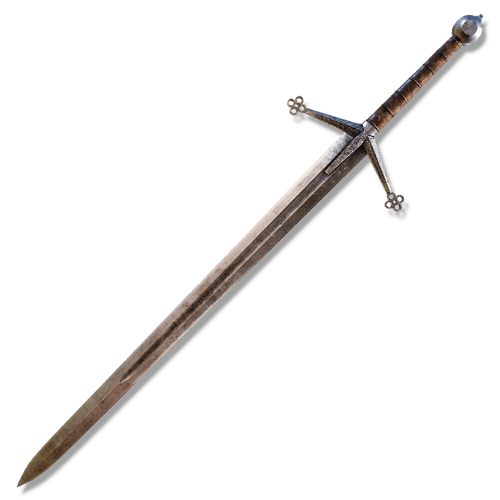
Claymore — Best Early Greatsword

Claymore

The Claymore is one of the easiest weapons to recommend if you want something faster and more versatile than the Hefty Scimitar.

It can be found inside Castle Morne in the Weeping Peninsula, making it available almost immediately after gaining access to Torrent.

The Claymore provides a great balance of speed, reach, damage, and stance pressure, while its thrusting Heavy Attack gives it an excellent punish tool against bosses.

It also accepts different Ashes of War and affinities, allowing you to apply a Heavy affinity and turn it into a reliable Strength weapon that can comfortably remain useful throughout the entire game.

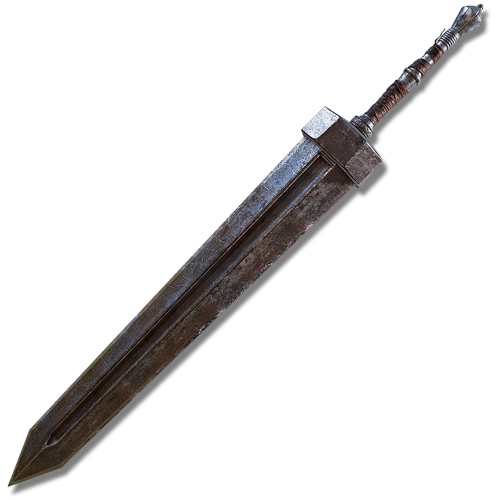
Greatsword — Best Early Colossal Sword

Greatsword — Best Early Colossal Sword

If you want the Heavy Knight to actually feel heavy, the Greatsword is one of the best early weapons to rush.

The Greatsword can be found in a carriage in Caelid, along the road northwest of the Caelem Ruins. You can ride directly there without defeating any bosses.

Its 31 Strength requirement initially looks intimidating, but remember that two-handing allows you to meet the requirement with only 21 Strength.

Compared with the Hefty Scimitar, the Greatsword is considerably slower but rewards every successful opening with enormous damage and excellent stance pressure. Apply a Heavy affinity later and it becomes an excellent weapon for a dedicated Strength build.

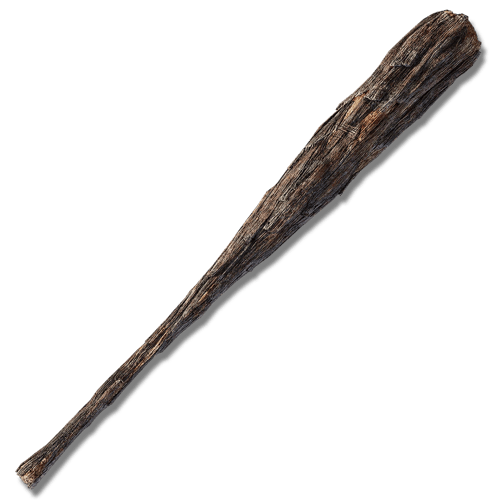
Large Club — Easy Early Strength Weapon

Large Club — Easy Early Strength Weapon

The Large Club is an extremely easy weapon to obtain if you want to immediately experiment with heavier Strike damage.

It can be picked up from a corpse in southern Limgrave, near the cliffs south of the Forlorn Hound Evergaol.

Its moveset isn't particularly complicated, but that's part of the appeal. You get strong Heavy Attacks, good stance damage, and Strike damage, which is extremely effective against miners, Crystalians, and many heavily armored or stone enemies.

It's also available without fighting anything significant, making it a useful early alternative while deciding what type of Strength weapon you eventually want to build around.

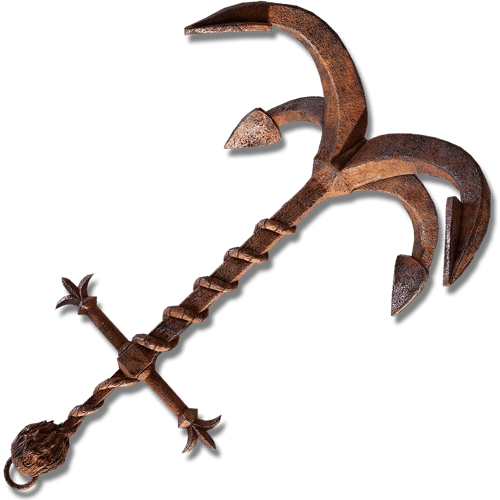
Rusted Anchor — Excellent Strength Alternative

Rusted Anchor — Excellent Strength Alternative

The Rusted Anchor is obtained by defeating the Scaly Misbegotten in Morne Tunnel on the Weeping Peninsula.

Despite its strange appearance, it's an extremely good Strength weapon.

Most importantly, the Rusted Anchor deals Pierce damage, which allows it to take advantage of counter damage when hitting enemies during their attack animations. This makes aggressive Heavy Attacks particularly rewarding.

Pairing it with Spear Talisman later can push this playstyle even further.

For players who don't mind its appearance, the Rusted Anchor is one of the strongest early weapons you can transition into.

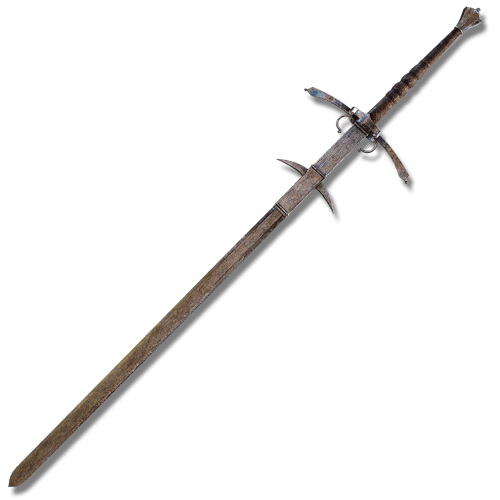
Zweihander — Great Low-Requirement Colossal Sword

Zweihander — Great Low-Requirement Colossal Sword

If the Greatsword's requirements are too demanding, the Zweihander provides a much easier introduction to Colossal Swords.

It can be purchased from the Isolated Merchant in the western Weeping Peninsula for 3,500 Runes.

Its relatively low requirements make it extremely accessible, while its long reach and thrusting Heavy Attack provide excellent spacing.

The Zweihander doesn't hit quite as hard as some of the more Strength-focused Colossal Swords, but its accessibility and excellent moveset make it one of the easiest heavy weapons to recommend during early progression.

Upgrading Your Early Weapon

Once you've decided which weapon you enjoy, your next priority should be getting it upgraded.

Limgrave Tunnels provide plenty of early Smithing Stone [1] materials, allowing you to quickly reach around +3.

As you move through Stormveil Castle, the Weeping Peninsula, and eventually Liurnia, you'll begin finding Smithing Stone [2], allowing your weapon to progress toward +6.

Don't worry about permanently committing to one weapon this early. Regular Smithing Stones eventually become purchasable, so experimenting with several early Strength weapons won't ruin your character.

Get the Iron Whetblade

Once you enter Stormveil Castle, make sure to pick up the Iron Whetblade behind a Stonesword Key fog wall near the Grafted Scion area.

This is an important upgrade for the Heavy Knight because it allows compatible Ashes of War to use the Heavy affinity, increasing Strength scaling while reducing scaling from other attributes.

Once your Strength begins increasing, Heavy affinity becomes the natural choice for most infusable weapons used by this build.

Which Weapon Should You Choose?

You don't need to obsess over finding one objectively best weapon.

  • Claymore — versatile and relatively fast
  • Greatsword — maximum heavy Strength playstyle
  • Large Club — simple Strike damage and stance pressure
  • Rusted Anchor — aggressive Pierce/counter damage
  • Zweihander — accessible Colossal Sword with excellent reach

The important part is moving away from the Hefty Scimitar if you don't enjoy its two-hit Heavy Attack. The Heavy Knight's starting stats aren't tied to Curved Greatswords, and some of the best Strength weapons in Elden Ring can already be obtained before or immediately after Stormveil.

Best Early Game Armor

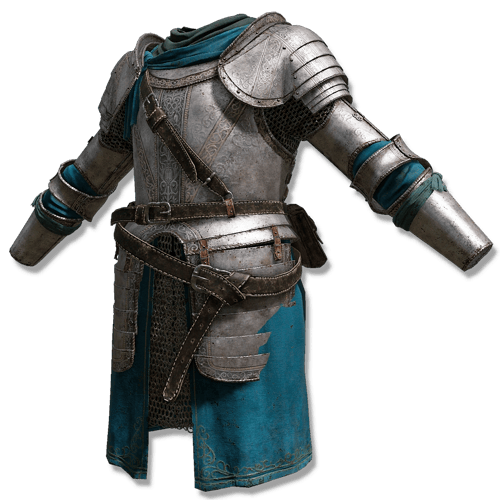
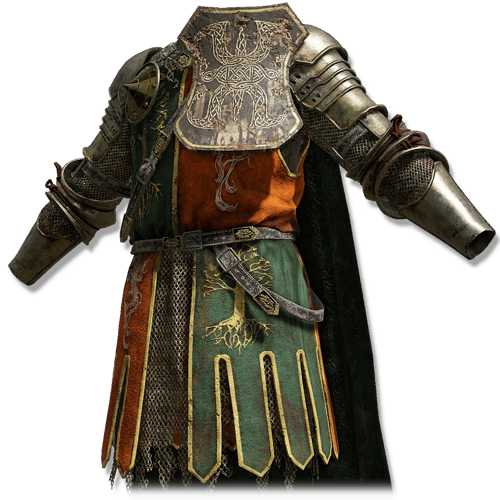
One of the advantages of starting as the Heavy Knight is that you don't need to immediately replace your starting armor. The Heavy Knight Set already provides strong physical defenses and Poise, making it perfectly suitable for the early game.

Your main concern should therefore be Equip Load. Heavy armor is useful, but not if wearing it pushes you into Heavy Load and makes your dodge considerably worse. Mix armor pieces when necessary and increase Endurance gradually rather than sacrificing your Medium Load just to wear a complete set.

Heavy Knight Set

Heavy Knight Set

The starting Heavy Knight armor is already one of your best early options, so there is no need to rush another armor set purely for better defenses.

Its combination of protection and Poise fits the class extremely well and can comfortably carry you through Limgrave, Stormveil, and beyond.

If the full set puts you above Medium Load after equipping a particularly heavy weapon, replace one or two pieces with lighter alternatives rather than abandoning the set entirely.

Knight Set

Knight Set

The Knight Set can be purchased from the Twin Maiden Husks after reaching Roundtable Hold.

It's a great general-purpose alternative with solid defenses and Poise without becoming excessively heavy. More importantly, it's immediately accessible and doesn't require farming enemies for individual armor drops.

This makes it particularly useful if you're transitioning into a heavier weapon and need to reduce the weight of your armor.

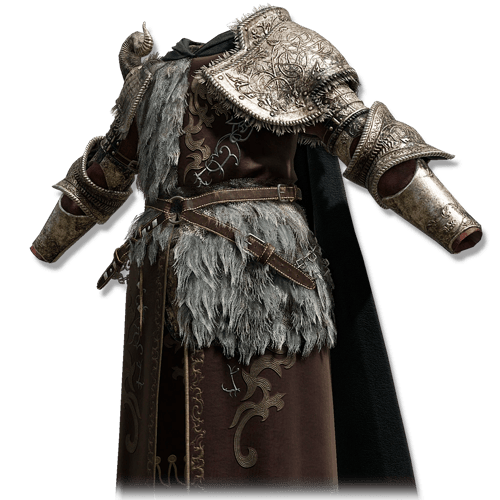
Banished Knight Set

Banished Knight Set

For significantly heavier protection, you can farm pieces of the Banished Knight Set from Banished Knights in Stormveil Castle.

The set provides excellent defenses and high Poise for how early you can obtain it, but it's also considerably heavier than your starting equipment.

You don't necessarily need the complete set. Mixing one or two Banished Knight pieces with your Heavy Knight armor can be an effective way to increase defenses or Poise without immediately requiring a large Endurance investment.

Godrick Knight / Soldier Armor

Godrick Knight  Soldier Armor

The various Godrick Knight and Godrick Soldier pieces found throughout Limgrave provide another easy source of early armor.

They're not something you need to specifically farm if your Heavy Knight Set is already working, but individual pieces can be useful for adjusting your Equip Load while maintaining reasonable defenses.

Armor Priorities

For the Heavy Knight, don't focus too heavily on finding a specific armor set. Your priorities should generally be:

  • Medium Load → useful Poise → defenses → appearance

Your starting armor already covers these requirements surprisingly well. Early armor drops should therefore be treated primarily as additional options for fine-tuning your weight and Poise, rather than mandatory upgrades.

Once you have substantially more Endurance later in the game, you can start considering the genuinely heavy armor sets without compromising your mobility.

Best Early Game Talismans

For this guide, we'll consider anything obtainable before reaching the Altus Plateau an early-game Talisman. The Heavy Knight benefits most from Talismans that improve charged attacks, stamina, Equip Load, and survivability, giving you several excellent options before progressing very far into the game.

Axe Talisman

Axe Talisman

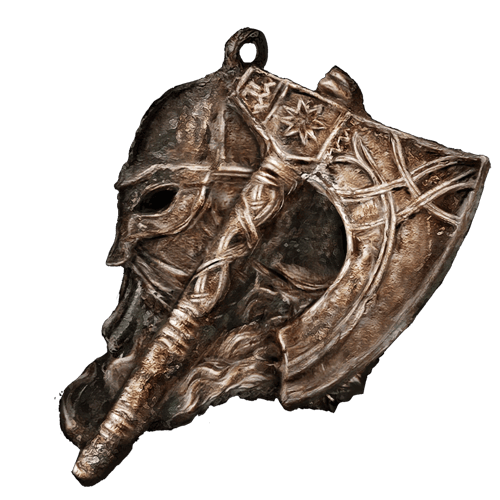
The Axe Talisman is one of the best early Talismans for a Strength build and can be obtained almost immediately.

You'll find it in a cellar beneath the Mistwood Ruins in eastern Limgrave, guarded by a Runebear.

It increases the damage of charged Heavy Attacks, which already synergize extremely well with heavy Strength weapons. Charged attacks also deal significant stance damage, making this particularly effective against bosses where you can consistently find larger punish windows.

If you're regularly using charged Heavy Attacks, this is one of the easiest Talismans to recommend.

Green Turtle Talisman

Green Turtle Talisman

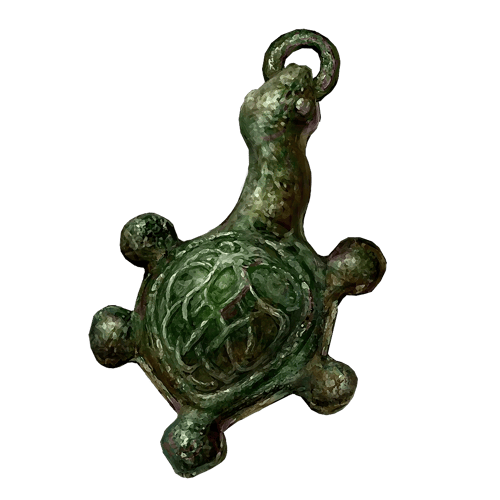
The Green Turtle Talisman is found in Summonwater Village behind a Stonesword Key barrier.

It increases Stamina recovery speed, which is especially valuable when using heavier weapons. Strength weapons can consume significant amounts of Stamina per swing, and you still need enough remaining to dodge afterward.

It's not a direct damage increase, but the additional Stamina recovery makes the entire build considerably more comfortable to play.

Arsenal Charm

Arsenal Charm

After defeating Godrick the Grafted, speak with Nepheli Loux at Roundtable Hold to receive the Arsenal Charm.

It increases your maximum Equip Load, allowing you to combine heavier Strength weapons with your Heavy Knight armor without immediately falling into Heavy Load.

This is particularly useful during early progression when you don't yet have enough Endurance to comfortably equip everything you want.

Claw Talisman

Claw Talisman

The Claw Talisman can be found in Stormveil Castle, on top of one of the towers accessible from the rooftops.

It increases the damage of jump attacks, making it an excellent alternative to the Axe Talisman if you prefer a more aggressive playstyle.

Jumping Heavy Attacks are particularly useful with large weapons because they combine high damage and stance pressure with considerably less commitment than a fully charged Heavy Attack.

Roar Medallion

Roar Medallion

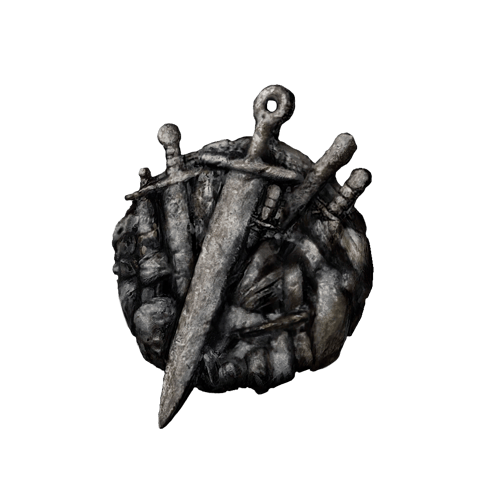
The Roar Medallion is obtained by defeating the Stonedigger Troll in Limgrave Tunnels.

This one is more build-dependent, but becomes extremely powerful if you use Roar-based Skills such as War Cry or Barbaric Roar. These Skills modify your Heavy Attacks, and the Roar Medallion increases the damage of the relevant roar-enhanced attacks.

If you're not using a Roar Skill, simply use another Talisman instead.

Radagon's Soreseal

Radagon's Soreseal

The Radagon's Soreseal can be obtained from Fort Faroth in Dragonbarrow without defeating a boss.

It provides +5 Vigor, Endurance, Strength, and Dexterity, making it extraordinarily powerful at low levels. Those 20 effective attribute points can simultaneously give you more health, Stamina, Equip Load, damage, and access to weapons you otherwise couldn't equip yet.

The downside is that you also take 15% more damage.

At very low levels, the additional Vigor can partially compensate for that downside, making the Soreseal extremely useful. However, its value drops substantially as your character becomes stronger. Treat it as an early progression tool, not something that automatically belongs in your endgame build.

Early Talisman Setup

For a general Heavy Knight build, a strong early setup would be:

  • Axe Talisman + Green Turtle Talisman

After obtaining your third Talisman slot:

  • Axe Talisman + Green Turtle Talisman + Arsenal Charm

You can then swap Claw Talisman in when focusing on jump attacks, Roar Medallion when using a Roar build, or Radagon's Soreseal when its additional attributes help you reach important early weapon requirements.

The Heavy Knight has unusually good Talisman options available almost immediately. You don't need to rush into later areas to make the build work; several of the Talismans that best complement a Strength playstyle are already available in Limgrave and Stormveil.

Heavy Knight Progression and General Tips

The Heavy Knight has a straightforward early game, but Strength builds become significantly better once you start taking advantage of stance damage, weapon affinities, two-handing, and the right attack openings. These tips will help you transition from the starting class into a complete Strength build.

Don't Feel Forced to Keep the Hefty Scimitar

The Hefty Scimitar is a fun starting weapon, but it doesn't need to define your build.

Its two-hit Heavy Attack requires a relatively long commitment, which can become increasingly difficult to use against faster bosses. If you enjoy the weapon, it's perfectly capable of progressing through the game, but the Heavy Knight's attributes also provide an excellent starting point for Greatswords, Great Hammers, Colossal Swords, and many other Strength weapons.

Experiment early and find the weapon class that suits you.

Two-Hand Your Weapon

Two-handing is particularly valuable on a Strength build because it effectively multiplies your Strength by 1.5 for relevant scaling and weapon requirements.

This lets you equip high-requirement weapons considerably earlier. A weapon requiring 30 Strength, for example, can be two-handed at 20 Strength.

Unless you're using a shield or another off-hand item that is central to your build, two-handing should generally be your default.

Prioritize Weapon Upgrades

Increasing Strength is important, but weapon upgrades should remain your primary source of additional damage during early progression.

Explore mining tunnels whenever you enter a new region and collect the Smithing-Stone Miner's Bell Bearings as they become available. These eventually allow you to purchase upgrade materials and make experimenting with different Strength weapons much easier.

Don't leave a weapon several upgrade levels behind simply because you're saving Smithing Stones for something later.

Use Heavy Affinity

Once you obtain the Iron Whetblade in Stormveil Castle, you gain much more flexibility when applying affinities to compatible weapons.

For a dedicated Strength build, Heavy affinity will generally be your preferred option, reducing other scaling while substantially improving Strength scaling.

This also means you're not restricted to weapons that naturally have excellent Strength scaling. Many infusable weapons can be converted into effective Strength weapons.

Learn to Break Enemy Stance

Strength isn't only about dealing a huge amount of damage with each swing. Large weapons are also exceptionally good at dealing stance damage.

Charged Heavy Attacks, jumping Heavy Attacks, Guard Counters, and many weapon Skills can quickly stagger enemies and bosses.

Once their stance breaks, immediately move toward the glowing Critical Hit position and capitalize on the opening.

Against many bosses, thinking in terms of creating stance breaks rather than simply reducing their HP makes Strength builds substantially more effective.

Don't Charge Every Heavy Attack

The Axe Talisman makes charged Heavy Attacks extremely powerful, but that doesn't mean every opening is large enough to use one.

Against fast enemies, a normal Heavy Attack, jumping attack, rolling attack, or even a basic Light Attack may be the correct punish.

One of the most important skills with large weapons is learning how much commitment each boss opening actually allows.

Jumping Heavy Attacks Are Extremely Reliable

If you're struggling to find opportunities for charged Heavy Attacks, use jumping Heavy Attacks instead.

They're faster, cover additional distance, deal excellent stance damage, and can be strengthened further with the Claw Talisman.

They shouldn't become the only attack you ever use, but they're one of the safest tools available to a heavy Strength build.

Medium Load Is More Important Than Heavy Armor

Don't sacrifice your dodge simply because the class is called the Heavy Knight.

You generally want to remain at Medium Load. Increase Endurance, use an Equip Load Talisman, or equip lighter armor pieces if necessary.

Heavy armor and Poise are useful, but mobility is usually worth considerably more than the relatively small defensive improvement gained by entering Heavy Load.

Use Buffs and Consumables

A pure Strength character doesn't need Intelligence or Faith to make use of buffs.

Greases, Exalted Flesh, Boiled Prawn/Crab, and weapon-specific consumables can provide significant advantages without requiring additional attribute investment.

Weapon Greases are particularly useful with infusable physical weapons, allowing you to change your elemental damage or status buildup depending on the enemy you're fighting.

Aim for 60 Vigor

As you move toward the later parts of the game, continue raising Vigor rather than putting every available level into Strength.

60 Vigor is the primary late-game target for a standard melee character. After reaching comfortable Endurance and weapon requirements, you can push Strength much more aggressively toward its higher scaling breakpoints.

A character with enormous Strength but insufficient HP often gains less practical value than one with slightly lower damage that can survive an additional boss attack.

Use Your Physick to Complement Your Weapon

Your Flask of Wondrous Physick provides another way to specialize the build.

The Strength-knot Crystal Tear is useful early when additional Strength helps meet requirements or improve damage. Later, Tears that improve stance breaking, charged attacks, or survivability can provide substantially more value depending on your weapon and playstyle.

Change your Physick when your build changes rather than using the same combination throughout the entire game.

Transition Into Your Preferred Endgame Strength Build

By the time you reach Altus Plateau, the Heavy Knight should no longer feel like a starting class. You should have enough weapons, Ashes of War, upgrade materials, and attributes to decide what kind of Strength character you actually want to play.

You can continue into a straightforward pure Strength setup, build around stance-breaking charged attacks, use an enormous Colossal Weapon, transition toward Strength/Faith, or even build around a specific Unique Weapon.

The Heavy Knight's main advantage is that it gives you a strong foundation without locking you into a specific endgame build. Use the early game to experiment, then specialize once you've found the weapon and playstyle you actually enjoy.