I was too young to play Ocarina of Time at release, but I grew up watching my older siblings work their way through Hyrule on the Nintendo 64, soaking up Kokiri Forest and Death Mountain long before I ever held the controller. I finally played it myself on the Nintendo 3DS with Ocarina of Time 3D, and I understood the hype straight away.
Since then, I’ve played nearly every major Zelda game, from Spirit Tracks and Twilight Princess to Breath of the Wild, and none of them has knocked Ocarina of Time off the top spot for me. The pacing, the dungeon design, and the sense of progression get me every time.
So a full remake had me ecstatic, and a little nervous. Ocarina of Time 3D showed the game could adapt to new hardware, but this was Nintendo rebuilding it from the ground up. Could a late-1990s game hold its own against modern releases, or would it be a relic in a shiny new coat of paint?
After dozens of hours back in Hyrule, I had my answer surprisingly quickly. Both the gameplay and story hold up, and the remake makes a strong case for why the original mattered so much. The visual overhaul, deeper storytelling, new content, and plenty of everyday conveniences modernize the game without losing what made it legendary.
The Legend of Zelda: Ocarina of Time first released in 1998, and almost three decades later, its influence is still easy to spot across the industry. Lock-on combat, world design, dungeon structure, and cinematic storytelling all trace back to it.
The original came from some of Nintendo’s biggest names. Eiji Aonuma co-directed it, Koji Kondo composed its excellent soundtrack, and Shigeru Miyamoto produced it.
This time, Nintendo built the remake in-house with EPD Production Group No.3, the team behind Breath of the Wild and Tears of the Kingdom. Aonuma also returned to produce the new version alongside Tears of the Kingdom director Hidemaro Fujibayashi.
For longtime fans, it’s the fullest version of a world they already love. For anyone who only knows Zelda from the Wii U and Switch era, it’s an easy way to see why people have long treated it as the genre's benchmark.
Our review of The Legend of Zelda: Ocarina of Time was conducted with the Nintendo Switch 2 version.
Highs
Stunning Rebuild of a Classic World
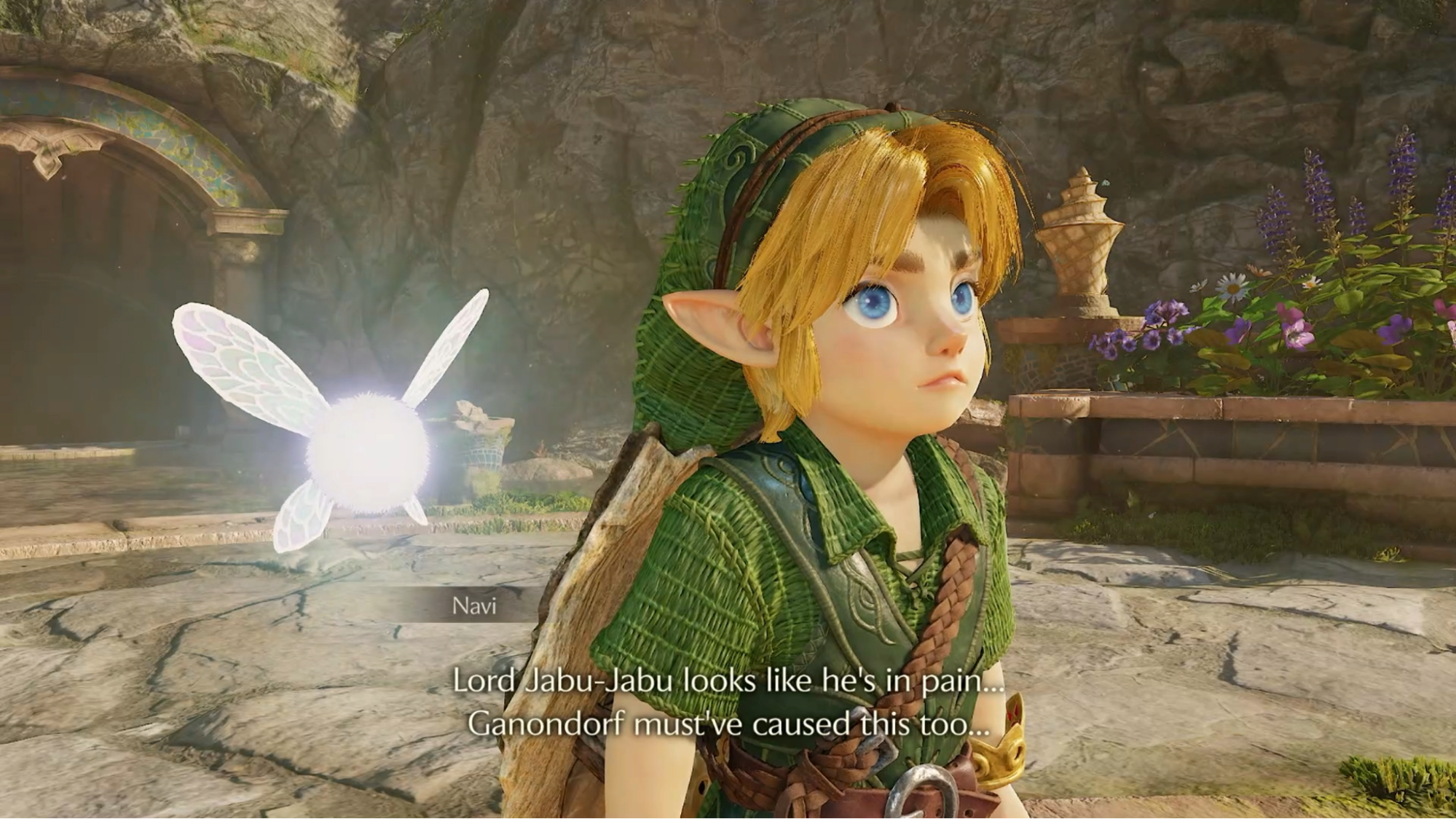
The easiest thing to praise is the visual overhaul, but calling the game “prettier” would do it a disservice. This is the first time Hyrule has truly looked like the world I imagined as a kid. The moment I booted up the game, I had that Ratatouille Anton Ego meme, where he flashes back to his childhood.
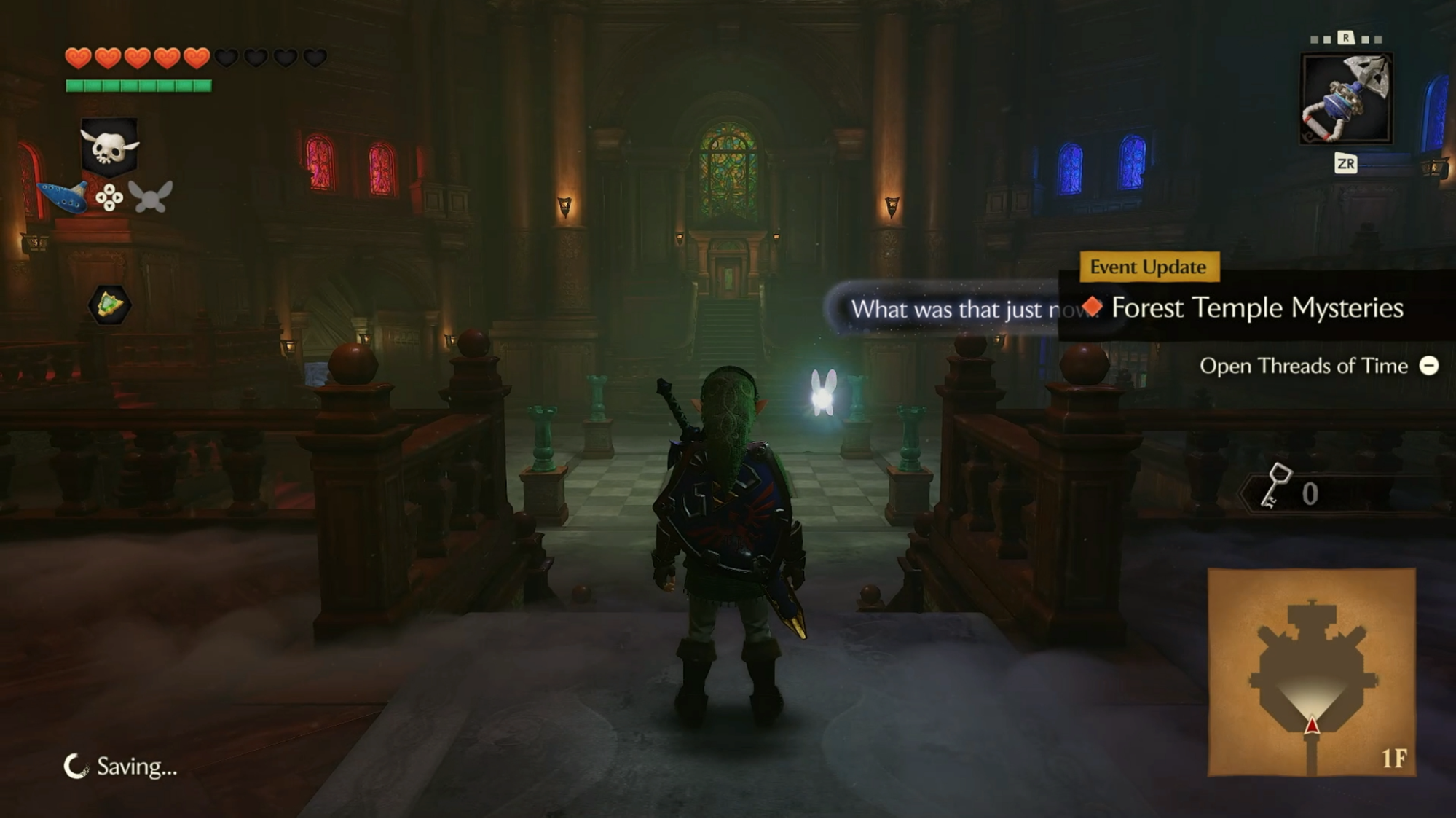
You can walk from Hyrule Field into Lon-Lon Ranch with no loading between the main area and any of the buildings. Hyrule flows together seamlessly, creating a stronger sense of a living kingdom rather than a collection of connected levels.
The improved presentation covers more than just the environments. Fully realized cutscenes transform some of the game’s most memorable story moments into cinematic experiences. Characters express emotions through facial animations and performance. Rather than relying on dialogue boxes, these changes make scenes hit harder.
The new facial and body animations reach well beyond the main cast. Villagers and townsfolk move around with the day/night cycle, gesture, and react with real personality when you bump into them or hit them. Places like Karariko Village and Hyrule Castle Town feel more lived-in rather than filled with people standing around waiting to be talked to.
Dungeons get the same treatment, with enemies that move towards you with menace, instead of just waiting around to be defeated. Hyrule has always been worth exploring, but now it feels like a place where people actually live.
Voice acting also plays a major role. For the most part, the performances bring these characters to life with real conviction, particularly during some of the story’s biggest moments.
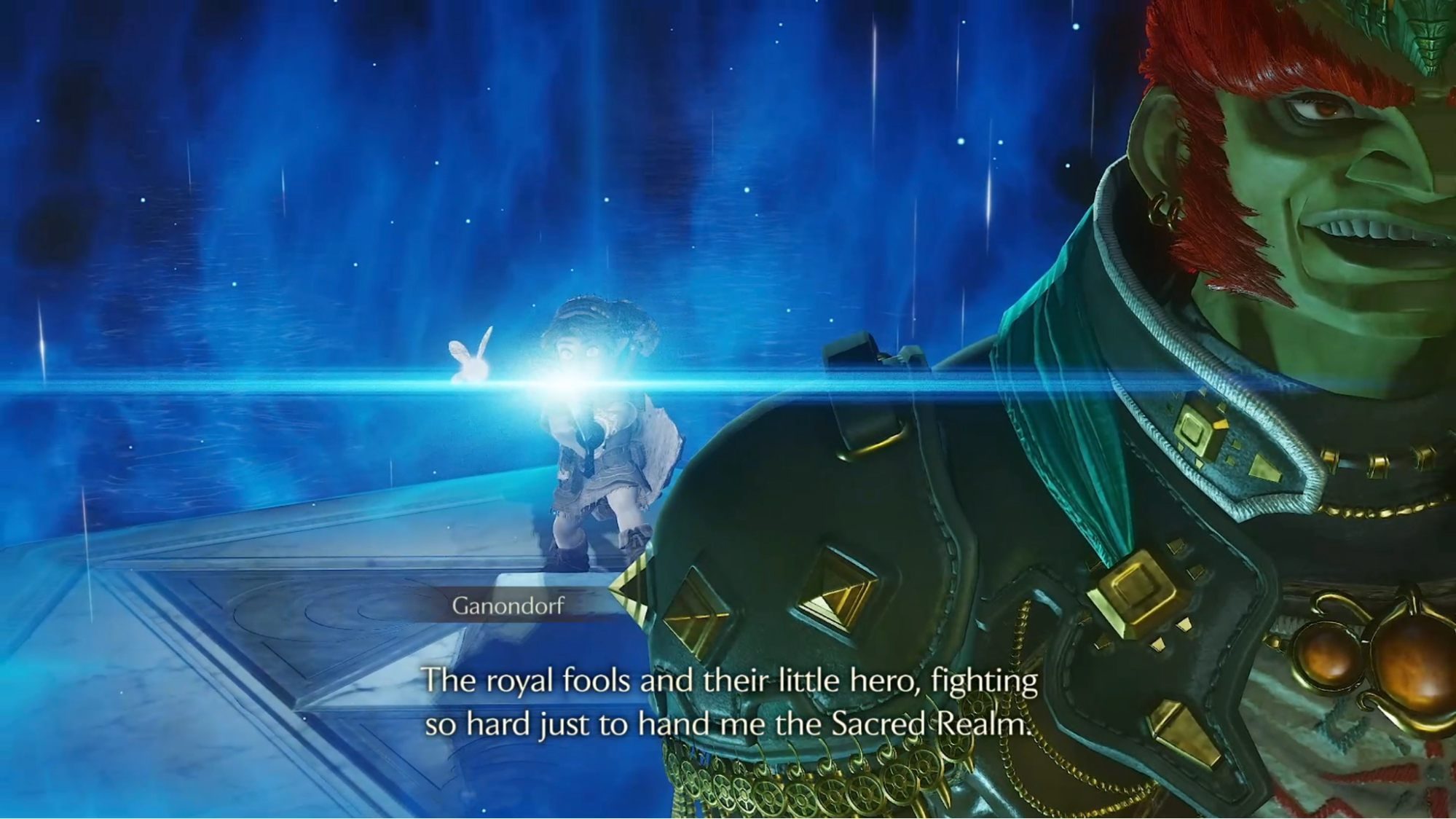
Notable actors, including Matt Mercer as Ganondorf and Lisa Reimold as Navi, deliver authentic performances. Hearing characters you’ve known for years finally speak feels surprisingly right, and it helps deepen emotional connections throughout the game.
The soundtrack deserves just as much credit. Koji Kondo's classic compositions stay intact, but better audio quality and subtle variations between day and night versions give familiar tracks an entirely new presence.
More than once, I stood still and listened to the melody play, taking in the atmosphere around me. It’s the Hyrule I remember from all those years ago, only richer and more immersive.
Smart Additions That Enrich the Original
One of my biggest concerns going into the remake was that it would simply be the original game with better graphics. Thankfully, the developers understood that modern players expect more.
What impressed me most about the new material is how organically it fits into the game. Most of the new content enhances areas where the original game at times felt limited.
Ganondorf is perhaps the best example. In the original release, he's unquestionably one of gaming's greatest villains, but long stretches make him feel distant from the player's journey. Nintendo addresses that by having players encounter him far more often throughout the story, giving the iconic villain more moments to shine.
These interactions make it clear who you're up against and why your quest matters. By the final battle, the fight feels far more personal, with more at stake.
I also spent far more time in the Boss Rush and combat arena modes than I expected. Both live in the Hall of Fallen Heroes, a dream-world gallery of statues of enemies Link has defeated. Boss statues offer timed remates, and owl statues start boss gauntlets. Being able to replay the game’s standout boss encounters whenever you want is exactly the sort of post-game content that suits a remake of this scale.
The expanded character backstories are another welcome addition, with some characters receiving more development than before. Even Link himself benefits from extra context that builds out his role in the story. It fills in gaps many fans have long wondered about, such as how he arrived in Kokiri Forest, the elf-like woodland village where he grows up.
The smaller additions are just as enjoyable. The Echo Gem is a badge-like gem that lights up when Gold Skulltulas are nearby. The Business Scrub Seed summons a wandering plant trader to your location and sells you supplies you’re running low on.
These give you fresh tools to experiment with while exploring, and the included bigger wallets make collecting rupees, Hyrule’s currency, more rewarding.
Fairy Thoughts also add personality to each area, giving players extra insight into the world without disrupting the pacing. Certain spots in the environment now trigger Navi, Link’s fairy companion, to share secrets, giving players extra insight into the world without disrupting the pacing.
None of these additions radically change Ocarina of Time, but they make Hyrule feel fuller, giving longtime fans more reasons to spend time in a world they already love.
Revamped Controls and Mechanics
The most immediate improvement is the updated camera, which makes exploration and combat feel noticeably smoother moment to moment.
A dedicated jump button removes the awkwardness of context-sensitive platforming, while sprinting helps traversal feel faster without fundamentally changing how the world is designed. A couple of times, I ran toward a gap and almost died from fall damage for not hitting the jump button, which was a funny way to break my muscle memory.
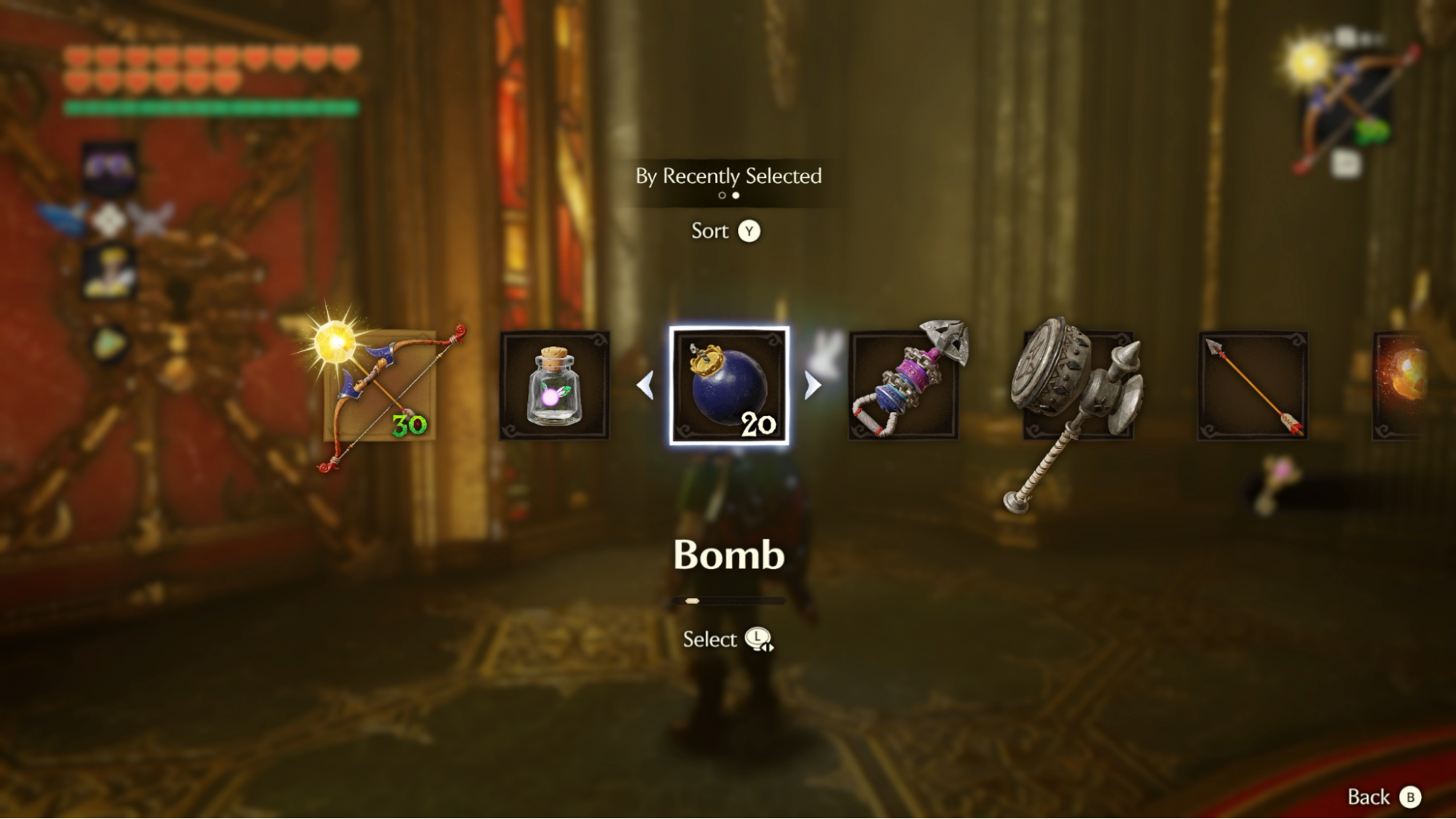
Beyond that, you no longer have to go into your menu to equip items in your quickslots. You can now hold R or L, immediately equip whatever you want, and use ZR to use it.
The only notable omission is the lack of a dedicated block button. You can only target, which will block, but only if your shield is out. Plenty of times I just used the hammer or bow and thought I was blocking, only to take a hit.
The same goes for the many quality-of-life upgrades scattered throughout the experience. Quest journals keep you from losing track of important objectives, while improved maps make navigation much easier without holding your hand. Save systems are much more flexible, thanks to manual saves, auto-saves, and loading options.
Princess Ruto no longer respawns if you accidentally leave her behind, and she stays exactly where you left her. Rupees don't vanish before you can reasonably collect them. The world maintains a consistent day-night cycle, while beds throughout Hyrule let players advance time if you haven’t obtained the Sun’s Song. Even Epona got a rework to be easier to control.
All of this makes the journey through Ocarina of Time less frustrating, and it’s left me itching to replay the game if they add a Master Quest version in a future update.
Lows
Puzzles and Challenges Lose Some of Their Mystery
For all of the remake's improvements, there were a few moments where I felt the developers were a little too eager to help. Part of what made the original Ocarina of Time special was its confidence in the player. It trusted you to get lost, experiment, make mistakes, and eventually discover the solution on your own. This version, however, takes a more accessible tack.
Navi is much more willing to guide you along, and several secrets that once took close observation are now easier to uncover. Hidden holes are more obvious, important items stand out more clearly, and some puzzle solutions feel less cryptic.
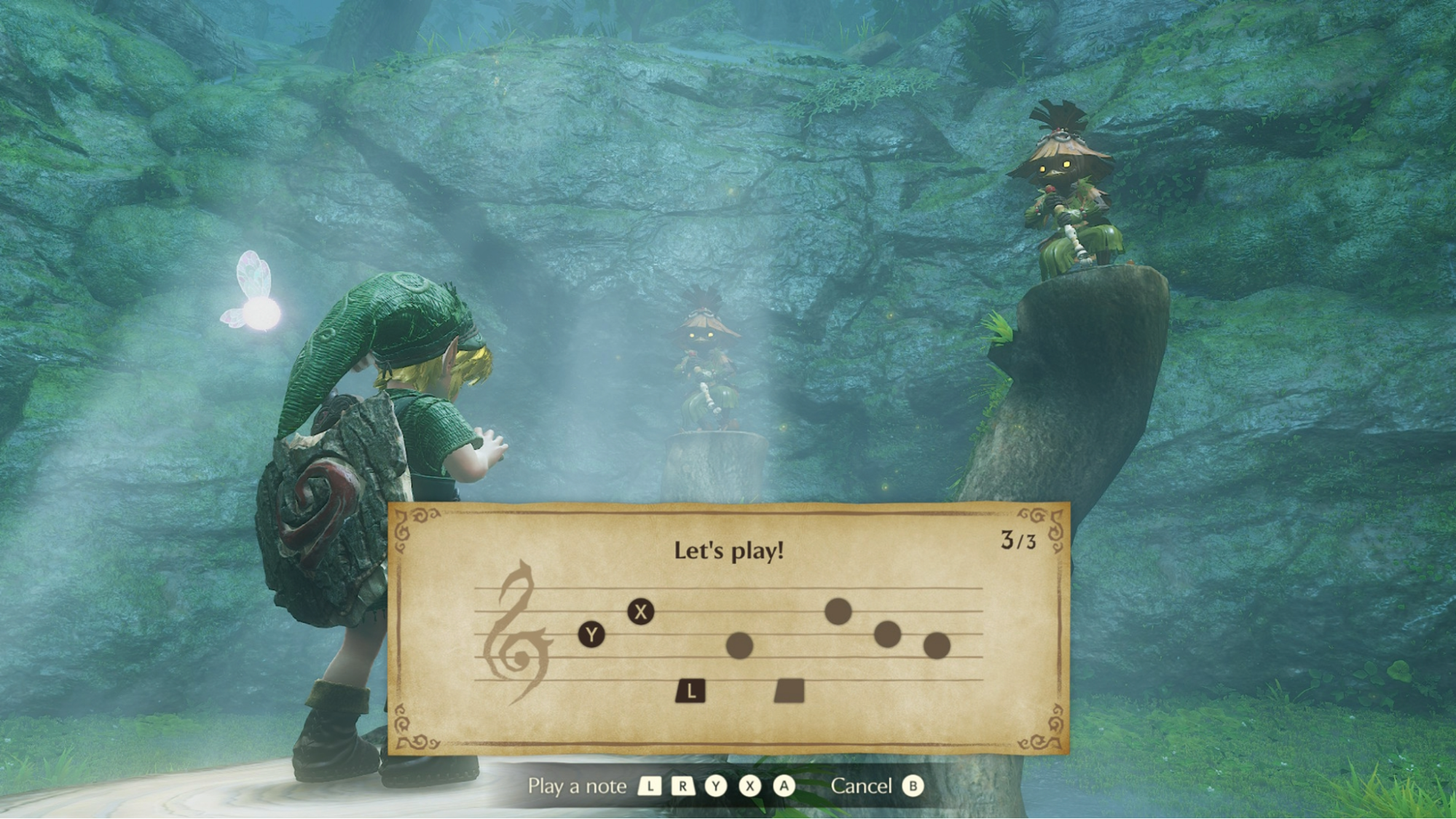
The most noticeable example appears during the game's ocarina memory sequences, where players are straight-up shown which notes to play, which ruins the whole point of a memory game.
Similarly, many challenges, especially speed-based ones, are much easier to complete. I won the race against Ingo to obtain Epona on the first try, as he is considerably slower this time around, and the dedicated sprint button helps in other speed challenges like the Giant’s Knife quests.
These changes didn’t damage my enjoyment of the game, and many new players will probably appreciate them. That said, as someone returning to Hyrule after countless playthroughs, I occasionally missed the sense of mystery that made certain discoveries feel so rewarding.
Few Detours from the Original Path
While the new content is fantastic, the game’s core structure is nearly identical to the original release. Still, it’s hard to criticize the game too heavily for staying faithful to a classic. Many players will see this faithfulness as one of the remake’s strongest qualities. For that reason, this criticism is more of a nitpick than a real fault.
The dungeons, boss fights, and puzzle solutions are largely carried over from the original. Even the story, despite meaningful expansions, follows the path fans already know.
I was really hoping for a few surprises. Not necessarily complete redesigns, but fresh twists on familiar ideas. I was wishing for new dungeon routes or different puzzle solutions.
By the time I reached several late-game dungeons, muscle memory was doing a lot of the heavy lifting. While some bosses have one extra move or maybe a few summons, the solutions to defeating them haven’t changed, so there is nothing new to contend with.
If you’ve played them many times like I have, walking back through the dungeons is a warm, nostalgic trip. Every room, key, and boss door is almost exactly where you left it, and for a while that comfort is the whole appeal.
The catch is that your subconscious and muscle memory take over very quickly. Solving a puzzle you already know feels more like reciting it than the moment of cleverness you felt the first time you worked it out. Part of what made those dungeons special was feeling stuck, stepping back, and finally seeing the answer.
It doesn’t offer alternate solutions, reworded routes, or remixed touches to keep returning players on their toes. Yes, you might now go to room B first instead of room A, but I was never once stuck on any part of the game, as the solutions were always the same.
I found myself wondering what could have happened if the developers had been more ambitious with the game’s design and added new experiences for players who know it by heart. I wasn’t asking for a total overhaul, only some twists or additions that would make experienced players and myself stop and rethink what we knew.
New Art Direction Might Be Divisive
This remake looks fantastic, with updated visuals throughout. It embraces a brighter, more saturated style, which works wonderfully for most of the game, but it takes some of the edge off some of its more unsettling locations.
The Bottom of the Well and the Shadow Temple are the biggest examples. Both felt uncomfortable to explore in the original. The new version keeps the layouts and encounters, but the cleaner, brighter environments cost it some of that horror-inspired atmosphere.
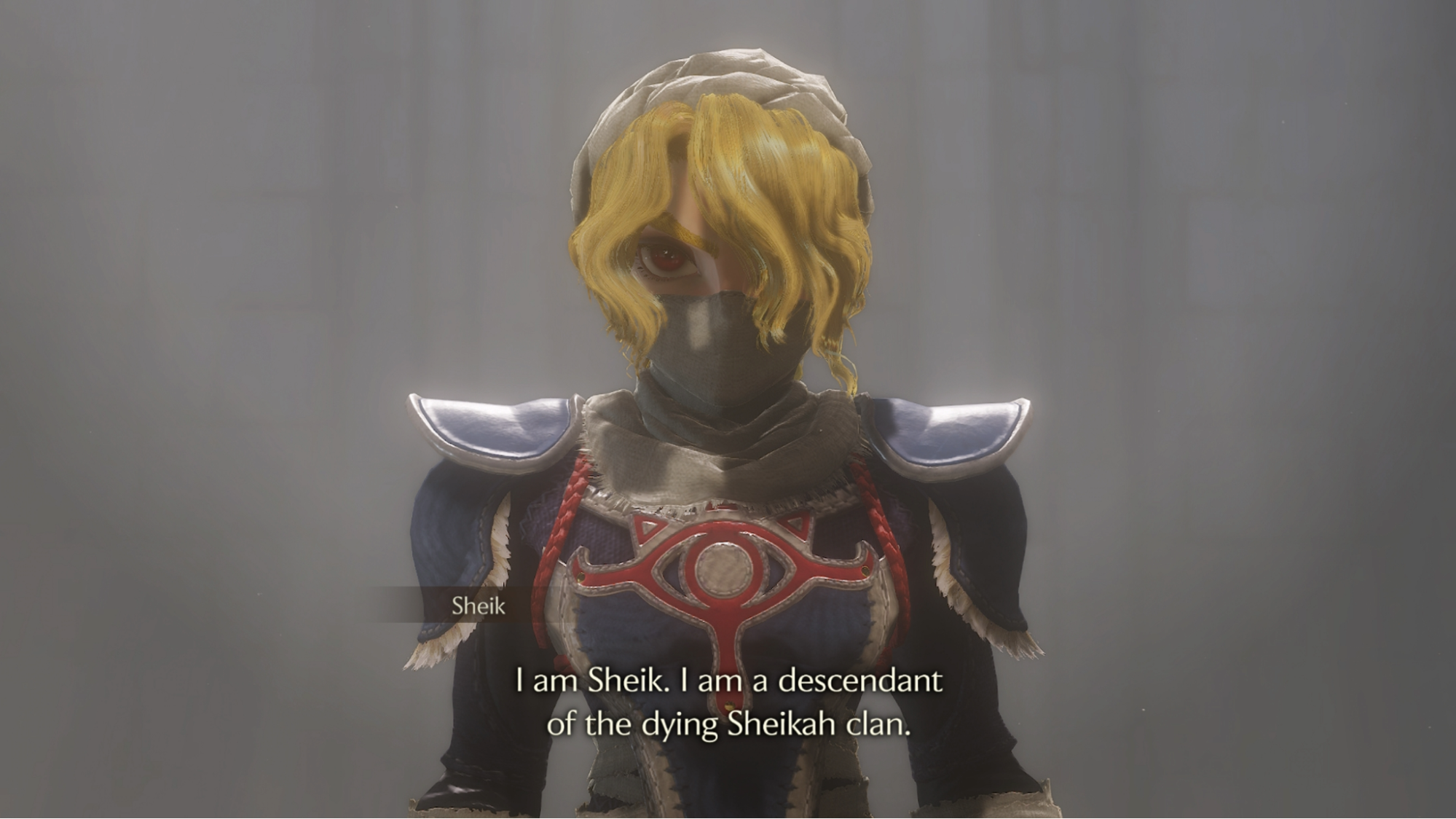
Character redesigns follow a similar pattern. While most are excellent, a few characters lose some of the designs that made them memorable in the original game. Nintendo’s art director said the team explored a style influenced by puppet shows and practical-effect films, and the doll-like faces fit that idea.
I can see the charm, and sometimes they look good for the non-Hylian or -Kokiri characters, but those stylized faces sit against a very realistic world. That contrast slips into uncanny-valley territory, especially in cutscenes.
Part of the issue is on us too. On the Nintendo 64, the limited graphics left faces blank with a finite amount of emotion, and our imaginations filled in the gaps. Any face the remake gives us has to compete with the ones we pictured as kids.
Sheik is perhaps the most noticeable example. Both their facial and body redesigns contrast sharply with the original. Without diving into spoiler territory, some of the mystery around them feels diminished, and it soured the experience.
The voice acting has a few uneven moments. Most performances are strong, but a handful of characters sound too theatrical or overly animated, and some scenes made me cringe. They felt more like a family fantasy film than the darker fairy-tale influences that originally defined parts of Ocarina of Time's world.
All told, these are minor, personal complaints in a remake that gets so much right. Most players will likely be too busy admiring how beautiful Hyrule looks to dwell on them for long, but veterans of the original may welcome or dislike these changes.
Our Score
10/10 (Timeless Adventure for a New Generation)
Nearly thirty years on, Ocarina of Time is still a clear contender for one of the greatest games ever made. Everything the remake adds is a bonus. The visuals, deeper storytelling, and extra content all add to the experience. But it’s the original’s design underneath it all that proves how far ahead of its time it was.
What I loved most was how cohesively it all fits together. The added story pieces strengthen the narrative without hurting the pacing, and the new items and side content gave me real reasons to keep exploring Hyrule.
The numerous gameplay improvements smooth out the frustrations of revisiting a late-1990s game, and I could feel how carefully the developers handled every change. It feels like the version of Ocarina of Time I’ve dreamed of for years.
The remake isn’t flawless, but none of its issues stuck with me. They felt like small trade-offs in a remake that gets so much else right.
It deserves a spot in any Game of the Year conversation. Whether a remake should win the industry’s biggest awards is a matter of taste. Still, on its own merits, it stands comfortably among this year’s greats, with the polish, staying power, and steady payoff you’d expect from a contender.
If you’re new to the world of Zelda, there is no better way to play a game that shaped so much of what came after. If you already played the original, you owe it to yourself to see Hyrule like this. I can’t wait to replay it, and I know you’ll feel the same.
I’m excited about what Nintendo will do next, whether that’s remaking Majora’s Mask or The Wind Waker, or new stories set in this era of Hyrule.
Even after the open worlds of Breath of the Wild and Tears of the Kingdom, Ocarina of Time stands as the series’ high point for dungeon design, progression, and storytelling. The remake proves that modern gaming still has room for a tightly designed linear adventure, and that not every great game needs an open world.
It shows why the original became so influential, and gives a new generation a way to play it in its definitive form.
Reviewed by Jack Briggs (originally published November 12, 2026)