Has it really been nearly three decades since we were sitting on our couches playing Episode I: Racer and waiting for Attack of the Clones to come out?
First revealed at The Game Awards in 2025, Star Wars: Galactic Racer is the true spiritual successor we've been waiting for. Developed by Fuse Games, which was founded by Criterion veterans who worked on Burnout and Need for Speed, the title has the perfect crew to bring racing back to the IP.
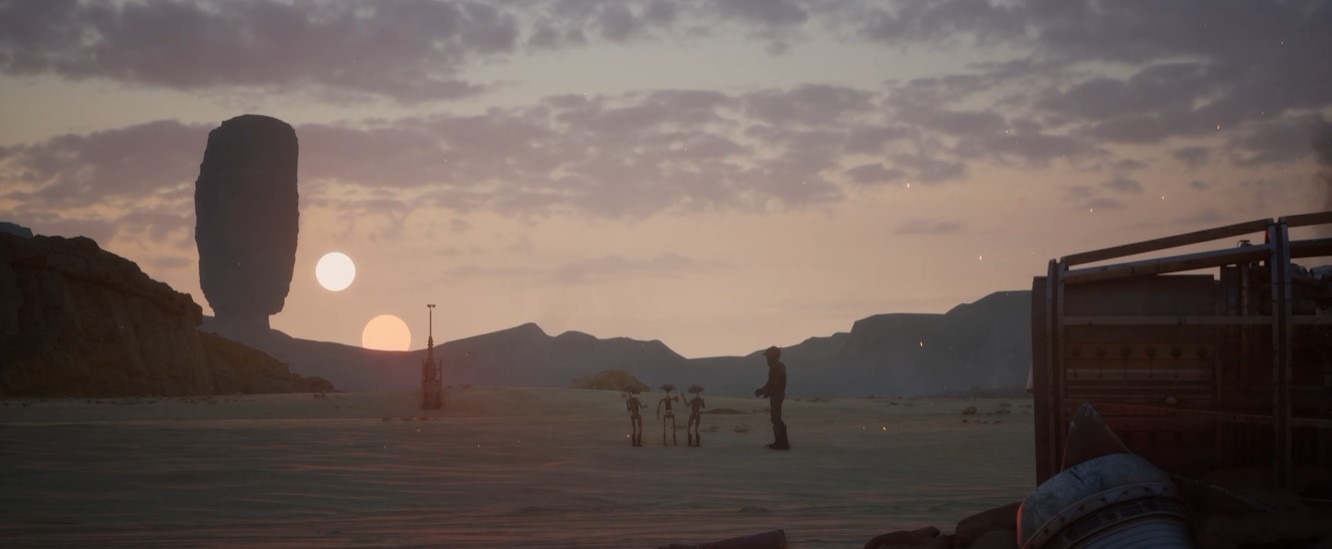
Taking place in the post-Return of the Jedi timeline, Galactic Racer is set in the early New Republic era, where podracing has been outlawed. In its place is a Galactic League that features racers who compete with landspeeders, speeder bikes, and skim speeders (a brand-new type of vehicle introduced in the game). And don't worry, podracing is still tastefully featured in the storyline and dedicated modes.
While Galactic Racer has the arcade racing identity you'd expect from its pedigree, you might be surprised to learn that comparisons to Slay the Spire and FTL: Faster Than Light are just as appropriate. This is because Galactic Racer's main modes are built upon roguelite mechanics to give it more depth and stakes than its predecessors.
Alongside the recent Zero Company, we're happy to say that this is another standout game that will please longtime Star Wars fans while doing justice to its genres.
Stick around as we dive into the game's highs, lows, and our final score.
Our review for Star Wars: Galactic Racer was conducted with the PC version on Steam.
Highs
Exhilarating at Every Turn
If you were wondering whether Fuse could still capture that signature visceral Burnout rush, this game absolutely delivers. Galactic Racer is one of those titles that just demands the gamer lean.
Even before the race begins, you have a few seconds to input Helldivers-esque button combinations for small but impactful bonuses. Your driver follows suit, expertly clicking buttons and turning knobs in response. From that point on, you feel locked in at every moment because a single mistake can cost you everything.
Your two turbo systems, the Afterburner and Ramjet, play brilliantly into that white-knuckled aspect. The Afterburner is your reliable option, providing a lower-risk burst as needed, gradually recharging over time.
The Ramjet is where things get spicy. It provides a much more potent boost with the caveat that you must hold it to keep it active for its full duration, which depends on your build. If you let go, you'll lose access to it until it fully comes down from cooldown. Oh, and there's one more kicker. If you hold it down for too long, you're going to literally explode and lose a crash charge (essentially an in-race "life").
Juggling both turbo systems while navigating the track, all while worrying about what your opponents are doing, gives you a constant stream of split-second decisions, in a way that's always a fun kind of stressful.
Racing at the icy Ando Prime planet exemplifies this best. To prevent your vehicle from freezing and becoming harder to steer, there are heating tunnels that will wipe your debuff.
The "obvious" choice would be to go through them, but since your competition will want to be doing the same, there's a good shot that not everyone makes it through intact.
When a crash does inevitably happen, Galactic Racer delivers on the destruction promised by the Burnout pedigree, with turbines, gears, and other parts flying in every direction. Within the context of Star Wars, it's more epic than ever as you hear the classic sci-fi screeches and wubs, with ice, lava, and acid to paint those chaotic scenes.
Overall, Galactic Racer nails the most crucial job of any arcade racing game: making dangerous speeds feel fun and rewarding.
The Definitive Roguelite Racer
With nearly every subgenre under the sun getting roguelite representation to the point of fatigue, Star Wars: Galactic Racer left us wondering why there aren't more like it. As the core of its single-player campaign and main multiplayer mode, the roguelite elements fit as perfectly as a scoundrel in a cantina.
When we reviewed Forza Horizon 6, one of our gripes was that it could sometimes lack buildup and escalation. Galactic Racer is on the opposite end of the spectrum, with every race carrying big-picture stakes and impact.
This risk-reward emphasis is exemplified by the core types of events you choose from as you progress through the usual roguelite branching options. Standard races award you credits based on your placement. You can lose a League Token if you squander all of your earlier-mentioned crash charges, but you have to really mess up repeatedly to do so.
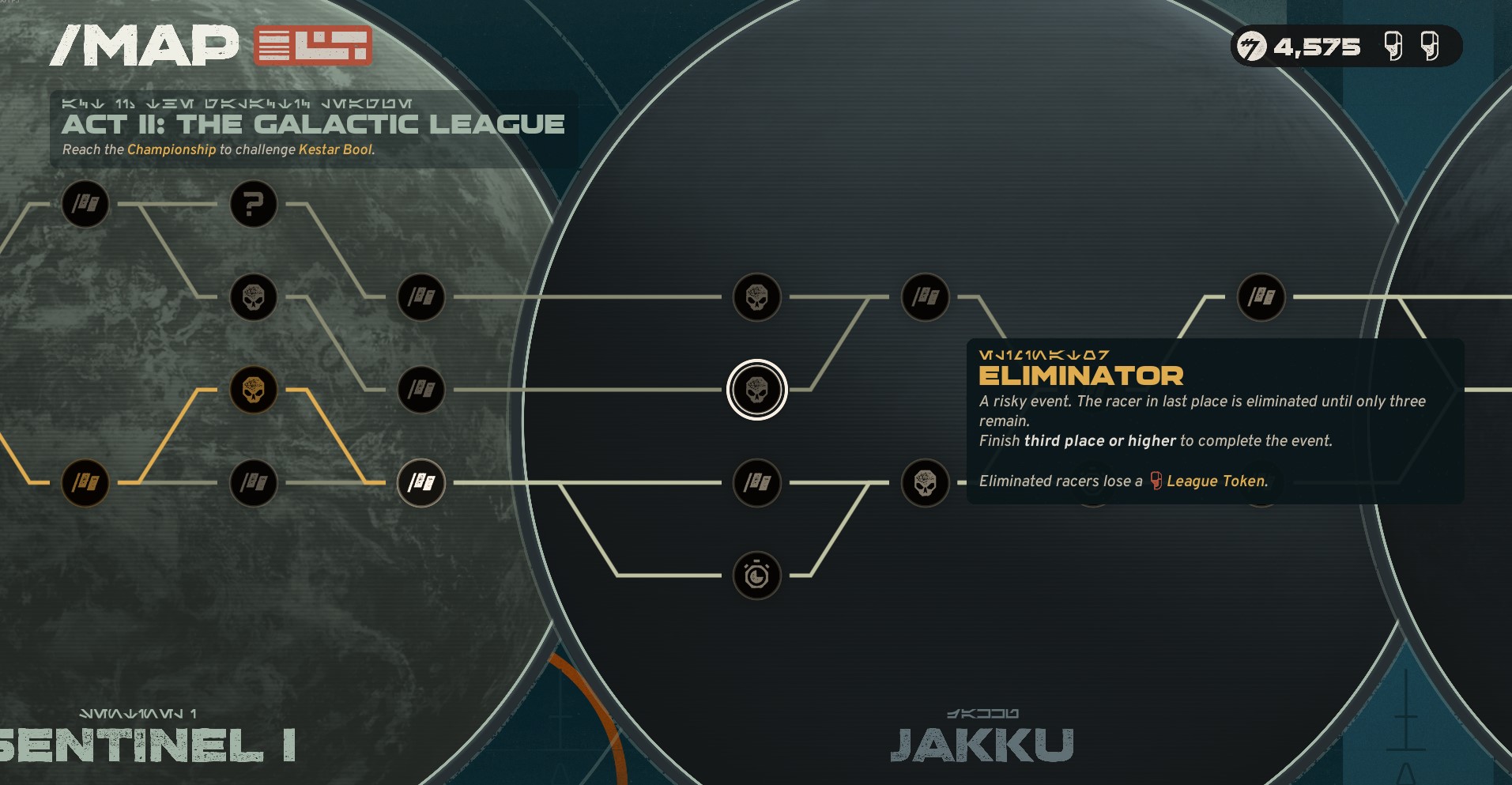
If you want to really test your limits and go for broke, the Eliminator event gives bigger and better rewards. However, this is a survival-based race in which the contestant in last place is eliminated at regular intervals until only the top three remain. Failure results in the loss of a League Token, which ends your run if it was your last one.
On the safe end of the spectrum, you have the Field Test, which essentially gives you a solo challenge scenario to help you improve a skill, such as maintaining your Ramjet duration or learning how to demolish enemy racers. This is the safest option as you're at no risk of losing a League Token no matter what you do.
It isn't enough to just survive a run, though. Much like in the roguelite inspirations we mentioned earlier, you need to truly push your limits to be strong enough for the boss encounters you'll face down the line. Play it too safe, and you'll get outscaled and humbled.
After each race, you choose upgrades that enhance your vehicle's handling and other capabilities, similar to choosing new cards between battles in a deckbuilder. If you crash too hard or face sabotage, you can even pick up Faults, which are essentially debuffs similar to curses in Slay the Spire.
This creates another important choice: spend credits to remove the Faults or try to play around them by ignoring them or adjusting your build to mitigate their negative effects.
And it doesn't stop there. Side bets and Backers are eventually introduced to add even more depth. Side bets allow you to wager on finishing ahead of a designated rival, while Backers entice you with in-race incentives for racing in a particular way (like time spent in last place or taking jumps as often as you can).
These gameplay systems continually layer and give Galactic Racer a well-executed balance of micro and macro choices, making every run feel like its own story. Sometimes you'll have an absolute monster of a run where you have a god complex like Sebulba. Other times, you'll struggle and feel like you need a divine intervention comeback to succeed.
If you do end up losing your last League Token, your final vehicle for that run is scrapped, but the currency you earned along the way (known as Tuning Points) contributes to your permanent progression that carries on between runs. This makes losses still feel like you're making headway as you raise the floor of your future speeders and unlock more possibilities to make better builds.
Don't be surprised if this becomes the new standard for arcade racers that follow suit. We'd love to see franchises like F-Zero and Mario Kart take a crack at it.
Build Variety and Experimentation
On top of its exhilarating racing and well-executed roguelite structure, Galactic Racer succeeds in making every run feel fresh thanks to its sheer number of build options.
To start off, you have the three core vehicle classes as your initial canvas. There's the landspeeder, which is the bulky all-rounder of the bunch. Second is the speeder bike, your sleek, motorcycle-esque option straight from the forests of Return of the Jedi. Lastly, you have the skim speeder, which pilots very much like a fighter jet, being able to turn its "wings" to go vertical and maximize precise maneuverability.
Your first impressions of these three classes might lead you to paint them into specific archetypes, such as the landspeeder leaning into tanky builds and the speeder bike expecting you to be a glass cannon.
However, one of the Field Tests makes it very clear that these stereotypical roles are meant to be broken, as you have a challenge where you pilot a speeder bike designed to plow through and destroy enemy racers.
This gives the game a mad-scientist tendency, where you want to try out wacky ideas and test what sticks. Besides your vehicle class, you also get to influence your initial build direction with choices like Racer Style and Favors.
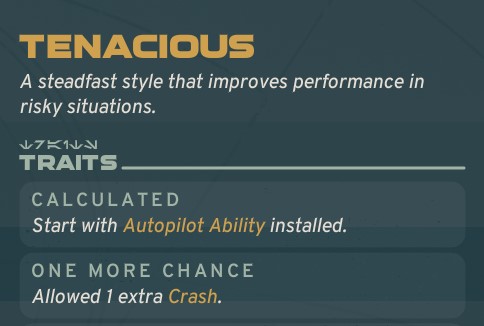
Racer Style acts akin to a "subclass", equipping you with special passives and default starting abilities (similar to Mario Kart item actives). These include Tech Expert, which starts you off with a Concussion Mine to manipulate the raceway with traps, or Tenacious, which comes with Autopilot equipped to help you take more risks and make it through otherwise fatal moments.
Meanwhile, Favors are best compared to starting Relics of Slay the Spire or the Keepsakes of Hades, granting inherent bonuses like an extra League Token or a higher crash limit.
As you get further into the campaign and complete run attempts, you unlock more of these, expanding your possible build angles and combinations. Even over a dozen hours into the game, you'll still be unlocking these and progressing their ranks for more powerful versions.
Since you can see which planets are going to be part of your upcoming Act's circuit, you can specifically tailor a playstyle to help you not only overcome the elemental obstacles, but even turn them into advantages.
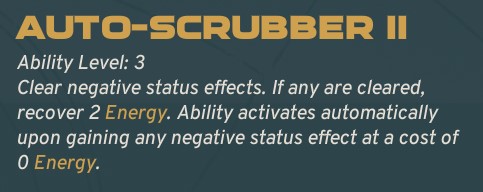
For example, with the Engineer Racer Style that comes with the Status Scrubber Ability, you can spec into a build that turns elemental debuff status effects into recovered Energy, allowing you to spam more abilities than your opponents.
Or, if you're about to play a map that includes tight caves, like Crait, going with a more Resilient and brawling build might be a good call to help you outlast your squishier enemies in close quarters.
The best part of being able to try different builds, though, is that no matter how OP the combinations you get are, you still have to execute them within the context of an actual race. There's no panacea that guarantees victory if you don't have the chops to back it up with fundamentals. Your build helps smooth out your journey, but your skills are ultimately what determine if you can finish the job.
Lows
Unfortunately Limited Multiplayer
If you're coming in as a fan of Episode I: Racer and hoping to relive the split-screen couch glory days, you'll have to rein in your expectations.
Fuse CEO Matt Webster has explained that the technological trade-off would've compromised fidelity and immersion. It's a bummer because the campaign is characterized so much by the trash-talk banter between racers. Being able to replicate that banter with friends and family would've been amazing.
However, that's understandable since couch experiences have become rarer in recent years. You would think that in exchange for this IRL limitation, the online offering would be more up to snuff.
We were met with disappointment when we found out that you can only party up with two friends, leaving us to play in rotations where any friends past that limit would have to watch Discord streams.
Not only that, but you're forced to play against strangers. You have no way to play in a custom room, removing the possibility of being able to practice together or set up 1v1 duels.
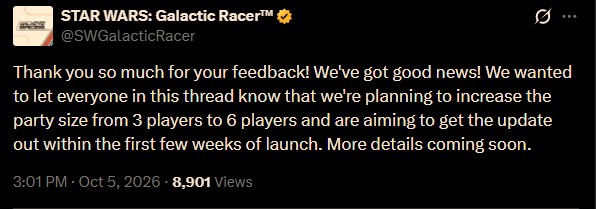
The devs have said via social media that they're aiming to raise the party size from three to six in an upcoming update, but that's still a half-step toward the twelve-player lobbies of the main multiplayer modes.
Lacks Expected Genre Standards
While the multiplayer gripes can be tied to technological limitations or oversights, Galactic Racer surprisingly also misses the mark on some expected low-hanging fruit.
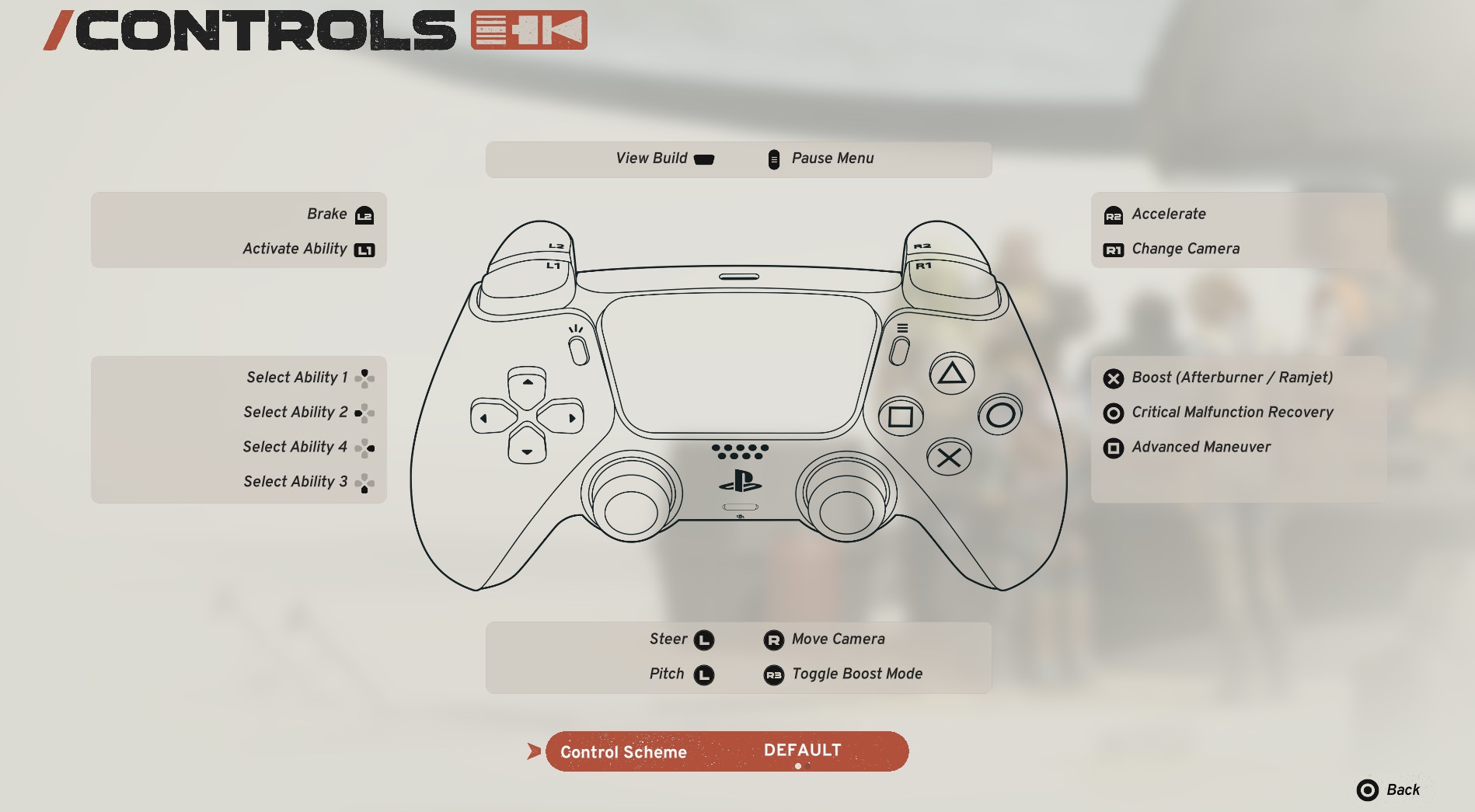
To start, you can't rebind your controls, whether you're on a controller or keyboard. We do acknowledge that there is an alternative controller scheme, but there's no way to fine-tune it for exactly what you want.
Rebinding is a long-standing standard expected within the racing genre, and in 2026, we need to expect games of this caliber to do more in promoting control-related accessibility. Star Wars has traditionally been an IP that tries to be for everyone of all ages, and having limited controls can leave some fans out of the fun.
While you can, of course, use system-level remapping with a PS5 or Xbox as a workaround, we did conduct this review with the PC version, where we expected it as a default.
The single-player experience also lacks some bread-and-butter basics. For instance, while Arcade mode does offer specific events, there's no way to simply choose a track, select settings, and race against bots. So if you can't shake a demon of a particular turn that usually results in a crash, you're out of luck if you want to practice it at your own pace.
Overall, these sorts of oversights make the game, as great as it is, feel a bit unfinished or undercooked in some areas. Thankfully, these issues should be a lot easier to solve than our previous Low point.
Needs Updates for True Longevity
If you're expecting Galactic Racer to be a roguelite that keeps you coming back for triple-digit hours, it certainly has the potential, but it isn't there just yet.
After the campaign credits roll (took us around 10–12 hours), you'll unlock a new difficulty, but there isn't an Endless mode or something akin to Slay the Spire's Ascensions or the Fear system of Hades 2.
That leaves you with finishing the finite number of Scenario missions or spamming the flawed Multiplayer mode we discussed earlier. While the game offers many ways to build your vehicles, the small number of planets (seven) makes the race circuits feel increasingly repetitive over time.
Although it's a comparable number of locations to Episode I: Racer's eight planets, it just doesn't jibe as well within the roguelite context. This feeling is accentuated online as the Multiplayer Tour and Podracing Tour always finish at Derven Acos and Tatooine, respectively.
If Fuse Games adds an Endless mode alongside a steady stream of content like new planets, racers, vehicles, and abilities over time, the game will have an incredible lifespan. We'd love to see the likes of Mustafar, Naboo, Lothal, and Mandalore enter the mix. Our wallets are ready!
Our Score
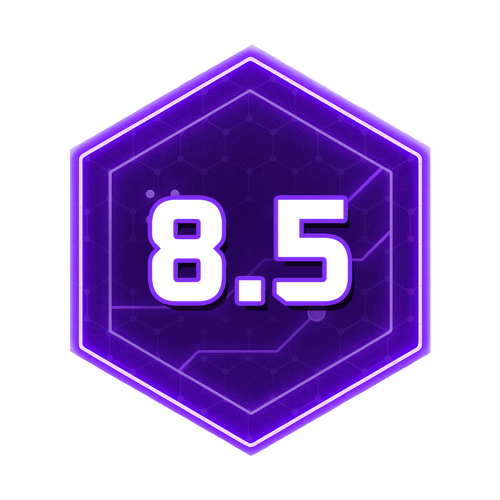
8.5/10 (A Stellar Roguelite Missing Key Features)
Make no mistake, Star Wars: Galactic Racer is truly an excellent blend of arcade racers and roguelites. It stands out as one of the pleasant surprises of the year, and we'd happily recommend it to anyone who's a fan of those genres. However, there were a few clear areas we felt it should've been better, so it lands at an 8.5 for us, just outside of GOTY-candidate territory.
Few new games this year will have you locking in and focusing as much as Galactic Racer, and it's bound to spawn inspired takes from other franchises.
As you make your way through its well-executed campaign, there will certainly be points where the all-too-familiar feeling of "just one more race" and "just one more run" sets in like a Jedi mind trick. We had a blast experimenting with its wide range of build options and mastering the twists, turns, and elemental mechanics of its maps.
But its missing features are just too apparent right now. It especially sucks when you have several friends waiting to rotate into a three-player party limit, knowing how amazing it'd be to play with a full lobby. Thankfully, a lot of its problems are primed to be solved with some well-earned updates and DLCs. As an infamous Senator once said, we'll be watching this game's future with great interest...
Reviewed by Agilio Macabasco (originally published October 11, 2026)