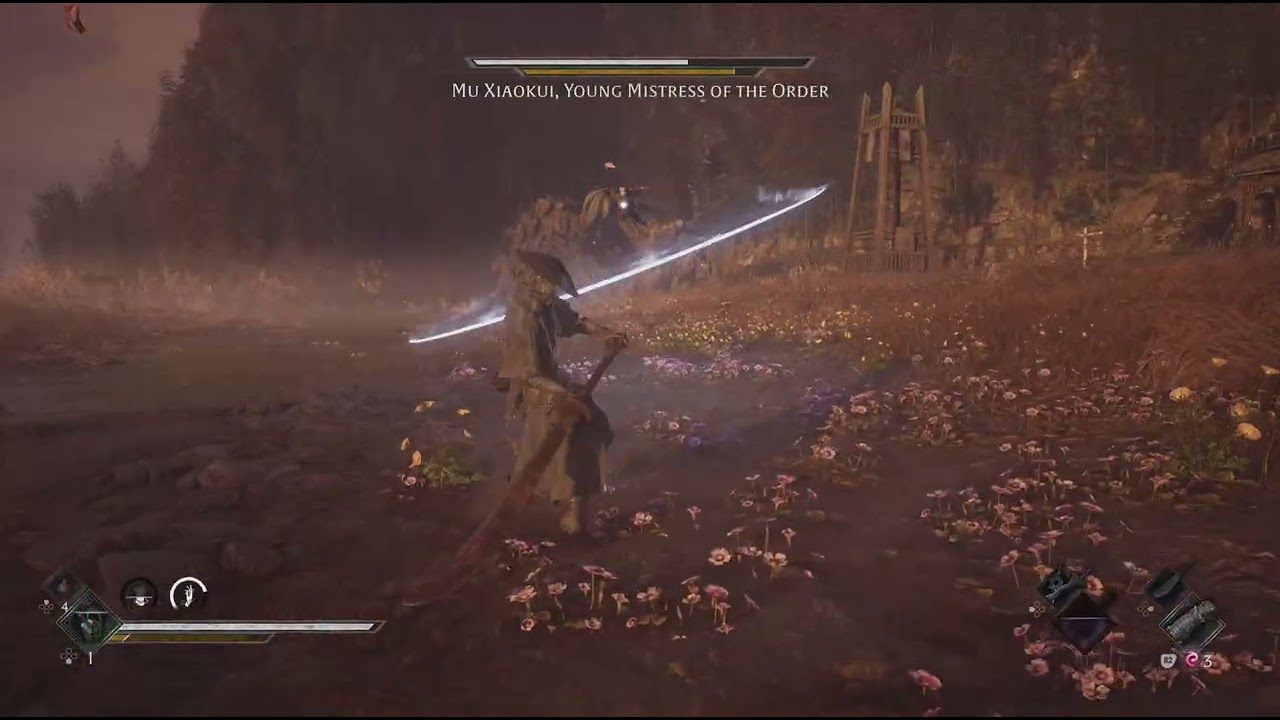
There’s a moment early in Phantom Blade Zero where sparks fly from clashing steel, a flute rises over the sound of combat, and a masked warrior launches into a spinning combo that looks ripped straight from a classic wuxia film. That moment perfectly captures what S-Game has built here.
S-GAME first announced the project at the September 2023 PlayStation Showcase, and it has been on many players' radar since. The game was originally slated for a September 2026 release. Still, S-GAME delayed the game by 50 days, focusing on polishing the game before release instead of relying on post-launch updates.
Phantom Blade Zero is at its best when it fully embraces its genre uniqueness, delivering a stylish blend of martial arts fantasy, lightning-fast combat, and RPG progression wrapped in one of the most distinctive settings in recent memory.
It doesn’t get everything right. Technical problems frequently interrupt the adventure, the story occasionally buries its most important details beneath collectible lore fragments, and the boss encounters often feel like they belong in a different game entirely.
Yet even with those flaws, it offers a compelling action RPG that stands out from nearly everything else in the genre.
Our review of Phantom Blade Zero was conducted with the PC version on Steam.
Highs
A Love Letter to Wuxia
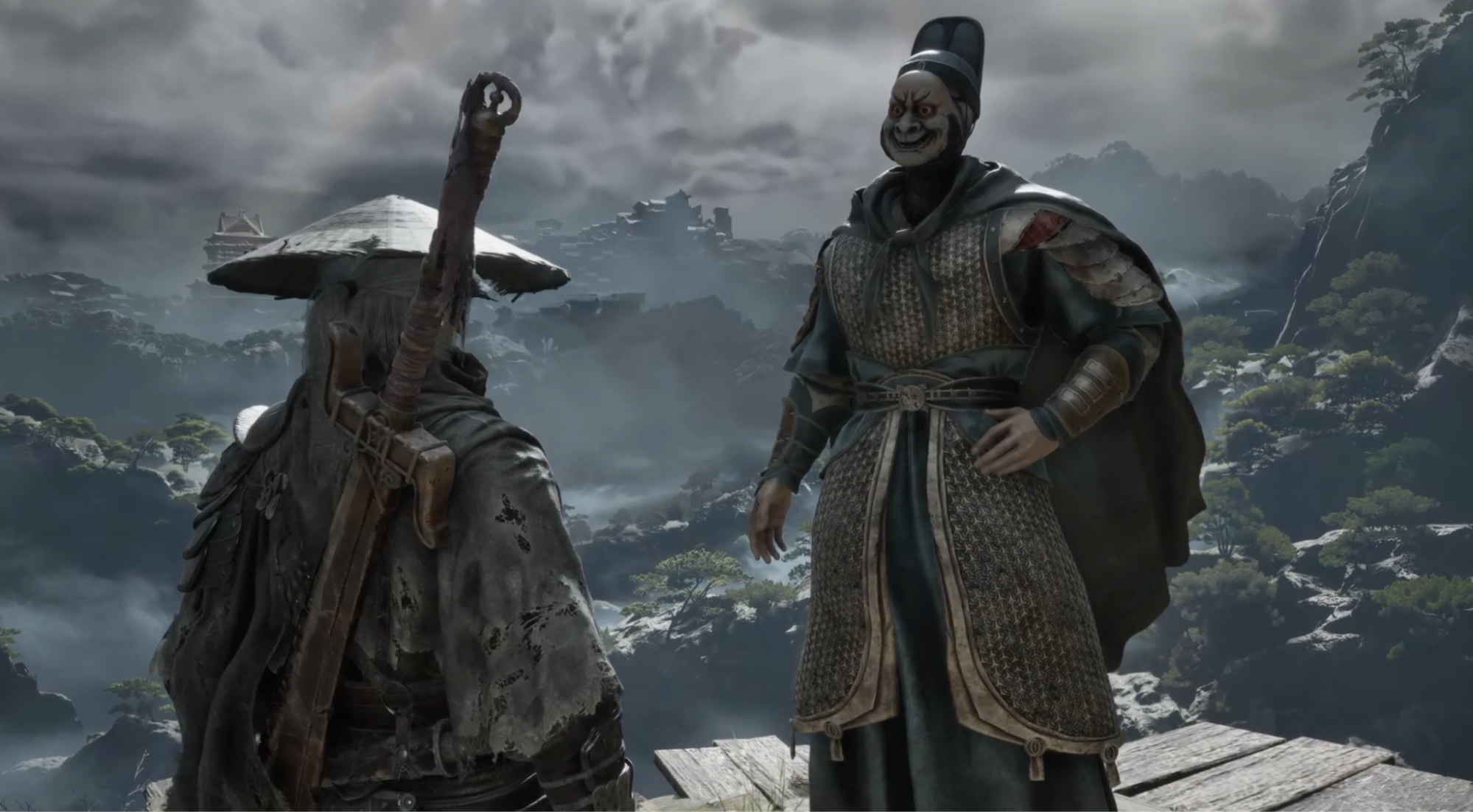
While many action RPGs borrow ideas from medieval fantasy or dark horror, Phantom Blade Zero leans heavily into Chinese wuxia folklore and culture. The result is a world that feels refreshingly different from the castles, knights, and ruined kingdoms that dominate the genre.
S-GAME brought legendary martial artist and actor Donnie Yen on board as creative consultant, drawing on his experience in kung fu cinema. His influence shows throughout the experience, from fluid weapon choreography to dramatic duels and cinematic camera work.
Its visual design constantly impresses, with ancient temples sitting alongside strange mechanical constructs, and masked assassins lurking in rain-soaked alleyways. Every major location feels rooted in mythology and martial arts tradition. The "Kung Fu Punk" aesthetic, as S-GAME describes it, gives the game a unique personality, blending folklore, mysticism, and technology without feeling out of place.
The soundtrack deserves equal praise. Traditional instruments frequently accompany combat and exploration, helping establish a strong sense of place throughout the adventure. Even cooler, when technology factors into boss fights, the music will blend with modern techno or heavy metal.
Both bosses and regular enemies draw on Chinese folklore and mythology, echoing stories of spirits and other evil entities. Combined with striking environmental art and stylish character designs, Phantom Blade Zero creates an atmosphere that's difficult to forget long after the credits roll.
Fast, Flexible and Deep Combat
Combat is easily the game's biggest strength. Encounters revolve around aggression, combo chaining, weapon mastery, and exploiting openings rather than patiently waiting for enemies to attack first.
The weapon variety is excellent, with more than 30 primary weapons and 20 secondary weapons to choose from. Each weapon type has its own animations, timing windows, combo routes, and special mechanics. Rather than serving as simple stat upgrades, weapons meaningfully change how encounters play out. Some reward relentless offense, others focus on mobility, crowd control, or status effects.
My first favorite weapon was the Jagged Steel, a rusted sword you get very early in one of the first boss fights. It applies stacks of bleed damage and can trigger attacks when you break the enemy's Sha-Chi, the game’s stamina/stagger system.
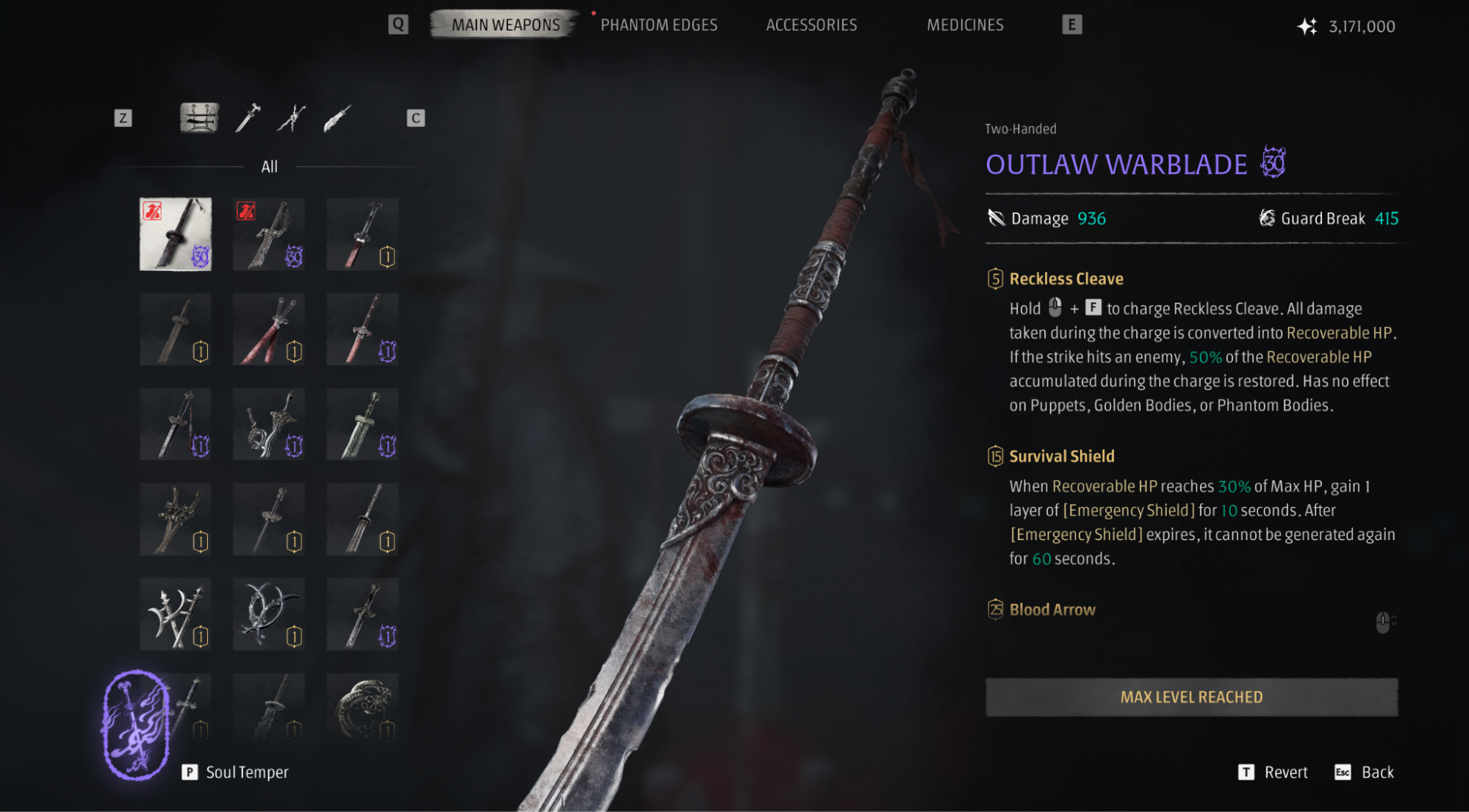
Later, however, I fell in love with the Outlaw Warblade, a two-handed sword that can drain your health to prime and detonate enemies for massive damage, while also healing your lost health.
Better still, the game lets you equip two weapons and rewards you for swapping mid-battle, so I had both ready at a moment’s notice.
Phantom Edges are secondary weapons with limited uses in battle before recharging, but they deal plenty of damage in different ways. Even better, they also act as Metroidvania mechanics, where you return to previous places to unlock different pathways.
Enemy design further strengthens the combat. Regular enemies often feature elaborate attack strings that require players to react, counter, dodge, and adapt. Even standard encounters remain engaging deep into the game because enemy movesets continue introducing new challenges.
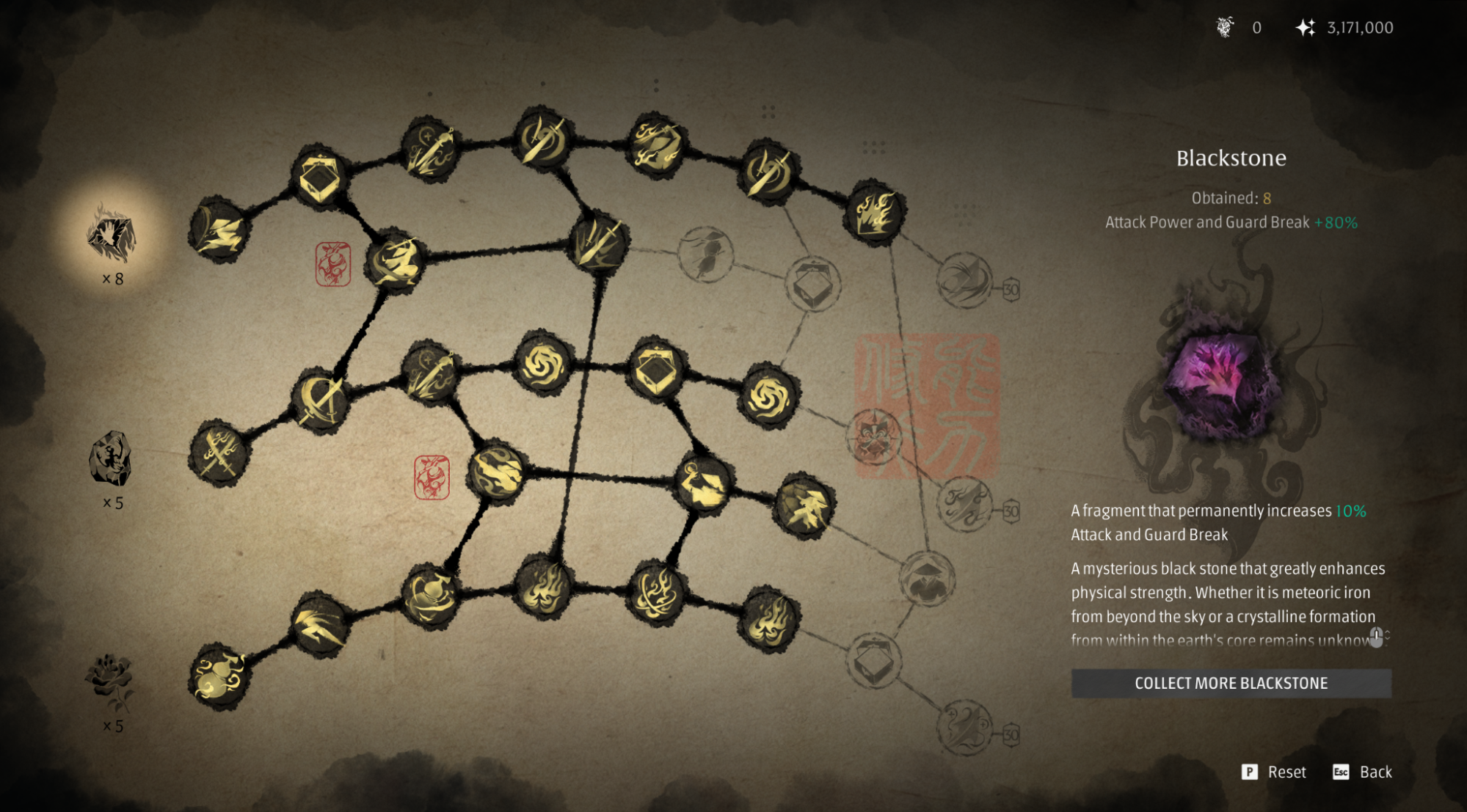
Beyond weapons, the huge assortment of accessories, upgrades, and medicines lets you experiment with builds. You can upgrade all of these, and refund any currency spent on items you no longer need. The game rarely locks players into a single playstyle, encouraging frequent experimentation throughout the campaign.
Blend of Soulslite and Character Action
Diving into Phantom Blade Zero blindly, I wasn’t sure what to expect. With its early teasers showing off Sekiro-like combat, challenging bosses, and wuxia aesthetics, it’s easy to understand how itcould be mistaken for a soulslike. Many Steam users also attached the soulslike tag to the game through much of its pre-release period.
That perception is easy to understand from trailers or early previews. But the final game takes a noticeably different approach and makes it more of a "soulslite" in reality."
Soulslike staples such as checkpoint-based progression and challenging multi-phase bosses do exist here. But S-GAME strips away many of the genre’s most punishing frustrations in favor of a more approachable gameplay model, while keeping a majority of the mechanics.
Yes, there is a campfire system that acts as checkpoints, fast travel nodes, and health top-ups, but using them doesn’t respawn enemies. Remnant Dust serves as the game’s primary currency, yet dying won’t leave it stranded on the ground waiting to be recovered. Rather than investing it into raw stat increases, you’ll spend it expanding a skill tree that unlocks new combat options and abilities.
Even the bosses take a more forgiving approach. While encounters are still challenging and require careful resource management across multiple phases, each phase has a checkpoint. If you fall during the second or third stage of a fight, you’ll restart from that phase instead of repeating the entire battle.
The inclusion of multiple difficulty options is another welcome addition. Players who want to focus on the story can enjoy the experience without major roadblocks, while those seeking a tougher challenge still have higher difficulty settings available.
This approach helps the game strike a comfortable middle ground. It delivers challenging combat and meaningful progression without becoming inaccessible to players who simply want to experience its world and story.
Lows
The Technical Side Needs Work
S-GAME has done a phenomenal job of creating a world that looks great artistically and graphically. It features many jaw-dropping landmarks, from mist-covered mountain paths and crumbling temples to bustling lantern-lit settlements. Every location stood out to me, and I was always excited to move into a new region, which the game features many of.
Unfortunately, Phantom Blade Zero isn't entirely polished. Throughout my playthrough, technical issues appeared often enough to become difficult to ignore. Camera angles occasionally struggled in tighter environments, zooming in super close behind Soul’s head or clipping through wider geometry. Bosses could push the player into awkward geometry, and several visual glitches disrupted otherwise impressive encounters.
More concerning were stability problems. During my playtime, I had a few crashes, all located in boss fights. One crash happened during a boss fight just before I killed the boss, so I had to retry. Worse, another happened during the cutscene after a boss fight, and with no save, I had to repeat it too.
I also ran into enough PC-specific issues that troubleshooting became part of the experience, including experimenting with driver versions to achieve consistent stability. The developers said before launch to update drivers to the latest version, but then, in a Steam community note a few days later, they said to roll back a few versions.
Smaller presentation issues also stand out. Lip-syncing frequently fails to match spoken dialogue when the language is set to Chinese, creating an odd disconnect during cutscenes. I like to play eastern-setting games in their native language, such as Ghost of Tsushima in Japanese. But because of the lip-sync issues, I had to set the language to English.
Meanwhile, the lock-on system has an irritating tendency to activate when it shouldn't, occasionally causing unnecessary mistakes in combat. Often, I'd try to focus on healers or buffers in groups of enemies, only for the game to lock on to a distant target and pull me away when I was trying to build combos.
While the crashes were annoying, after changing the drivers around, I didn’t have any more issues. None of the other issues I mentioned make the game unplayable, but they collectively chip away at what is otherwise an extremely polished presentation.
The Story Deserves More Limelight
Phantom Blade Zero's premise is extremely compelling, with cutting-edge visuals, cinematic cutscenes, and tense combat and dialogue exchanges. Your character, Soul, has committed treason by killing your faction’s leader for reasons unknown, and a massive bounty has now been placed on your head. After a mortal wound, you have 66 days left to hunt down a mystical, synthetic heart to heal yourself before your enemies obtain it for nefarious reasons.
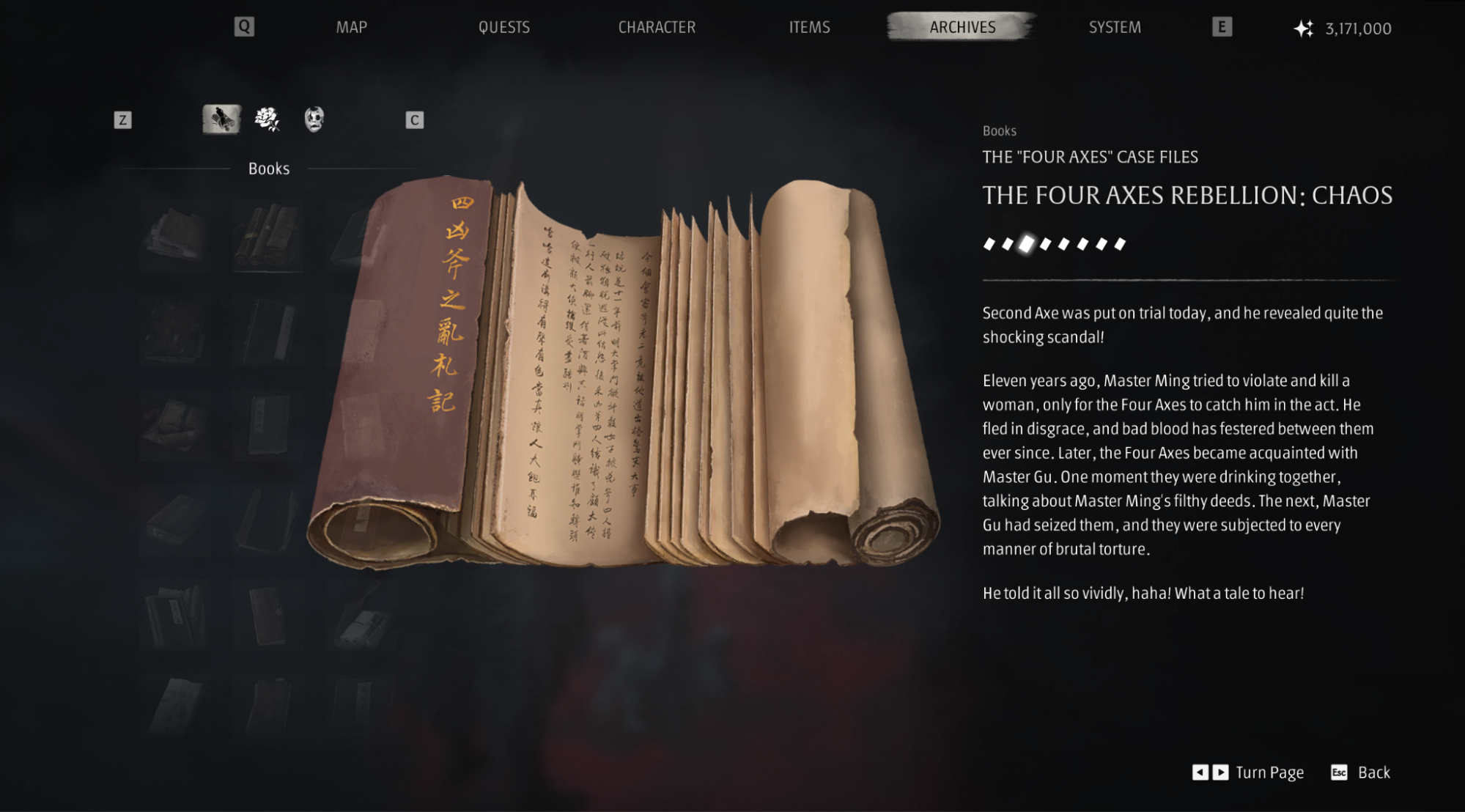
Political conspiracies, martial arts factions, ancient secrets, and supernatural forces create a strong foundation for an engaging narrative. But the problem isn't the story itself, the problem is how the story is delivered. Much like games such as Saros, a considerable amount of narrative context is scattered across lore entries, notes, environmental details, and fragmented discoveries.
Important information is often split into multiple pieces that players find out of sequence. As a result, players may uncover later revelations before understanding the events that set them up. Other soulslites like Jedi: Survivor or Stellar Blade keep most story beats to the main dialogue and cutscenes, creating a more focused story rather than one so splintered.
Even more so, many of the game’s characters, stories, and relationships are already cemented before the opening credits. As a player, it can be frustrating to have all these people know each other and talk about events you never saw unfold.
While you meet new characters throughout your journey, they're overshadowed by the people the character already knows, and each newly introduced boss or faction member leaves you frustrated because you still don't know who they are.
For those willing to dig through every journal and collectible, there's an interesting story beneath the surface. For everyone else, the narrative can feel unnecessarily fragmented and confusing.
Bosses Feel Like a Different Game
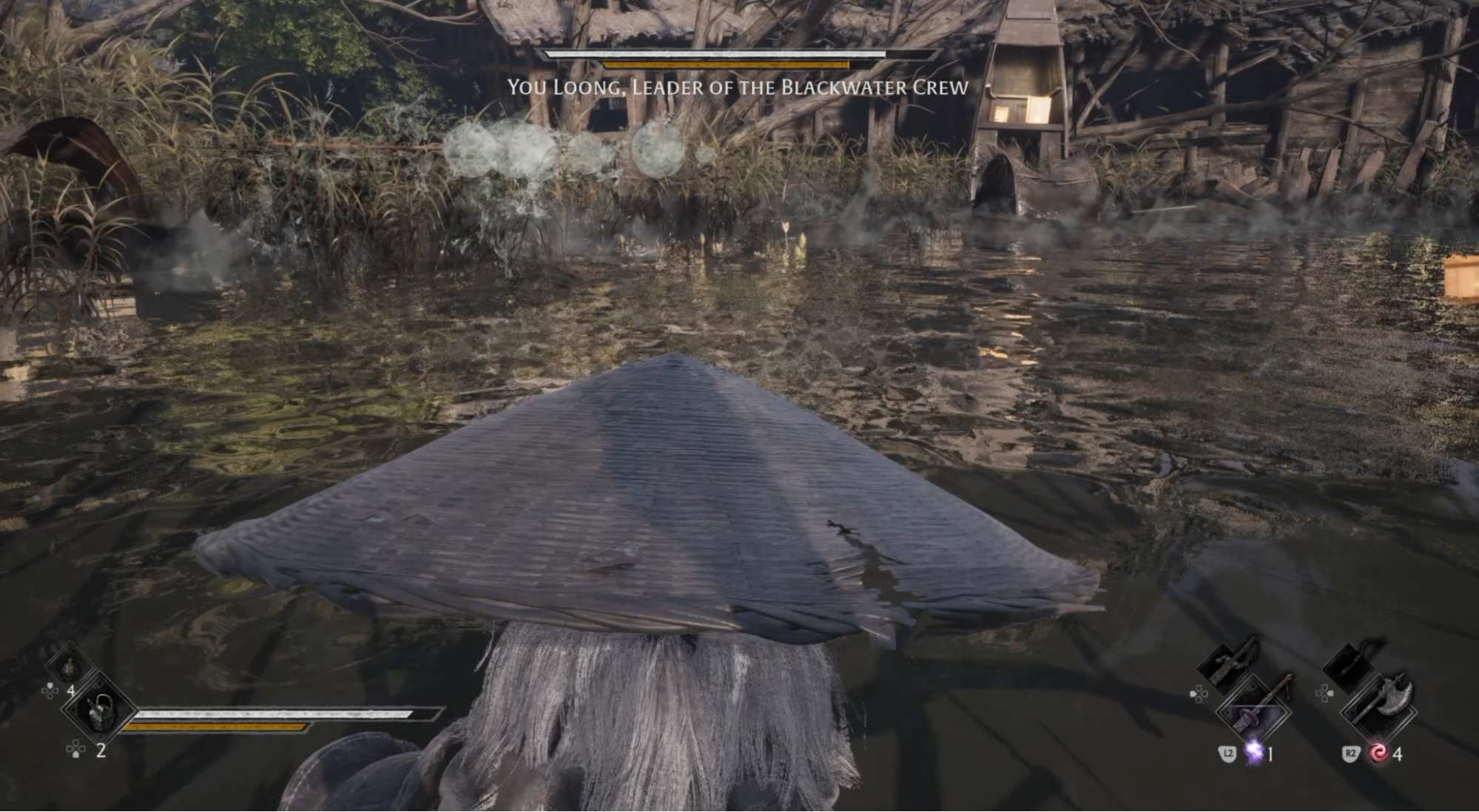
Oddly enough with a game of this genre, I was surprised to see how many bossfights didn't vibe with me during my playthrough compared to normal combat. When I was fighting regular enemies in Phantom Blade Zero, combat felt fast, expressive, and packed with options.
I constantly chained combos, executions, assassinations, and abilities that rewarded me with healing, medicine refills, or free Phantom Edge uses. It felt like every system fed into one another.
A good example is the Sha-Chi system itself. Draining an enemy’s Sha-Chi gauge opens them up to powerful finishers with main weapons or Phantom Edges that deal heavy damage, or breaks their shields to let more combos trigger, while they negate damage. It reminded me a little of God of War, where building enough stagger lets you trigger a devastating stun attack.
Then, I started reaching the tougher bosses, and many of those opportunities disappeared. Bosses have their own version of the Sha-Chi mechanic, but breaking their gauge doesn’t open them up to the same finishers or rewards. Instead, it usually just creates a brief damage window before the fight resumes. After spending hours learning and investing in mechanics that revolve around different skills and abilities, it felt strange to see them become significantly less impactful against the enemies I was supposed to care about.
Bosses also felt significantly tougher than standard encounters, creating occasional difficulty spikes that didn’t always align with the rest of the experience. This wasn’t necessarily because their movesets were especially complex. More often, I found myself dealing with enormous health pools or relentless attack strings that could drain my entire Sha-Chi bar through blocking and parrying alone, leaving me vulnerable to a quick death.
Early on, these fights gave me trouble, but after the first third of the game, I cleared most bosses on my first, maybe second, attempt. Not because I had mastered some deep mechanic, but because I learned I could often get by with a simple loop of dodging attacks and healing through the Outlaw Warblade.
To be clear, Phantom Blade Zero has some genuinely fantastic boss fights. Many of the main story encounters are visually stunning set pieces that do a great job of showcasing the game's wuxia-inspired style, and bosses like the Lion Dancer introduce creative mechanics that stand out long after the credits roll.
The issue is less the quality of the best bosses and more the consistency of the overall roster. While a handful of encounters introduce unique ideas, many others, particularly optional side bosses, struggle to distinguish themselves mechanically or visually. In several cases, I found myself more engaged by the game's elite regular enemies, which often demanded greater use of the combat system's full range of tools.
Most are visually impressive, memorable spectacles with strong presentation and excellent animations. But, with such a creative combat system as the foundation, I wished more bosses pushed those mechanics further or offered unique twists that matched the imagination found elsewhere in the game.
Our Score
9/10 (A Near-Perfect Wuxia Soulslite)
Phantom Blade Zero is a soulslite that feels completely confident in its own distinctiveness. Rather than chasing trends, S-GAME has built something that stands apart through its stunning wuxia-inspired world, fast combat, and a style that permeates every corner of the experience. It’s an aesthetic and combat style rarely explored, and only a couple of games like Where Winds Meet or Wuchang: Fallen Feathers have tried to capture it.
From the moment I started playing, it felt like one of those rare games that might genuinely earn a perfect score. Its blend of martial arts fantasy, folklore, stunning visuals, and intricate weapon-driven combat created an experience that felt fresh in a genre increasingly crowded with familiar ideas.
The game's strengths are immediately obvious. Experimenting with new weapons and accessories, discovering powerful synergies, and learning to exploit enemy weaknesses makes combat endlessly rewarding. New tools are introduced at a steady pace, encouraging experimentation without forcing players to constantly abandon a preferred playstyle. For a long stretch, it felt as though the game could do no wrong.
As I dug deeper, however, some cracks started to appear. Technical issues became more frequent, and while the boss roster contains some genuinely excellent encounters, many later fights began to feel iterative rather than innovative. The further I progressed, the more I noticed bosses relying on familiar patterns instead of building upon the creativity that made the game's regular combat so special.
What surprised me was how little these shortcomings affected my desire to keep playing. Even as Phantom Blade Zero slipped from feeling like a potential 10/10 to a very strong 9/10, the foundation remained incredibly compelling. The combat was still among the most satisfying I've played in years, and the world remained consistently fascinating to explore.
Even during its weaker moments, it never stopped reminding me why I was so impressed in the first place. Long after I put down the controller, I found myself thinking about its breathtaking environments, haunting soundtrack, and stylish duels. Few games have lingered in my mind this much after each session, and that's perhaps the strongest compliment I can give it.
In a market filled with excellent melee-combat games, Phantom Blade Zero manages to do the increasingly difficult task of feeling distinct. It has the confidence to straddle the space between action games and soulslikes, borrowing ideas from both while ultimately becoming something that has its own wuxia soulslite identity.
Finally, it is also a reduced-price title at $60, with a rough runtime of 40 hours. On top of that, it has multiple endings and a New Game Plus already packed in, featuring new weapons to use and unlock, new skills to upgrade, and even a harder difficulty.
For fans of soulslites, this isn’t just an easy recommendation. It’s one of the year's standout releases, and a game that deserves a spot among the modern greats of the genre. It's the kind of game that reminded me why I fell in love with action RPGs in the first place, constantly rewarding curiosity, mastery, and experimentation from beginning to end.
Reviewed by Jack Briggs (originally published November 5, 2026)