menu
MobalyticsUse your favourite features in-game with our Desktop App
Riftbound Guide

All Riftbound Formats Explained

Beginner
Mechanics
Updated on Nov 20, 2025
Nov 20, 2025

Overview

One defining trait of Riftbound is that it was designed from the ground up to support both 1v1 and multiplayer. This makes it very accessible to both veterans and newcomers, and offers a variety of fun experiences.

While the rules generally remain the same across formats, there are a few key differences you’ll want to keep in mind. Does the player going first draw a card on their opening turn? How do we decide which battlefields get used? We’ll answer all that and more!

Constructed Formats

Building decks is what defines trading card games. A huge part of the fun comes from discovering the crazy combos, and testing various interactions to see what works best. 

As it stands now, there are currently no differences when it comes to deckbuilding in constructed formats. This will definitely change in the future after the first Standard Rotation (see below for details), but for the time being there’s no distinction.

Standard 1v1

Generally regarded as the default game mode, Standard 1v1 is the classic two player experience where you go head-to-head against your opponent.

It can be enjoyed both casually and competitively, though competitive tends to lean more towards best of three to help minimize RNG (by providing more opportunities to play).

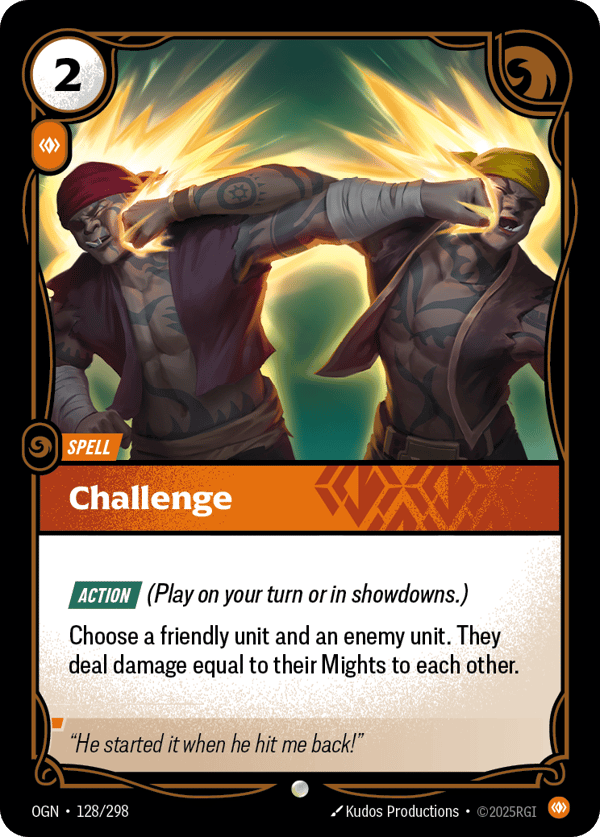
riftbound challenge

Single Game (Best of One)

  • Points to Win: 8
  • Number of Battlefields: 2
  • Battlefield Selection: Random
  • First Player Draws: Yes

Match (Best of Three)

  • Points to Win: 8
  • Number of Battlefields: 2
  • Battlefield Selection: Choose One (It can’t be selected during games 2-3)
  • First Player Draws: Yes

Multiplayer Free-for-All

A fun casual experience where sometimes the table talk influences more outcomes than the cards themselves. The rules support both three and four player variants.

In a four player free-for-all, the player going first does not present a battlefield. Aside from that, three player and four player games are the same. 

  • Points to Win: 8
  • Number of Battlefields: 3
  • Battlefield Selection: Random
  • First Player Draws: No

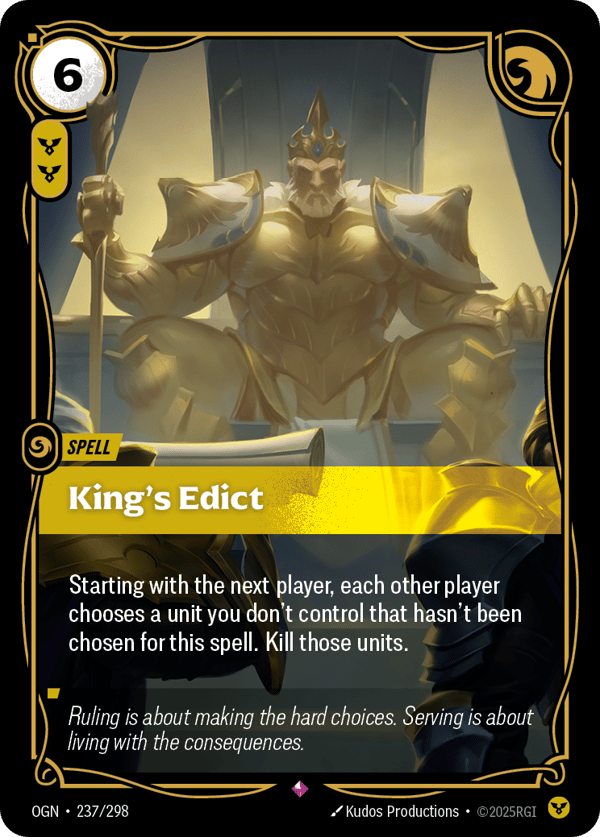
riftbound king's edict

Multiplayer 2v2

A chance for players to team up with a friend and challenge two others. It provides the unique opportunity to create combos that aren’t possible with just one deck.  

Just like four player free-for-all, the player who goes first will exclude their battlefields.

  • Points to Win: 11
  • Number of Battlefields: 3
  • Battlefield Selection: Random
  • First Player Draws: No

Limited Formats

Another popular way to play card games is by opening fresh packs and building with what you get. These are known as Limited formats, and they’re a great way to even the playing field (especially for those who have smaller collections).

We won’t cover all of the rules, but for the most part, Limited formats follow the same setup structure of a Standard 1v1 Match (though you could adapt it for multiplayer if you like).

Sealed

In Sealed, players get to open six packs to create a 25-card deck with three Domains. This enables some wild combos that are otherwise illegal under regular deckbuilding rules.

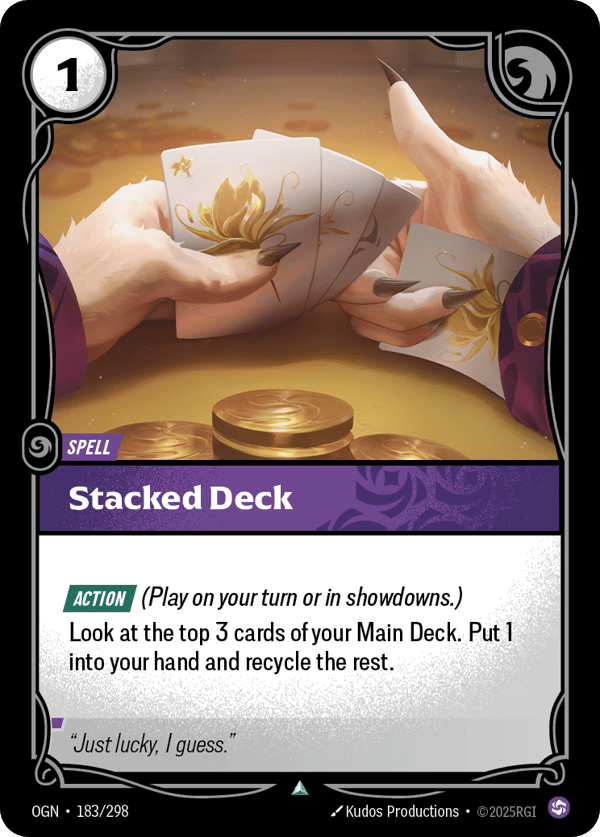
riftbound stacked deck

Draft

Draft formats are typically a more skill-based extension of Sealed. Rather than keeping every card to yourself, packs will rotate around the table as players secretly select what they want (continuing until all cards are drafted, then decks get built).

Riot has stated that they are working on a Draft format but have yet to settle on the rules. So for now, we can only assume it’ll follow a similar structure to other card games. We’ll be sure to update you with more details as they are announced.

The Standard Format (Competitive)

If you’re new to TCGs and want to explore the competitive scene, there’s a few additional things you’ll need to know. Playing across the kitchen table can be a bit different from your local game store, as there can occasionally be restrictions on what’s playable.

Note: Riftbound is still in its infancy, so there are currently no restrictions at this time.

Generally speaking, the Standard Format plays the same as a best of three 1v1 Match. As mentioned earlier, this allows more opportunities to play, helping to ensure that skill matters.

Sideboards

Beyond the regular rules of play, competitive events go one step further by allowing players to bring a sideboard.

A sideboard is a set of eight additional cards that can be exchanged with your main deck (in any number) during games two and three (they count towards the deck’s card copy limits).

It’s an important way for decks to adapt to specific matchups, and is a key strategic component when deckbuilding for an event. While they aren’t mandatory, it’d be silly not to have one.
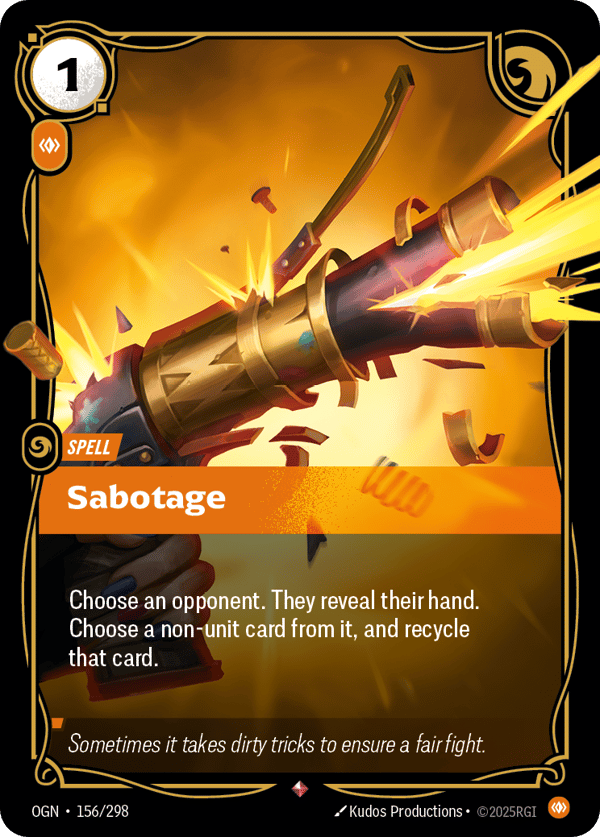
riftbound sabotage

What is a Standard Rotation?

Rotation is a tried and true method for establishing long term health in a trading card game. It’s a repeatable cycle where older sets get removed and replaced, ensuring that the experience remains fresh, and that newer cards have room to breathe.

While this may sound daunting on the surface, don’t worry, each set has plenty of time in the spotlight before it eventually retires. And even then, Riot has confirmed there will be additional formats to support our older collections.

Outside of the early days of Riftbound, between four to eight sets are to exist within Standard at a time. Once the first set is released in each calendar year, the oldest four sets will rotate out. 

Riot has already announced that the first Standard Rotation will occur at the start of 2028. This will coincide with Set 10, so we’ve got plenty of time to play before things change.

Note: The first Rotation will remove five sets, likely due to the timing of Origins’ release.

Card Legality & Bans

While formats are the driving force when it comes to card legality, it won’t be until post-Rotation that we experience its true impact. However, depending on the state of the metagame, it’s always possible for Riot to take matters into their own hands.

If a card becomes deemed unhealthy for a format, actions can be taken to remove it entirely. That said, according to Riot’s statement on bans, they are intended to be used sparingly. It’s more about correcting a detrimental problem than acting just for the sake of change.

Anyone who decides to compete, even at an LGS level, should familiarize themselves with any existing banlists (when applicable). Getting in trouble for playing an illegal decklist isn’t a fun experience, especially if there are prizes on the line. Do your part to stay informed.

Table of Contents

See More Guides

Riftbound: Intro to Playing Red (Fury)
By Mobalytics Updated on Dec 16, 2025
Beginner
Mechanics
Beginner
Mechanics
Riftbound: Intro to Playing Green (Calm)
By Mobalytics Updated on Dec 16, 2025
Beginner
Mechanics
Beginner
Mechanics
Riftbound: Intro to Playing Blue (Mind)
By Mobalytics Updated on Dec 16, 2025
Beginner
Mechanics
Beginner
Mechanics
Riftbound: Intro to Playing Orange (Body)
By Mobalytics Updated on Dec 16, 2025
Beginner
Mechanics
Beginner
Mechanics