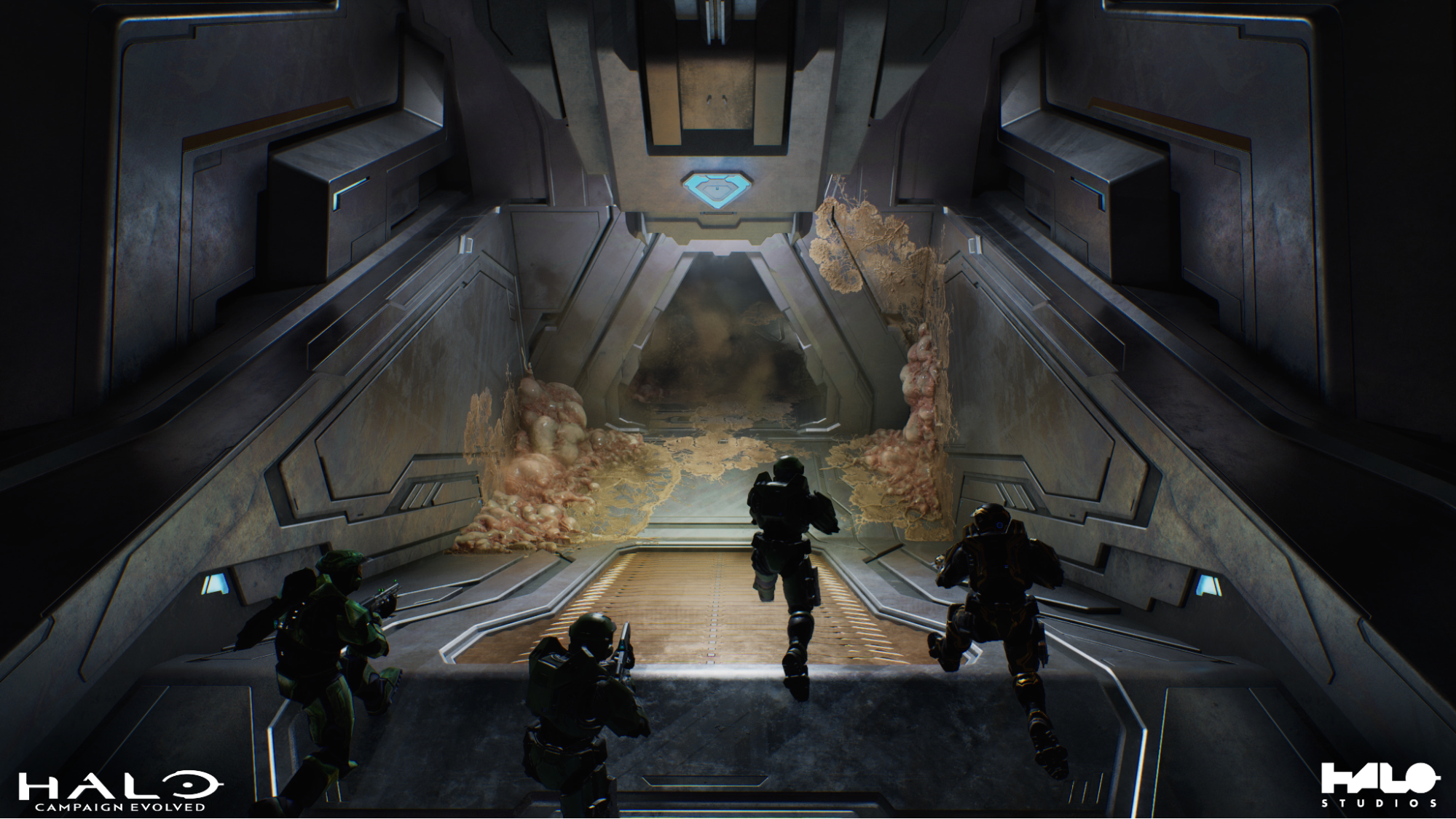
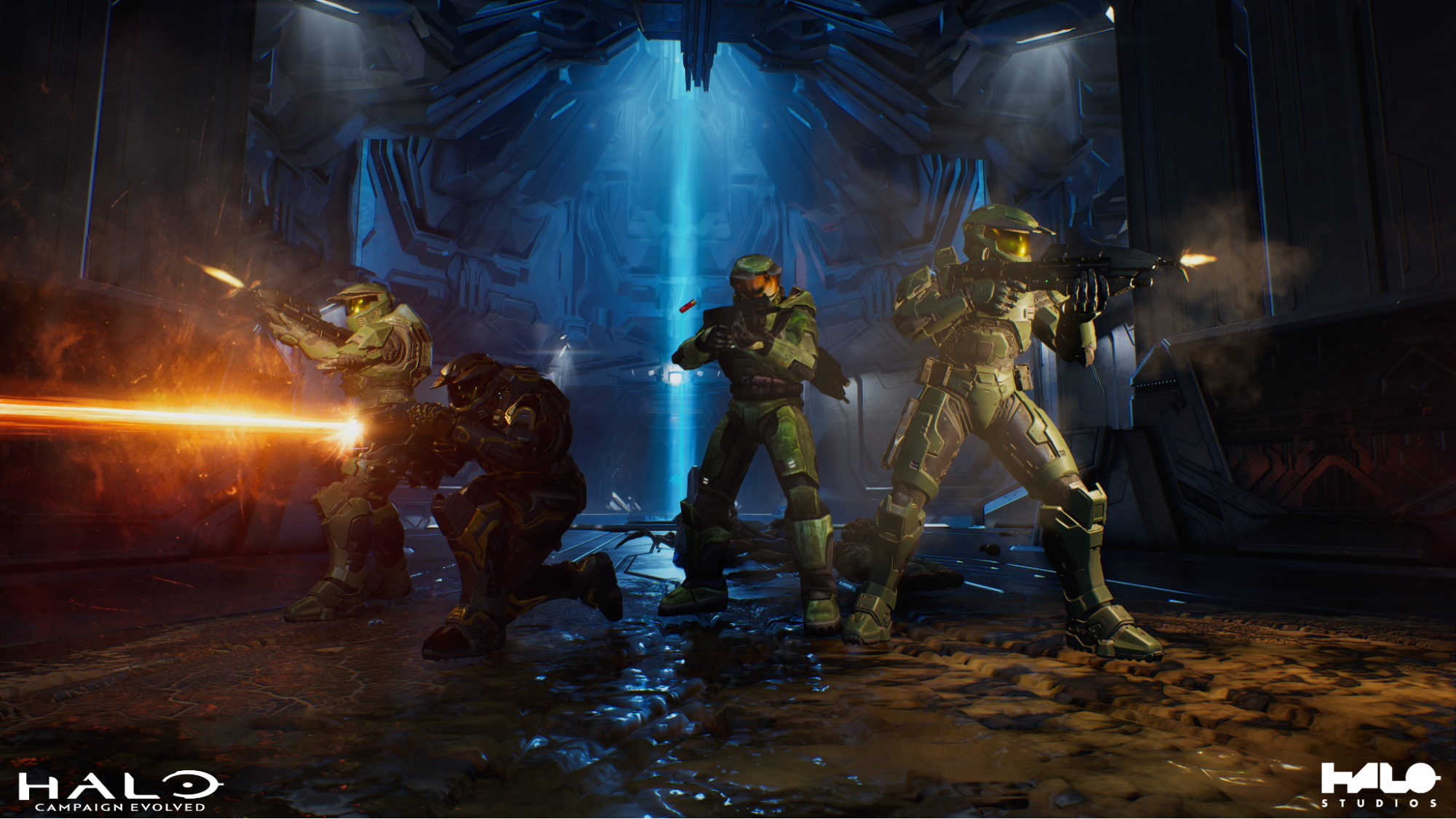
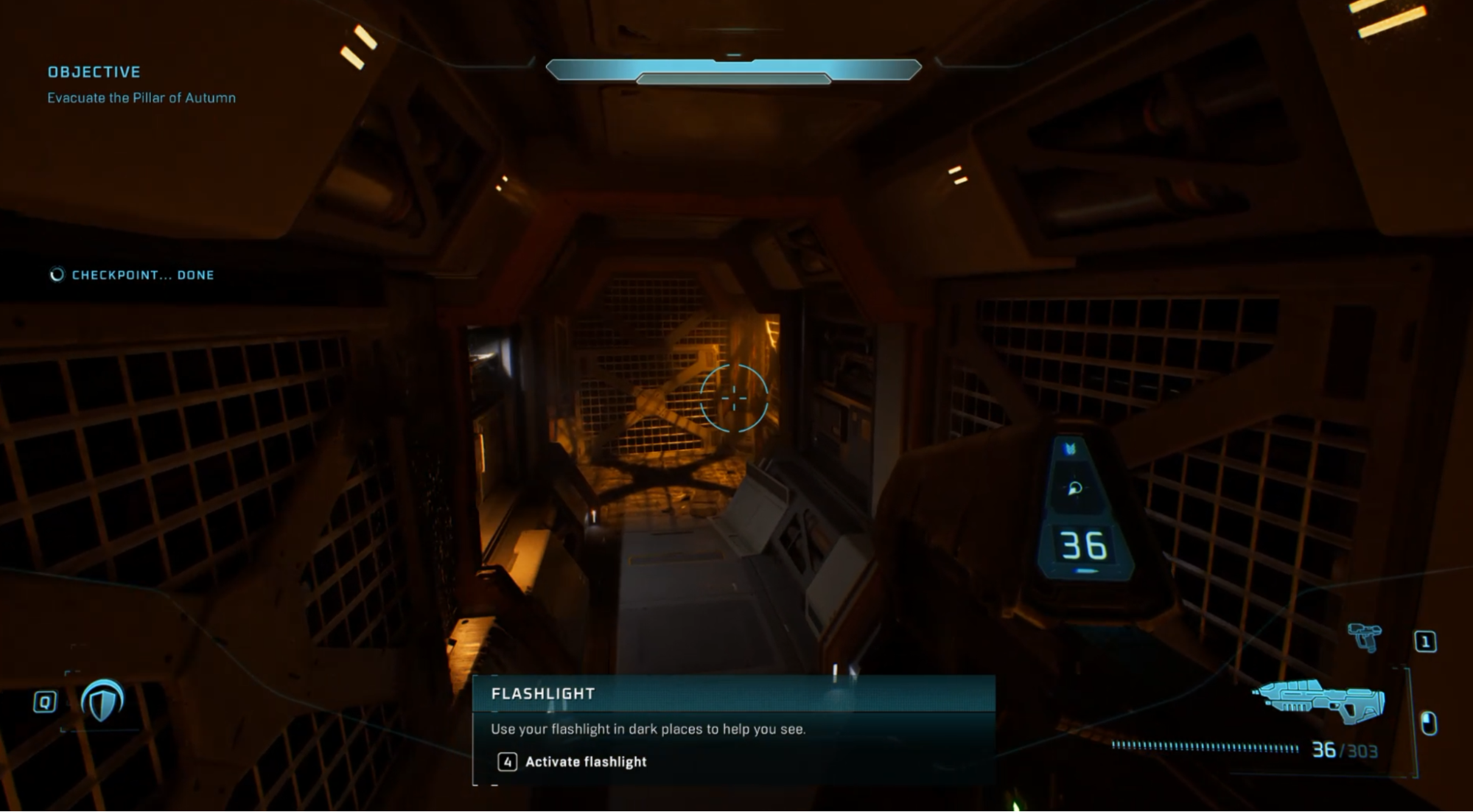
Halo: Campaign Evolved arrives from Halo Studios, with guidance from several former Bungie developers, and its extended development period reflects the challenge of modernizing systems that originated more than twenty years ago. Instead of simply polishing old assets, the team rebuilt mission logic, encounter scripting, and animation behavior that were never designed for contemporary hardware, resulting in a campaign that feels like a hybrid of reinterpretation and restoration.
The three new prequel missions give the story a sturdier foundation, adding context that helps the early game feel more deliberate and grounded. These additions don’t merely stretch the runtime, they introduce motivations and world‑building details that allow the narrative to settle before the familiar conflict begins.
This version leans into tactical combat, expanded storytelling, and a brighter, more futuristic aesthetic that intentionally contrasts the original’s moody atmosphere. Tutorials, UI improvements, and four‑player co‑op make the campaign more approachable, especially for players who may not have nostalgia for the original’s pacing or visual identity.
Even when certain elements don’t fully land, the intent behind the redesign is unmistakable, and it’s clear the team aimed to evolve a classic into something more modern, albeit with drawbacks. Halo: Campaign Evolved feels like a thoughtful attempt to revisit a foundational entry, with modern sensibilities, while still acknowledging its roots, but unfortunately not landing every change it makes.
Our review for Halo: Campaign Evolved was conducted with the PC version on Steam.
Highs
Expanded Storytelling That Adds Real Weight
The new cutscenes and prequel missions enrich the world with details that previously lived only in supplementary lore or fan speculation. Characters who once felt like functional pieces of the plot now have clearer motivations, giving the campaign a stronger emotional backbone.
The pacing benefits from this added context, as the story no longer rushes players into conflict without establishing the stakes. These early segments create a sense of buildup that helps the rest of the campaign feel more intentional and better structured.
Even though the narrative remains straightforward, the additional connective tissue between missions gives the campaign a more polished rhythm. Transitions feel smoother, and the story’s tone gains a sense of consistency that wasn’t present in earlier versions.
This expanded approach respects the franchise’s history while acknowledging that modern players expect richer storytelling. It elevates the campaign beyond a simple nostalgia project and gives Halo’s early era a renewed sense of identity.
Tactical Combat That Changes How You Play
Combat has been reshaped to emphasize positioning, timing, and deliberate ability usage rather than pure forward momentum. The lower TTK encourages players to think more carefully about how they approach encounters, creating a more methodical pace.
Manually activated powerups introduce a layer of strategy that wasn’t present before, turning previously passive bonuses into tools that reward thoughtful play. This shift makes each fight feel more controlled and gives players more agency over how they handle threats.
Co‑op amplifies this tactical direction by encouraging players to coordinate their abilities, spacing, and timing in a way that gives each encounter a more deliberate rhythm. When teams sync powerups, manage positioning, and communicate during tougher fights, the combat gains a level of strategy that simply isn’t present in solo play.
The lower TTK reinforces this, making coordinated movement and timing feel genuinely rewarding rather than optional. Even with some dated animations, the combat has a satisfying cadence that keeps encounters engaging and varied.
These changes refresh the gameplay without abandoning Halo’s identity, striking a balance between modern design and classic feel. It’s a meaningful evolution that adds depth without overwhelming players who prefer a simpler approach.
Modern Touches That Improve Accessibility
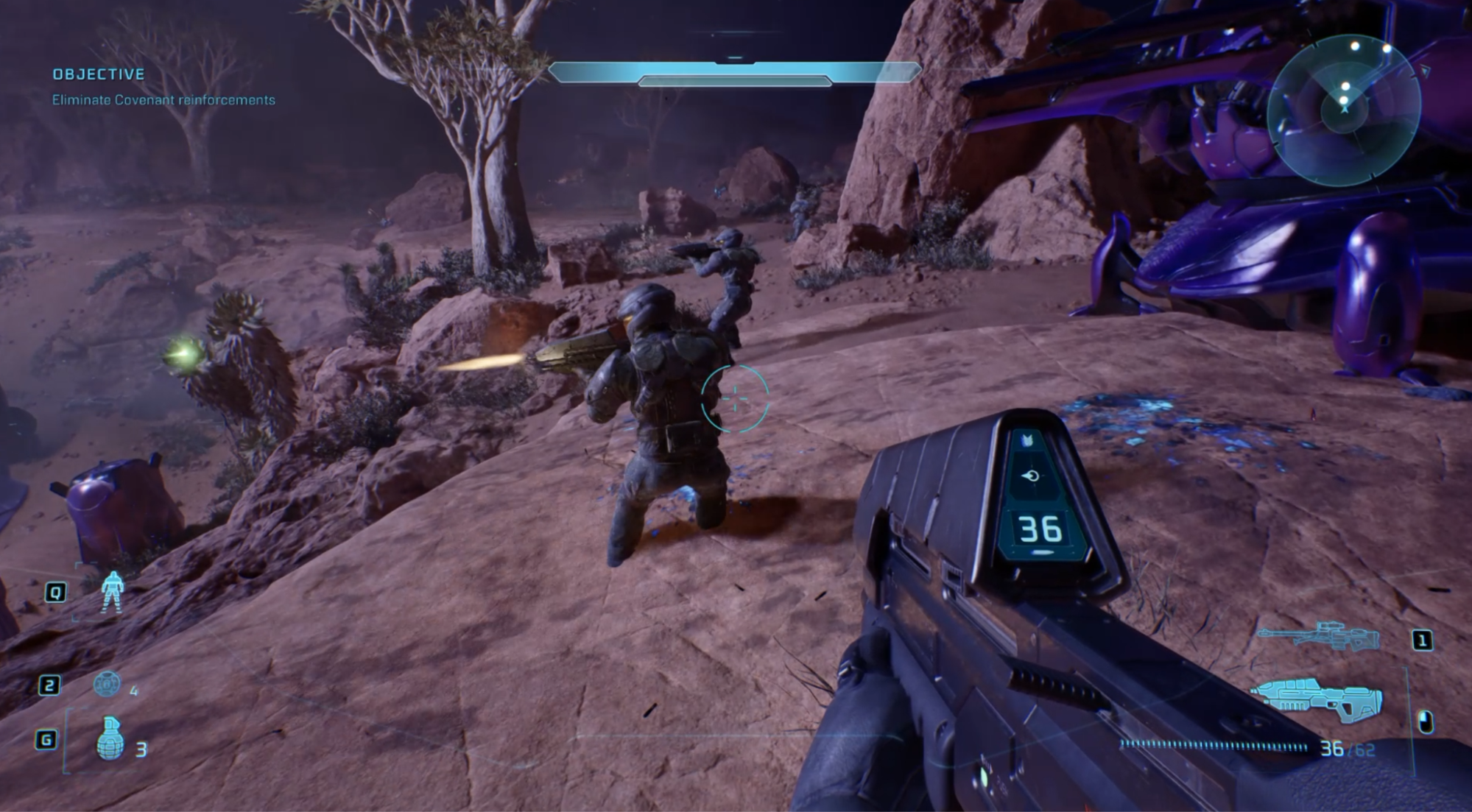
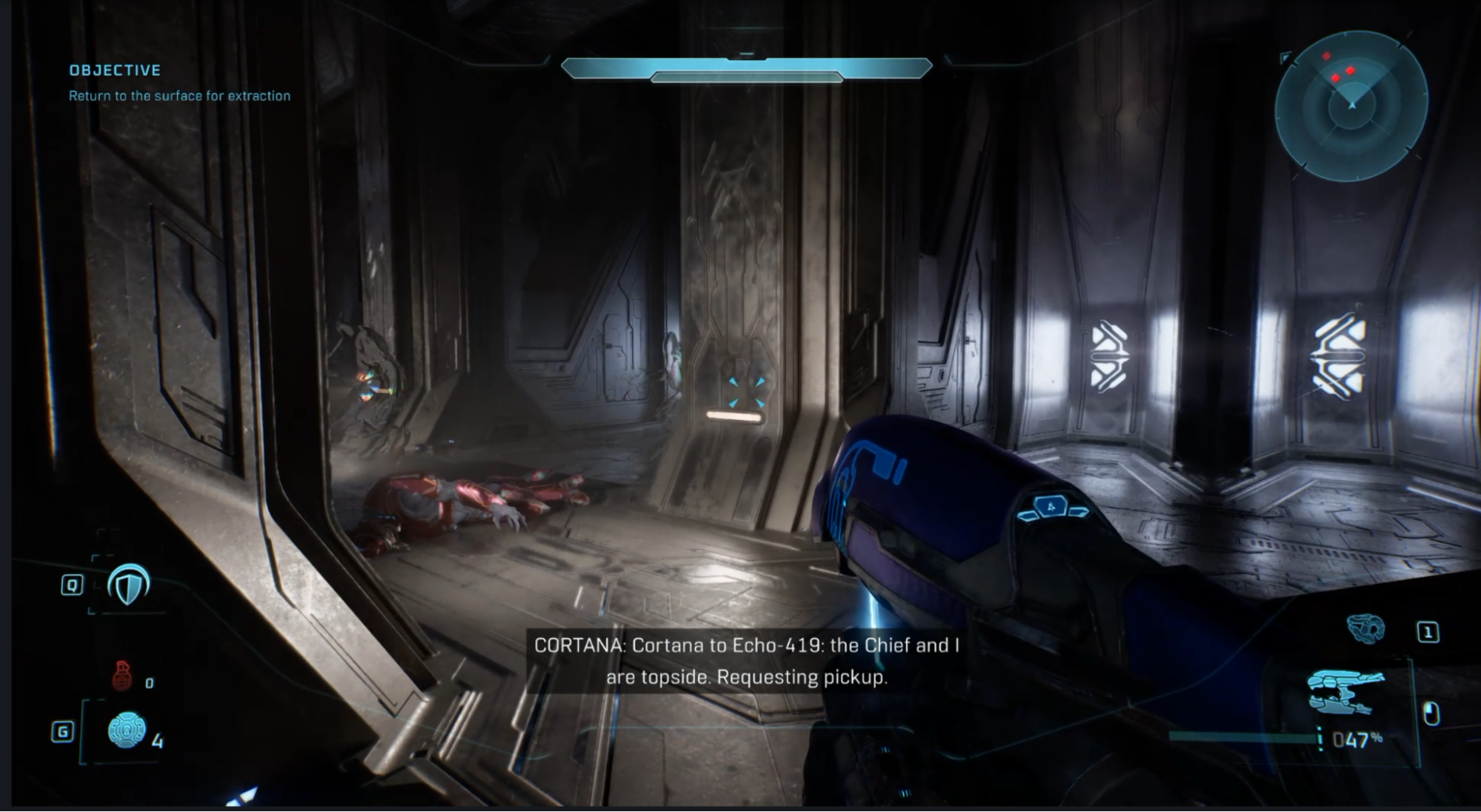
The updated UI, clearer tutorials, and streamlined mission flow make the campaign easier to understand and navigate. These adjustments help new players settle in quickly while giving returning fans a smoother experience.
Markers and on‑screen prompts keep you oriented at all times, ensuring you never lose track of where to go or what the mission expects from you. They’re helpful, but they’re also ever‑present, and it would’ve been a welcome option to be asked to toggle them on at the start of the game, for players who prefer a more old‑school, discovery‑driven experience. As such, many players won't know the option to turn this off is hidden within the settings.
The reduced price makes the campaign more appealing, especially for players who want a shorter, more approachable experience. The pacing remains tight, and the campaign moves briskly without feeling rushed.
Four‑player co‑op adds replay value and brings back the social energy that defined early Halo campaigns. It encourages experimentation, teamwork, and revisiting missions with different strategies, giving the game a sense of longevity despite its compact structure.
Lows
Legacy Issues That Shouldn’t Still Exist
Enemy behavior remains inconsistent, with AI that can feel unaware or erratic in ways reminiscent of early‑2000s design. These moments break tension and make certain encounters feel less dynamic than they should.
During the third mission, The Truth and Reconciliation, I died numerous times from how braindead my AI comrades are. I restarted the same checkpoint three or more times, as they kept lobbing grenades near the vehicle turrets after ascending the grav lift, creating a cascading explosion that killed me.
On top of that, I was boxed in twice by my AI, allowing the Covenant to dispatch me effortlessly with their Plasma Swords. They can also shove you off platforms, leading you to fall to your death or have to spend time walking back to where you were. My AI was now a new obstacle I had to overcome, and I learned to stay as far away from them as possible to ensure my survival.
Animations show their age, especially during combat transitions and facial expressions. These visual shortcomings stand out more because other parts of the game have been modernized, creating uneven presentation across the campaign.
Several long‑standing bugs return, reminding players of the game’s origins in ways that aren’t always charming. Teammates and enemies alike can clip through the floor, or try to shoot each other through walls. These issues can interrupt the flow of missions and make the experience feel less polished than expected.
Voice sync occasionally lags behind dialogue, creating awkward pauses during scenes meant to carry emotional weight. It’s a noticeable flaw in a campaign that leans heavily on new story content.
Together, these lingering technical problems make the campaign feel like it’s still carrying baggage from an older era, preventing the experience from ever feeling fully modern or confidently rebuilt.
Missing Features That Hurt the Experience
The absence of multiplayer is a significant omission for a Halo release, leaving the package feeling incomplete even with co‑op included. It reduces long‑term engagement and removes a pillar of the franchise’s identity. For a first-time installment of PlayStation hardware, having Multiplayer would’ve been a slam dunk in bringing these two ecosystems together.
Requiring a Microsoft Account on all platforms introduces an unnecessary hurdle for players who simply want to jump into the campaign. It’s a modern requirement that feels out of place in a retro‑inspired experience, especially when there is no Multiplayer component.
Certain control options feel outdated, such as the lack of hold‑to‑sprint, and the hold-to-aim doesn’t function as it should. These limitations make the game feel less fluid than modern shooters and can be jarring for players accustomed to contemporary control schemes.
Even the tracker displays pinpoint enemy locations without offering a radar. As such, any tension from hiding or cloaked enemies instantly evaporates, as you can effortlessly locate enemies and get the drop on them first. These changes reduce situational awareness and make encounters feel less intuitive.
The campaign’s lower difficulty may disappoint players seeking a challenge, especially veterans who associate Halo with demanding combat scenarios. Even on higher settings, the game feels noticeably easier than earlier entries. I started the game on Normal Difficulty and swapped to Heroic during the opening sequence, as enemies died much faster compared to the original.
The absence of these core systems leaves the campaign feeling like a streamlined version of Halo rather than a fully modernized one, creating a noticeable gap between what longtime fans expect and what this package actually delivers.
Aesthetic and Structural Choices That Don’t Always Work
Just like in the Anniversary Edition, the bright, hyper‑lit environments dramatically change the tone of the campaign, stripping away the tension and unease that once defined Halo’s darker corridors and shadowy outdoor spaces, and again rendering the flashlight mechanic useless. I felt I was traversing around a Covenant Battle Cruiser, rather than an ancient, religious structure.
With everything clearly visible at all times, the sense of dread that used to creep in during quiet stretches is almost entirely gone, making the world feel safer and less atmospheric than it should.
Although the campaign technically includes more missions and cutscenes, the faster TTK causes encounters to evaporate almost instantly, which shortens the practical experience. Fights that once unfolded with a slow escalation now end before they can build momentum, creating the impression that missions wrap up sooner than intended despite the added content.
Several newly introduced characters clash with the tone of the campaign, often coming across as abrasive or oddly placed within the narrative. Their personalities don’t mesh well with the established cast, and their presence can create a sense of pushback from players who find their behavior grating or out of sync with Halo’s usual character dynamics.
On top of that, I have noticed the Covenant always speak English, and haven’t heard them speak Sangheili through my entire playthrough, creating a lack of immersion that previous entries once sought.
Character faces have been redesigned, but the new models sit deep in the uncanny valley, with expressions and proportions that feel noticeably off compared to their predecessors. This creates an unsettling effect during cutscenes, where familiar characters look almost, but not quite, like themselves, making emotional moments harder to connect with.
Some of the original cutscenes created specifically for this version don’t match Halo’s established tone or humor, leaning into exaggerated reactions and comedic beats that feel more like something out of Borderlands. These scenes stand out sharply against the rest of the campaign and can pull players out of the experience because they don’t align with the series’ usual style.
Altogether, these aesthetic and structural choices give the campaign a tone that often feels at odds with Halo’s identity, creating moments that feel less natural and more experimental than the rest of the package can comfortably support.
Our Score
7/10 (Decent, But Not Definitive)
Halo: Campaign Evolved is a bold attempt to revisit a foundational campaign with modern sensibilities, and the expanded story, clearer tutorials, and co‑op support give it a stronger sense of structure than earlier versions ever had. The added missions and cutscenes help flesh out the world in meaningful ways, and the tactical combat changes introduce a more deliberate rhythm that will appeal to players who enjoy planning their engagements rather than sprinting through them.
At the same time, the campaign’s new direction comes with noticeable drawbacks. The faster TTK shortens encounters so dramatically that missions often feel like they end before their ideas fully develop, creating an experience that feels compressed even though the game technically contains more content. The bright environments remove much of the tension and atmosphere that once defined Halo’s quieter moments, and several newly introduced characters feel out of place, creating a tonal mismatch that can push players away rather than draw them in.
Visual presentation also struggles to maintain consistency. The redesigned faces sit deep in the uncanny valley, making familiar characters look strangely unfamiliar, and several new cutscenes lean into exaggerated humor that feels closer to Borderlands than Halo. These choices give the campaign an uneven identity, as if it’s caught between honoring its origins and experimenting with a style that doesn’t quite fit.
Even though this release comes at a reduced price, it’s difficult to recommend it over the Master Chief Collection, which is cheaper, includes multiple full campaigns, offers multiplayer, and lets you revisit the original graphics with a single button press. MCC simply delivers far more value, content, and authenticity than this reinterpretation can match.
While the game is still a lot of fun, it’s tough to recommend it when better versions of the game exist for better prices, and a much different conversation would be had if only the original Combat Evolved and this reiteration were available. But that isn’t the case.
As such, the end result is a campaign that might be worth playing for some fans, even if it doesn’t fully capture the magic of the original. While this is the only way to experience Halo for PlayStation players, PC and Xbox players should stick to the Master Chief Collection for now.
Reviewed by Jack Briggs (originally published July 27, 2026)