Release Date: April 29, 2026 (April 27 with Deluxe version)
Platform: PlayStation 5
Developer: Housemarque
Publisher: Sony Interactive Entertainment
In the five years since Returnal (2021) established Housemarque as one of PlayStation’s most technically ambitious studios, anticipation for the team’s next project has steadily intensified. Saros, the studio’s newest PS5 exclusive, arrives with the weight of expectation, a follow‑up not only to a critically acclaimed title, but to a game that redefined what a first‑party roguelite could look and feel like on modern hardware.
Housemarque isn’t attempting to reinvent its formula so much as refine it, by sharpening its combat, deepening its atmosphere, and expanding its narrative ambitions while maintaining the studio’s unmistakable identity.
What makes Saros particularly compelling is the clarity of its creative intent. Rather than chasing broader accessibility or abandoning its bullet‑hell roots, Housemarque appears focused on elevating the elements that made Returnal distinctive: high‑velocity combat, oppressive sci‑fi worldbuilding, and a structure built around repetition and mastery.
The result is a game that feels confident in its direction, one that understands its audience and aims to deliver a more polished, more cohesive expression of the studio’s strengths.
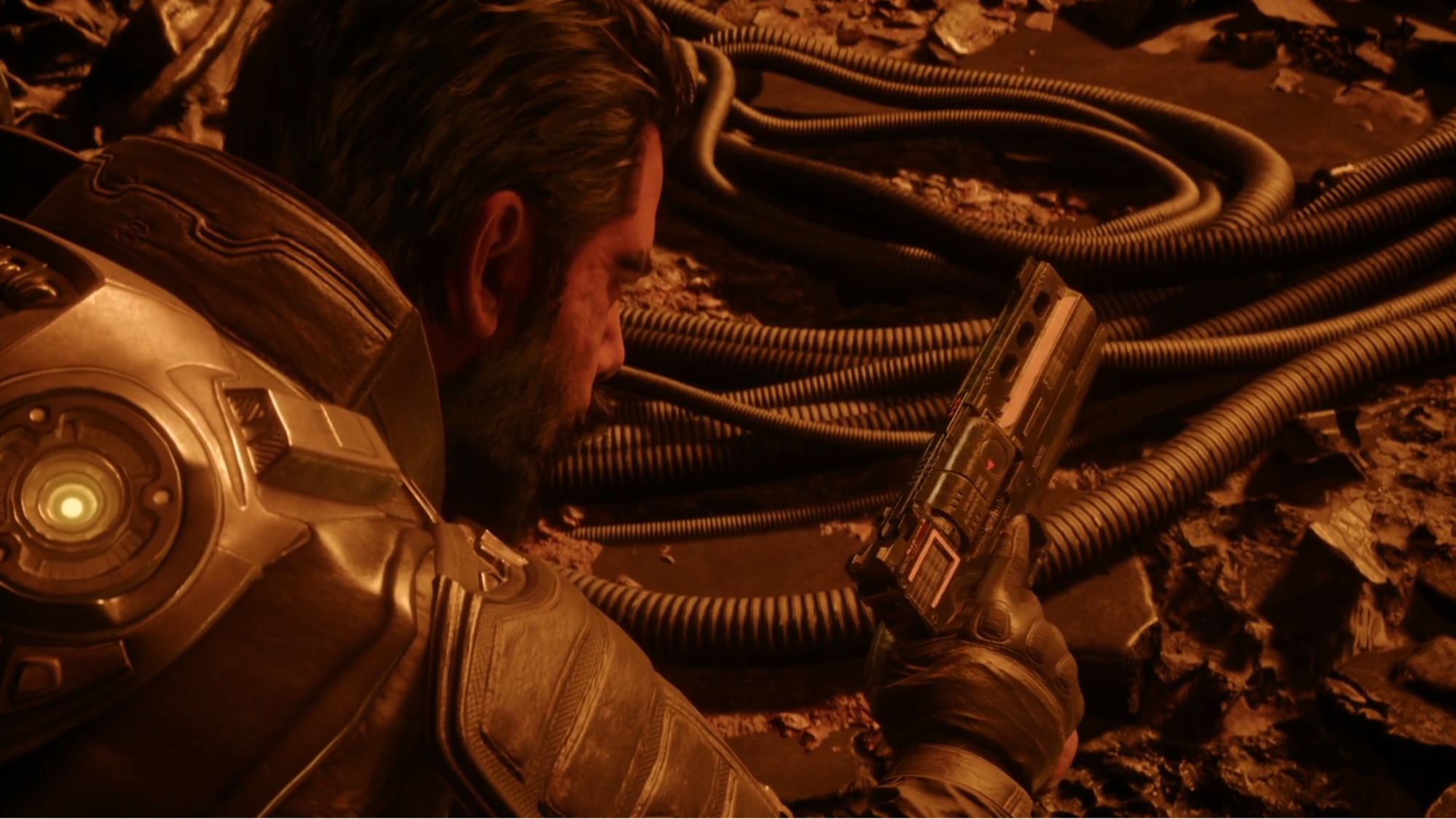
Housemarque’s Saros positions itself as the studio’s next major evolution after Returnal, once again blending atmospheric sci‑fi, psychological tension, and high‑intensity action. The game follows Arjun Devraj, a Solari Enforcer sent to investigate a missing off‑world colony on the planet Carcosa, a world locked in a recurring cycle of a solar eclipse.
The narrative is delivered through a mixture of environmental storytelling, holographic echoes of the colony’s final days, and Arjun’s own internal reflections as he navigates the ruins.
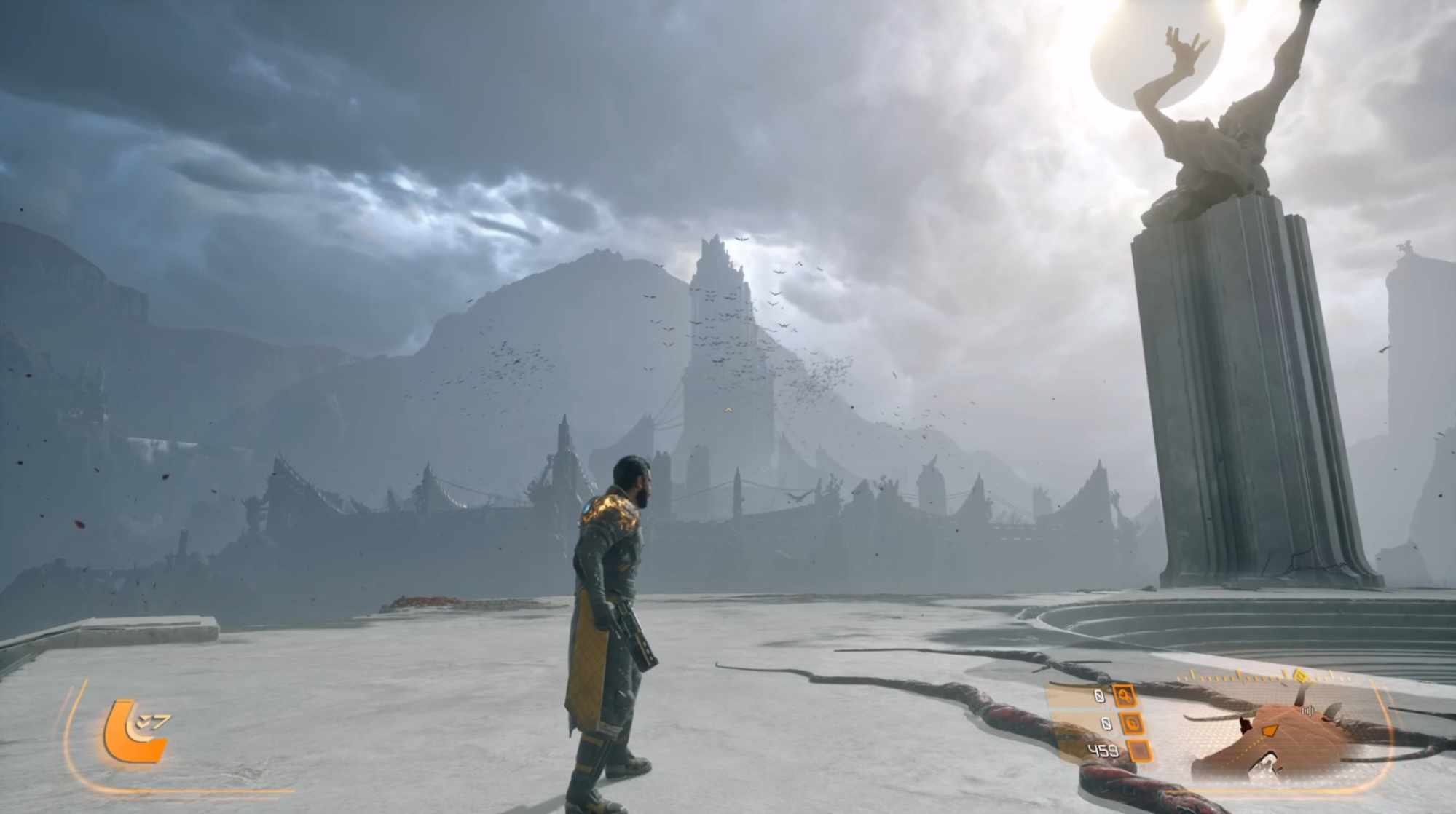
The opening hours establish a bleak, oppressive tone. Carcosa is a world in decay, its architecture swallowed by alien growth and its inhabitants long vanished. Housemarque emphasizes that the story is not linear but fragmented, encouraging players to piece together what happened through exploration and repeated runs.
In the five years since Returnal (2021) established Housemarque as one of PlayStation’s most technically ambitious studios, anticipation for the team’s next project has steadily intensified. Saros, the studio’s newest PS5 exclusive, arrives with the weight of expectation, a follow‑up not only to a critically acclaimed title, but to a game that redefined what a first‑party roguelite could look and feel like on modern hardware.
Our review for Saros was conducted with the PlayStation 5 version.
Highs
Combat: Bullet-Hell Elegance in Third-Person Form
Saros shows Housemarque at its most technically confident, translating the studio’s arcade-driven intensity into sharp, modern third-person combat. Encounters feel precise and responsive, with dense projectile patterns, tight i-frame windows with the Dash ability, and a parry system that rewards perfectly timed counters with massive damage dealers. It’s a move set that becomes instinctive almost immediately, letting players slip into a muscle-memory style rhythm rather than consciously managing inputs.
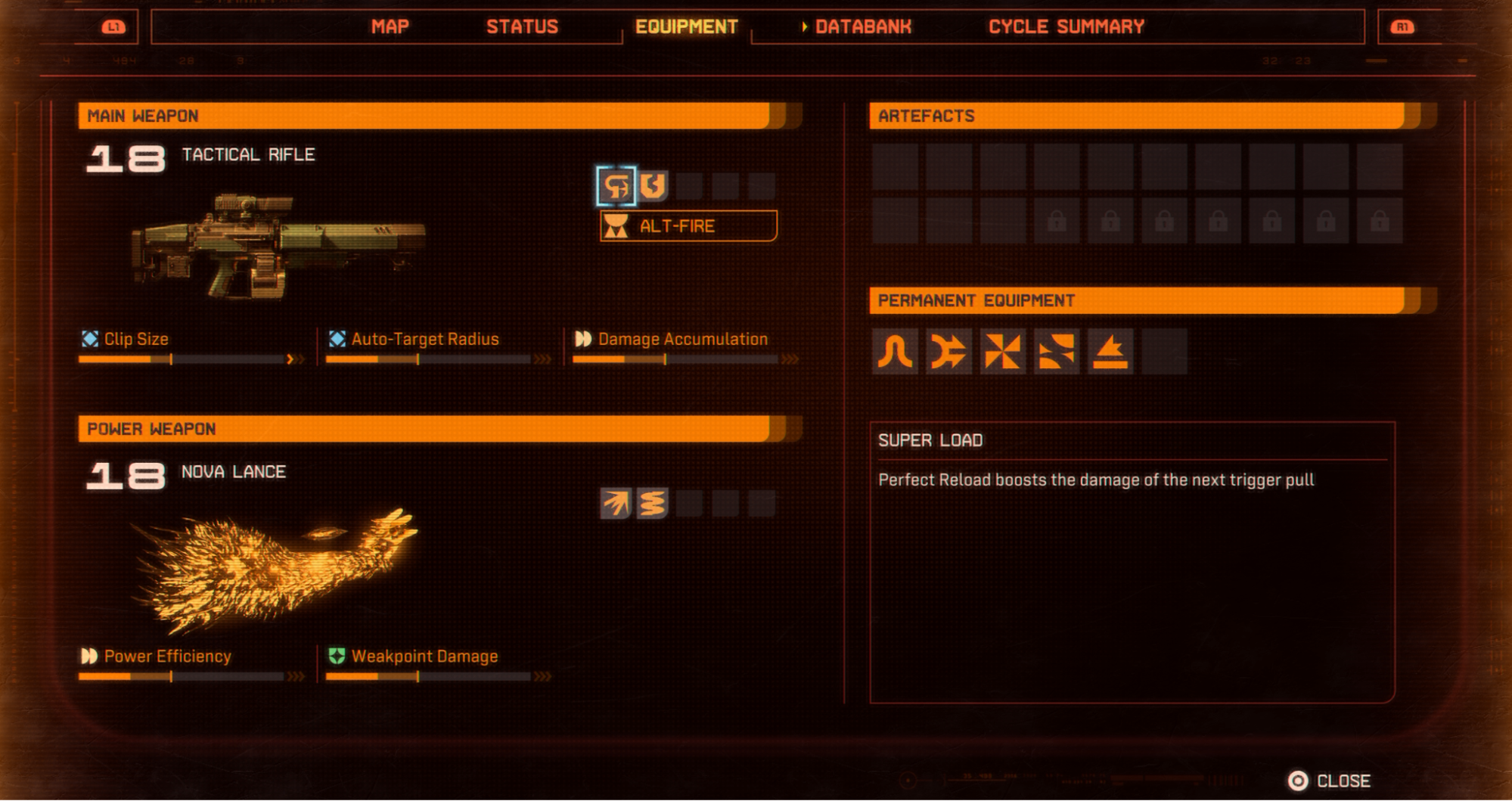
Arjun’s hybrid arsenal strengthens the flow of combat, blending Solari weaponry with Carcosan tech to create varied firing styles and alt fire synergies. Each weapon and tool has a clear mechanical identity, with charged beam shots that pierce armor, ricocheting plasma bursts for crowd control, and mobility focused abilities that charge offensive powers when used aggressively. The system lets players shift quickly between damage, control, and repositioning without ever losing momentum.
Despite the visual chaos, Housemarque keeps every cue readable through smart color coding, animation timing, and clear telegraphs. Bosses in particular showcase this mastery with their multi‑phase patterns escalating in complexity without ever feeling unfair, giving players just enough information to adapt without deflating the challenge.
Even when the screen fills with bullet‑hell patterns, the fights feel demanding rather than punishing, and each victory lands with the satisfaction of earned mastery. When dying in an encounter, I never once felt frustrated at the game's mechanics or difficulty, but due to my own skill, thus learning from my mistakes and succeeding in the following attempt.
Normal enemies, by contrast, lean more heavily on familiar attack loops and repeated archetypes, creating a sense of repetition during extended runs. Housemarque’s clarity of design keeps them engaging moment to moment, but their patterns become predictable long before the bosses do. There’s more to unpack there later, especially in how it affects pacing across biomes.
What ultimately stands out is how consistently Saros maintains its momentum. The game pushes players to stay aggressive, using its mechanics to reward initiative rather than caution, and the result is an experience that feels both empowering and demanding. It’s a confident refinement of Housemarque’s signature style and one of the generation’s standout action offerings.
Technical Performance: Harnessing the PS5’s Full Potential
Housemarque remains one of Sony’s most technically proficient studios, and Saros shows exactly why. The game takes full advantage of the PS5’s hardware, delivering fast loading between runs, high‑resolution visuals packed with particle effects, and nuanced DualSense haptics that distinguish both weapons and environmental feedback.
Even subtle sensations, like the granular rumble of Carcosan sand shifting underfoot or the sharp, metallic kick of a Solari rifle, are mapped with impressive precision. Adaptive trigger resistance adds another layer of tactility, especially during alt‑fire attacks that tighten or loosen based on charge level, giving each weapon a distinct physical identity.
Ray‑traced reflections and global illumination deepen the atmosphere, with Carcosa’s eclipse‑lit surfaces catching light in ways that make its alien architecture feel oppressive and alive.
Gameplay maintains a smooth framerate on the PS5 Pro, though on my PS5 Slim it occasionally dips during heavy particle storms or multi‑enemy encounters. These drops aren’t severe, but they’re noticeable and last long enough to break the otherwise seamless flow during the most chaotic fights, most notably during the boss fights.
While cinematics and some dialogue exchanges are capped at 30fps, the core action stays fluid and visually striking. The contrast between the slower, filmic cutscenes and the high‑velocity gameplay sometimes helps the pacing feel more deliberate, and the pre-rendered cutscenes still look breathtaking regardless.
The new environmental rendering techniques also deserve mention, particularly the way ray‑traced shadows shift dynamically during boss encounters. Light sources flicker, distort, and react to attacks in ways that subtly telegraph danger while enhancing the sense of scale.
The result is a technical showcase that reinforces Housemarque’s reputation for polish and sensory detail. Saros doesn’t just run well, it feels engineered around the PS5’s strengths, using every tool available to elevate its combat, atmosphere, and moment‑to‑moment intensity.
Difficulty & Progression: Mastery on Your Terms
Saros builds on the foundation Returnal established, refining its high velocity combat into something sharper, cleaner, and more immediately readable. Movement feels more deliberate, with tighter dodge dash windows and clearer projectile patterns that reward precision rather than panic. It is unmistakably Housemarque, but with a confidence that comes from iterating on a proven formula.
The game’s difficulty curve reflects that same refinement. Early runs are demanding but never discouraging, teaching players how to read enemy telegraphs and manage cooldowns without overwhelming them. Each biome introduces new threats at a pace that feels challenging yet controlled.
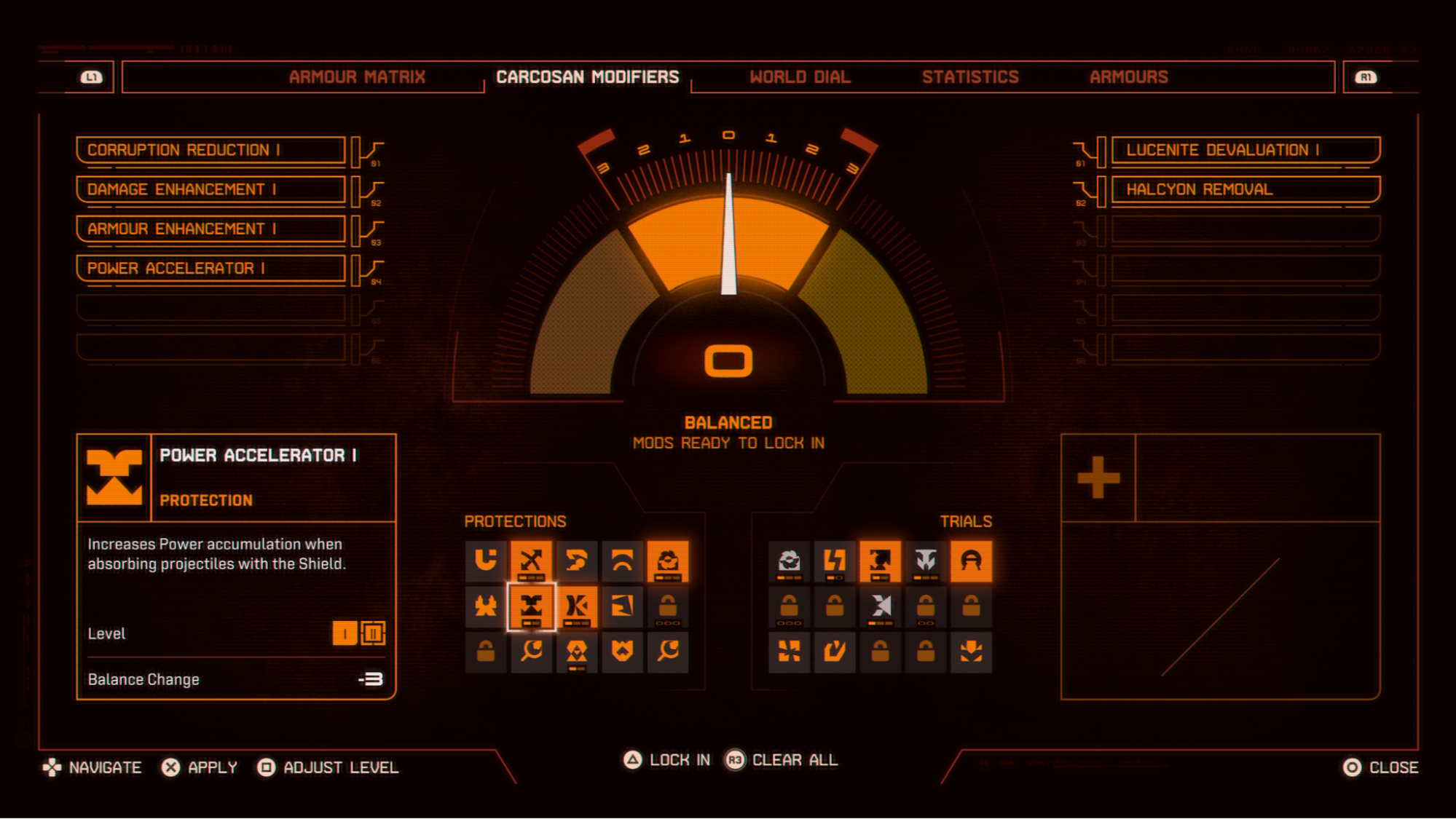
Where Saros stands out is in its approach to difficulty tuning. Instead of relying on static modes, the game uses a dynamic World Balance system that adjusts the experience based on player performance and chosen "Carcosan Modifiers". It is a flexible framework that respects both mastery and accessibility.
This system includes options to deal more and take less damage, boost resource drops, and allow your shield to last longer. They must be paired with modifiers that make the game harder, such as taking more damage or reducing upgrade materials. If your skill tree was maxed out, you could remove skill tree resource drops entirely and instead improve shield efficiency, making boss runs easier without removing the challenge.
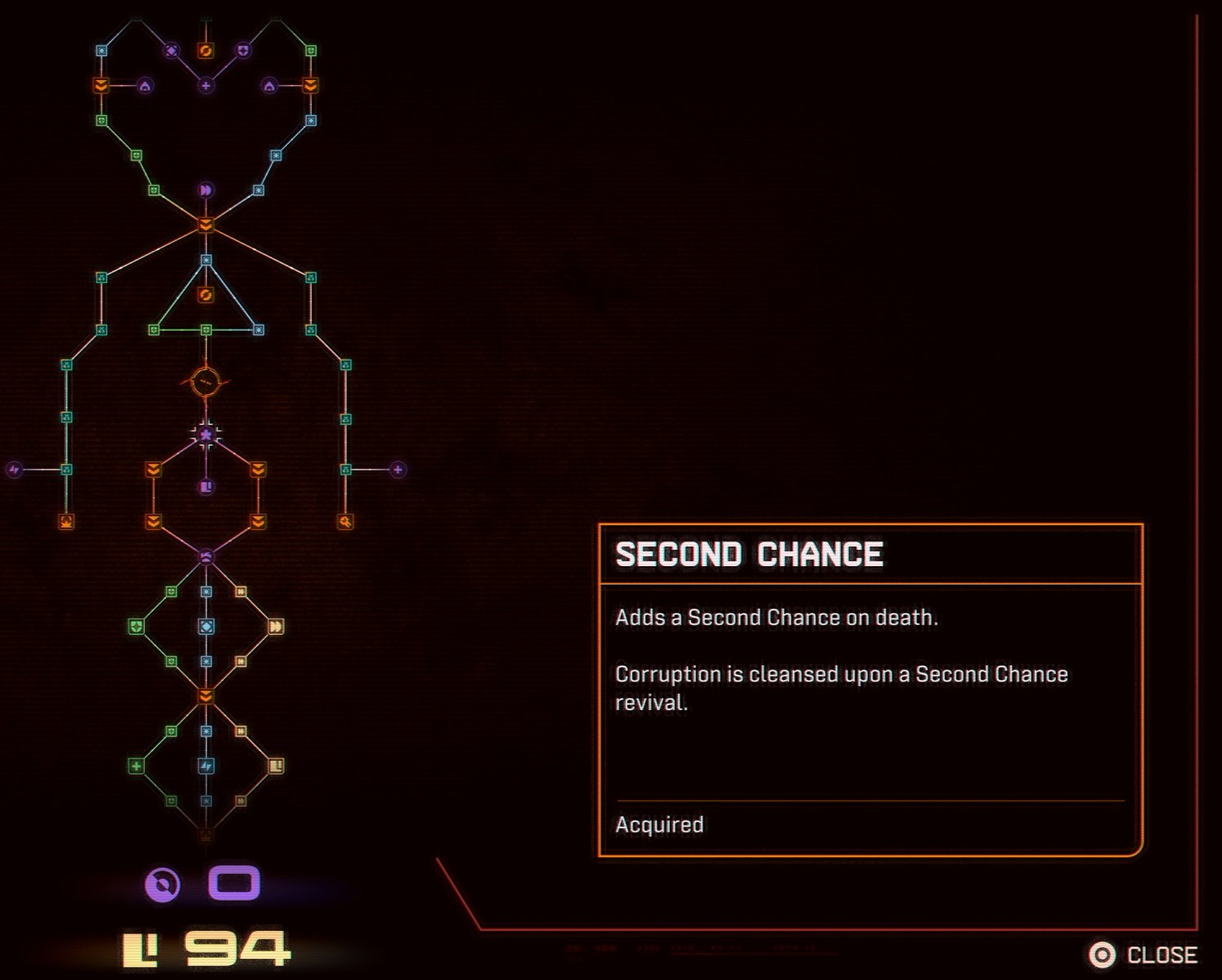
The skill tree itself adds another layer of long-term progression, giving each run a sense of momentum even when it ends abruptly. While few skills add new mechanics, they generally increase your player health and power, while refining existing skills such as increasing parry damage or granting extra health when using Second Chance. Resources drop at a high rate, especially with the Eclipse modifier, so runs never feel wasted and I always unlocked at least one or two nodes.
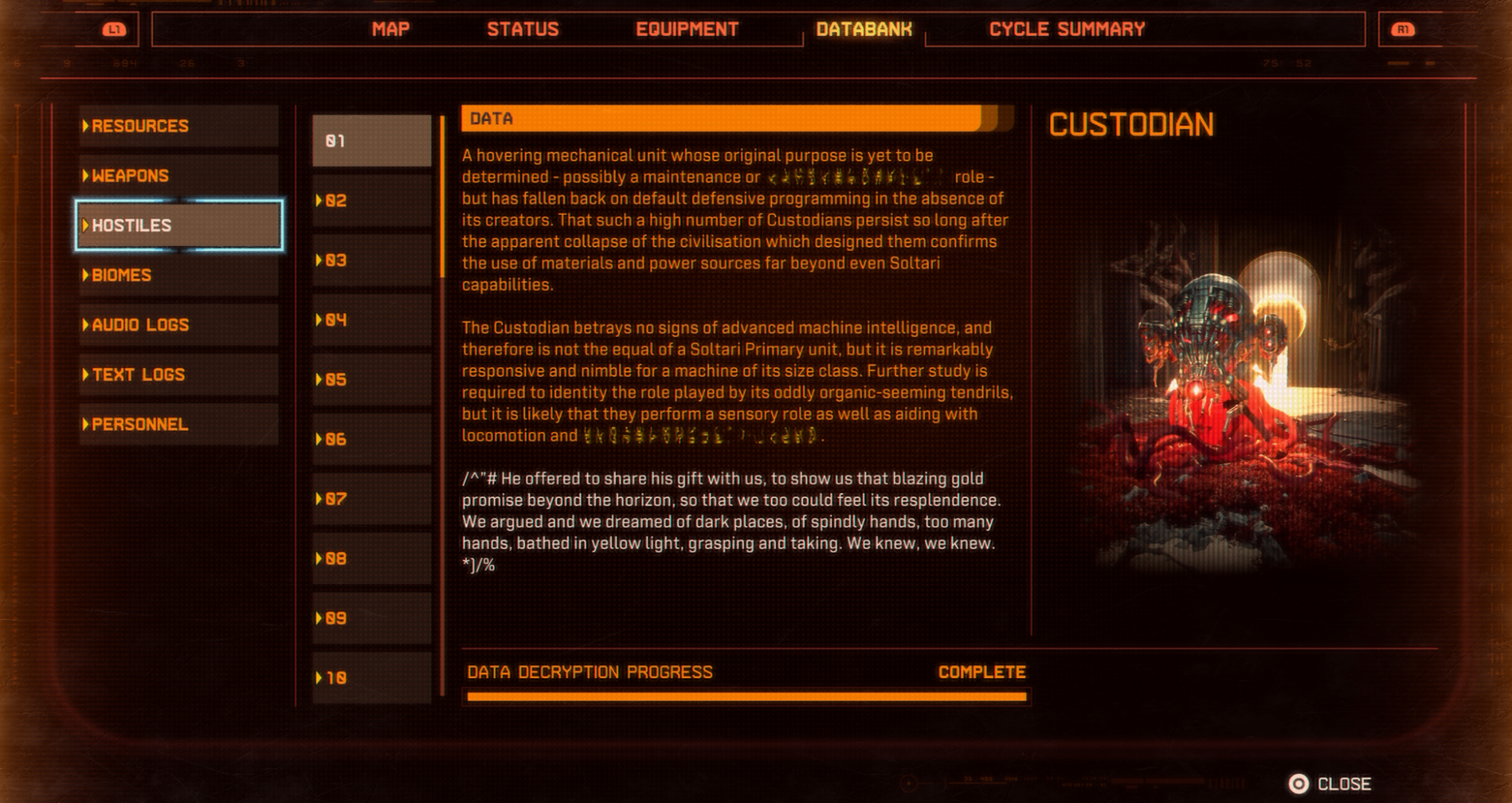
This progression ties neatly into the Eclipse mechanic, a risk reward modifier that overlays each biome with harsher enemy variants and more aggressive AI patterns. Under an Eclipse, foes hit harder, move faster, and gain new projectile combinations, but they also drop far more resources. In conjunction, new areas and combat arenas will open, granting higher tier resources, artefacts, and new Databank Entries.
None of these systems disrupt Saros’s momentum and pushes the game even more into the roguelite genre in areas that Returnal didn't. The game maintains its emphasis on aggression while giving players meaningful control over how that intensity manifests.
Lows
Story & Atmosphere: Told in Fragments
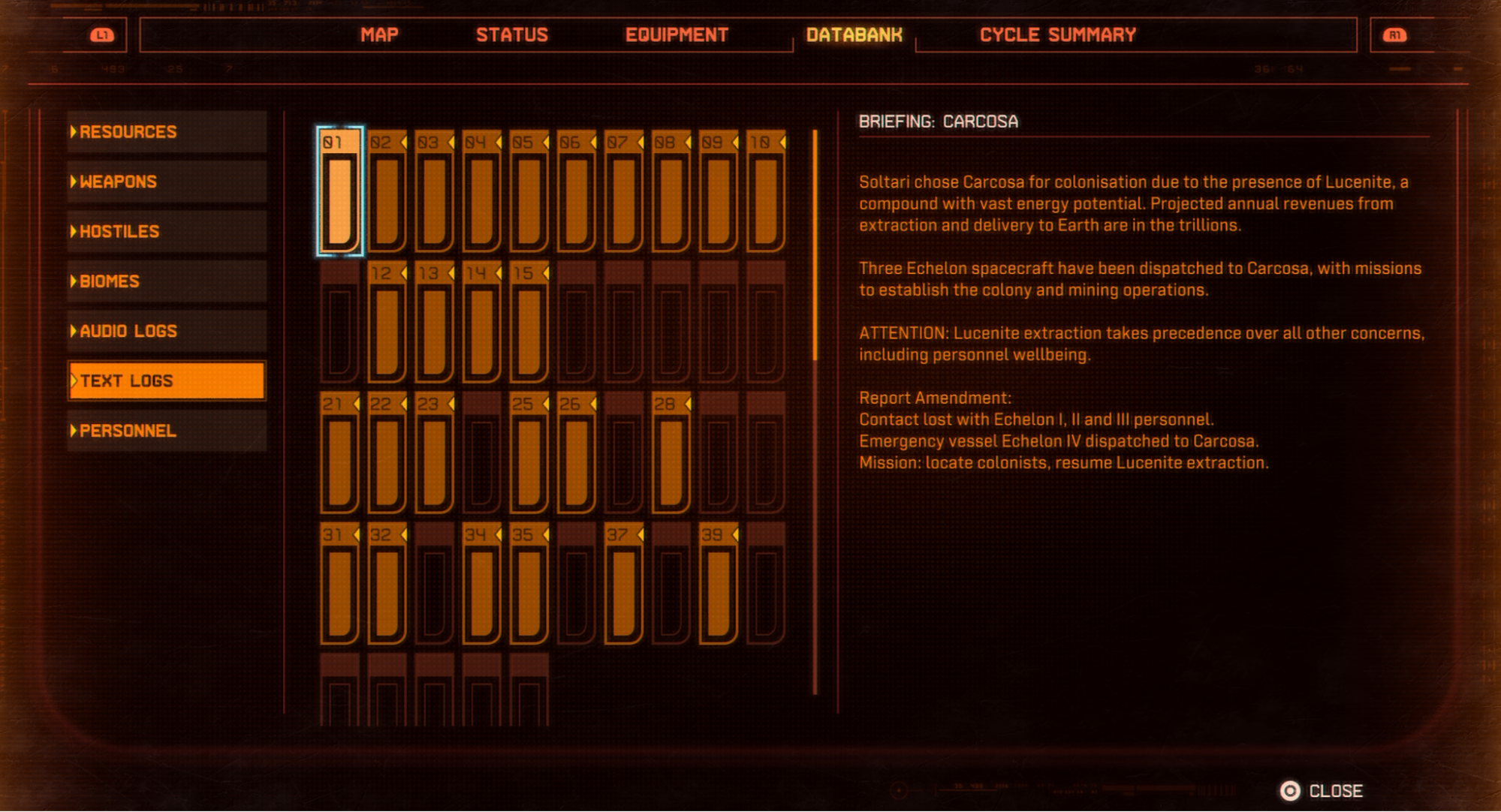
Even through the full experience, Saros maintains a narrative structure that is intentionally sparse, fragmented, and heavily reliant on environmental storytelling. The story unfolds through holographic echoes, scattered audio and text logs, and atmospheric cues rather than traditional cutscenes or linear exposition.
Arjun’s motivations and emotional arc are present, but they’re delivered with notable restraint, leaving much of the interpretation to the player. This creates a world that feels eerie and enigmatic, yet it also limits the immediacy of the narrative. Emotional beats often simmer beneath the surface rather than erupting in clear, dramatic moments.
Key story moments can also be easy to miss without thorough exploration, making it harder to form a cohesive understanding of the colony’s downfall until much later in the game. Because the narrative is so dependent on player‑driven discovery, certain sequences can trigger at unexpected times or feel slightly out of sync with the pacing of a run.
For some players, this slow‑burn approach will feel atmospheric and rewarding, but others may find that the story never fully takes center stage. The tonal balance between psychological tension and high‑velocity combat can occasionally feel uneven, creating a subtle disconnect between what the narrative is trying to evoke and what the gameplay demands.
The understated narrative also affects pacing, as the game prioritizes mood and discovery over explicit exposition. Major revelations can land with less force than expected simply because the game refuses to underline them. It’s a structure that values ambiguity over impact, and that choice shapes how the story resonates.
Another factor making the revelations less impactful are that they are usually only delivered once a biome is complete, meaning spending too many hours or runs on a biome means there’s major gaps in time between these story beats. While it may have worked for Returnal where the protagonist Selene is all alone, it feels out of place for a game where numerous characters are present that could've added dialogue during runs.
Some of the worldbuilding inherits this same restraint. The cosmic‑horror atmosphere is strong, but the broader lore often feels intentionally elusive, offering glimpses rather than full explanations. The result is a setting that’s evocative and unsettling, though not always as richly developed as its aesthetic suggests.
This isn’t a flaw in execution, it’s a deliberate stylistic choice that defines the experience. Housemarque leans into ambiguity, environmental detail, and interpretive storytelling rather than direct narrative delivery. For players who enjoy piecing together meaning from fragments, the approach feels confident and purposeful.
However, it does mean Saros may not satisfy players who prefer clear, character‑focused storytelling or a more traditional narrative arc. The game commits fully to its fragmented, interpretive style, shaping how its world and themes are ultimately absorbed. It’s a bold narrative identity, one that rewards curiosity, but doesn’t chase universal accessibility.
Repetition: When Variety Starts to Blur
Even with its refined combat and strong moment‑to‑moment flow, Saros can’t fully escape the inherent repetition of its roguelite structure. Runs are built around revisiting similar spaces, fighting familiar threats, and gradually pushing deeper into each act. That loop is intentional, but it also means the sense of discovery tapers off earlier than expected.
Enemy variety contributes to this feeling. Most foes can be handled with the same core rhythm of dodging, shooting, and occasionally closing in for a melee strike when a forcefield needs breaking. This consistency keeps the combat readable, but it also flattens the tactical landscape. Few enemies demand a change in approach beyond spacing and timing, the result being a roster that sometimes looks diverse but often plays the same.
Over extended sessions, this can make encounters feel predictable. Once you’ve internalized the dodge windows and projectile patterns, most fights become an exercise in execution rather than adaptation. It’s satisfying in a mechanical sense, but it doesn’t always evolve in the ways the genre’s best examples do.
Biome structure reinforces this repetition. Each act introduces aesthetics with skybox and environmental color palette changes, yet many of the biomes within reuse the same building templates, puzzle structures, and traversal challenges. Even when the geometry is rearranged, the underlying components are familiar enough that the sense of novelty fades quickly.
There were moments where I genuinely questioned whether I had loaded into the correct biome, simply because the visual language and repeated room structures between adjacent areas felt so similar. Without sharper visual or mechanical distinctions, the early thrill of discovery gradually gives way to a more routine cadence.
Ultimately, Saros embraces repetition as part of its identity, but that choice comes with trade‑offs. The loop remains compelling, yet the limited mechanical variety in enemies and the aesthetic overlap between biomes, and even their repeated structural layouts, limit how surprising each new run can feel.
Characters: Forgettable and Fast‑Fading
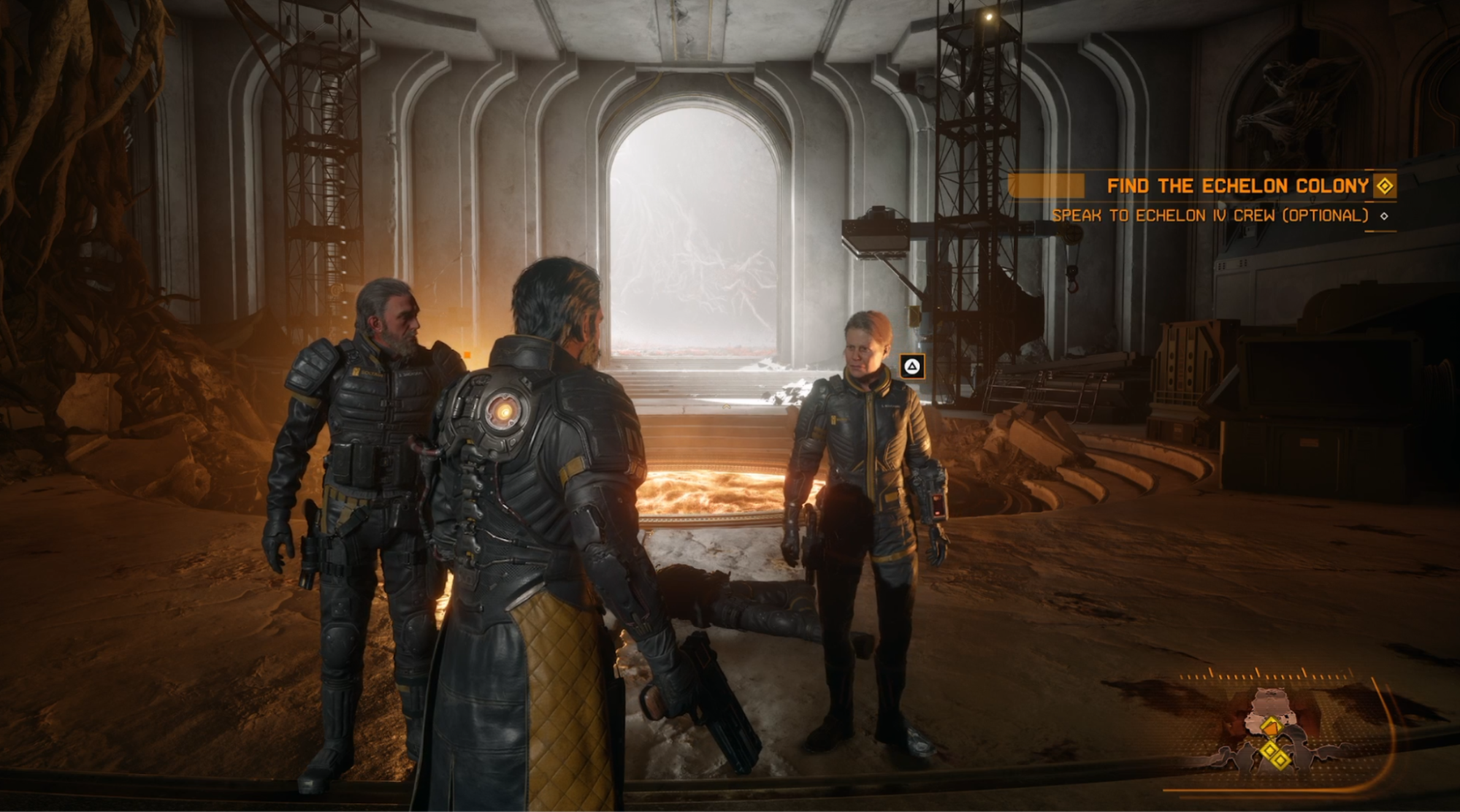
The characters in Saros struggle to make a lasting impression. Most of them appear briefly, deliver a few lines, and then vanish from the narrative before they’ve had the chance to develop any real identity. Their personalities are lightly sketched, and the game rarely gives them the space needed to stand out.
Because new characters enter and exit so quickly, they tend to blur together. Someone might show up for a single conversation, disappear for hours, and then suddenly be referenced again as if their presence should be memorable. The pacing of these introductions makes it difficult to form any attachment or even recall who’s who.
This rapid turnover also leads to moments of genuine confusion. More than once, I found myself hearing a name and having to stop to remember where I’d last encountered that character, or if I’d even met them at all. A problem that makes this worse is Arjun or other's will refer to the same character as different names, either as their first name, last name, or a nickname. Without defining traits or meaningful interactions, many of them fade into the background almost immediately.
Arjun’s performance sits in a similar space. He’s steady and grounded, but not especially dynamic, delivering his lines with a calm consistency that doesn’t always elevate the scenes he anchors. It’s a performance that supports the game’s tone without adding much additional nuance or personality.
Side characters fare no better. Their delivery is clear and professional, yet rarely expressive enough to bring texture or energy to their moments on screen. Interactions feel functional rather than character‑driven, and the hub sequences lack the spark that stronger performances might have provided.
Taken together, the cast feels more utilitarian than memorable. They serve their roles within the structure of the game, but they rarely add flavor or emotional weight. It’s a world populated by characters who move in and out of focus so quickly that they never have the chance to define the experience.
Our Score
8/10 (Great Roguelite, But Misses the Marque)
Saros emerges as a confident evolution of Housemarque’s design philosophy, a game that sharpens the studio’s strengths rather than diluting them. Its combat is fast, precise, and deeply satisfying, its atmosphere is oppressive and memorable, and its technical execution reinforces why Housemarque remains one of PlayStation’s most reliable first‑party teams. At the same time, its deliberate pacing, fragmented storytelling, and inherent roguelite repetition mean it won’t resonate equally with every type of player.
For those who connect with its rhythm, Saros delivers a focused, high‑intensity experience that stands comfortably among the strongest action titles of the generation. It may not chase broad accessibility, but its commitment to its identity is exactly what makes it so compelling. You don’t need to have played Returnal to appreciate what Saros achieves, though returning fans will immediately recognize the studio’s refined craftsmanship.
As a complete package, Saros is a genuine pleasure to play for players who value mechanical mastery, atmospheric worldbuilding, and tightly honed combat design. Its additional mechanics, and refinements of previous ones from Returnal, welcome new audiences by fostering a more accessible gameplay environment. Its shortcomings are intentional trade‑offs that create the occasional misstep, and its highs are among the best the genre has to offer.
While I didn’t engage with the fragmented story, I always found myself saying “just one more run!”, as I absolutely couldn’t get enough of the combat and player progression. I don’t see it winning Game of the Year, but it will definitely be nominated, and maybe even win, awards due to its rewarding and engaging gameplay.
Main Reviewer: Jack Briggs (originally published April 28, 2026)