If you were already intrigued by Mewgenics and have it on your wishlist, seriously, just skip this review, buy it on the release day, February 10th, and go in blind.
For everyone else, Mewgenics is created and developed by a small indie team led by Edmund McMillen (Super Meat Boy, The Binding of Isaac) and Tyler Glaiel (Closure, The End is Nigh). Two legends who started from the days of Flash and Newgrounds and have since been pillars of the indie golden era.
The two shared the duties of game design for Mewgenics, but McMillen was primarily responsible for art and story, while Glaiel handled programming.
Having worked together in the past, the duo came together once again six years ago to execute an idea that was originally teased back in 2012 when McMillen was still a collaborator with Team Meat.
While its genres and even ownership changed along the way, the concept always leaned upon the breeding of randomly generated cats.
If Super Meat Boy was McMillen’s Mario and TheBinding of Isaac his Zelda, Mewgenics has since become an ode to tabletop games like Dungeons & Dragons, Magic: The Gathering, and Kingdom Death: Monster.
By combining a tactical RPG with a breeding sim and packaging it in a massive story powered by a roguelite loop, it’s one of the most ambitious and inconceivable concepts attempted in years. And you can take our word for it — these guys cooked.
Our review for Mewgenics was conducted with the PC version on Steam.
The Highs
A Two-Sided Gameplay Loop Like No Other
While Mewgenics consistently reveals new mechanics, it’s ultimately a gameplay loop made of two major halves.
The first half of the loop is essentially a procedurally-generated roguelite D&D campaign.
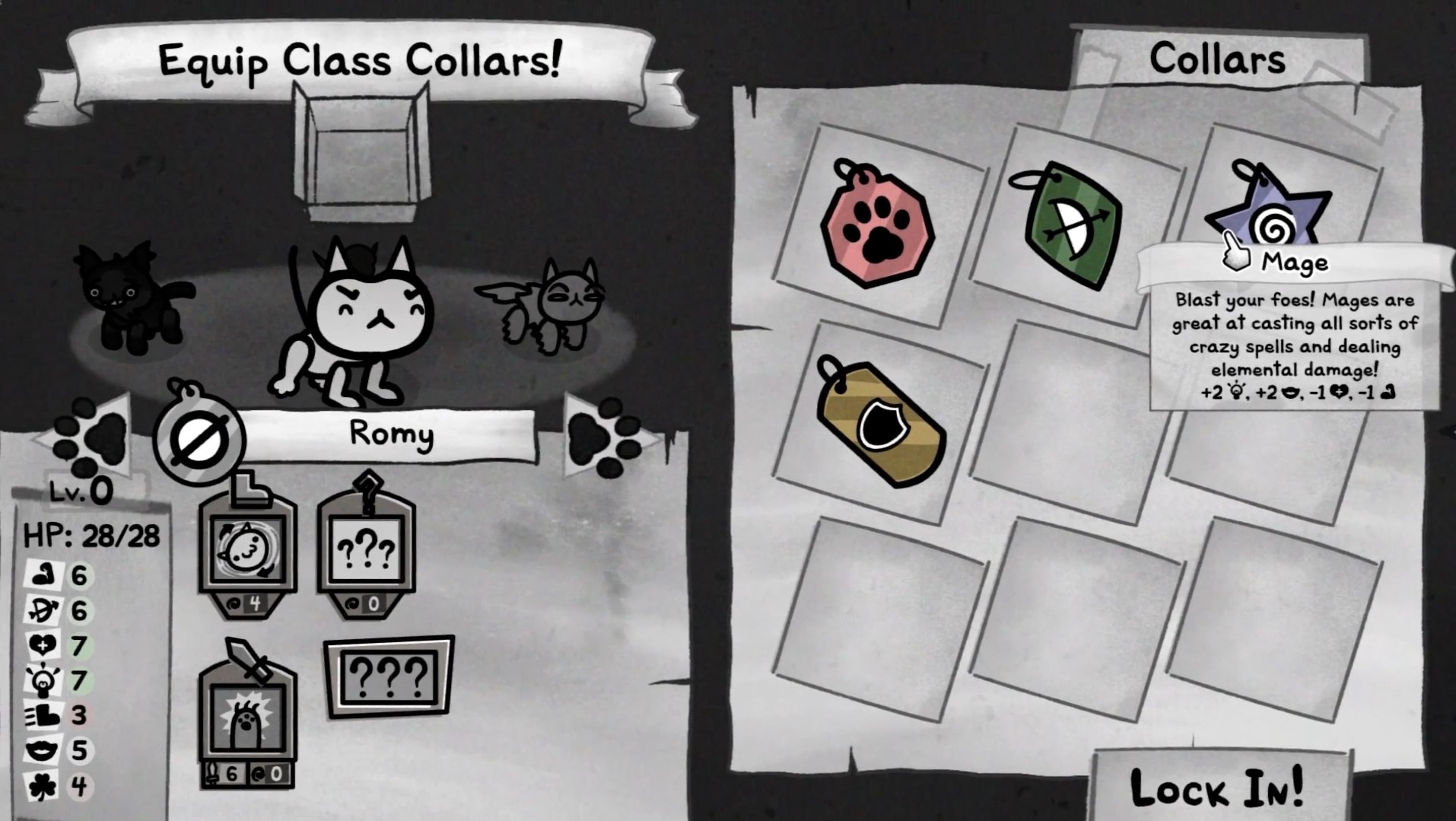
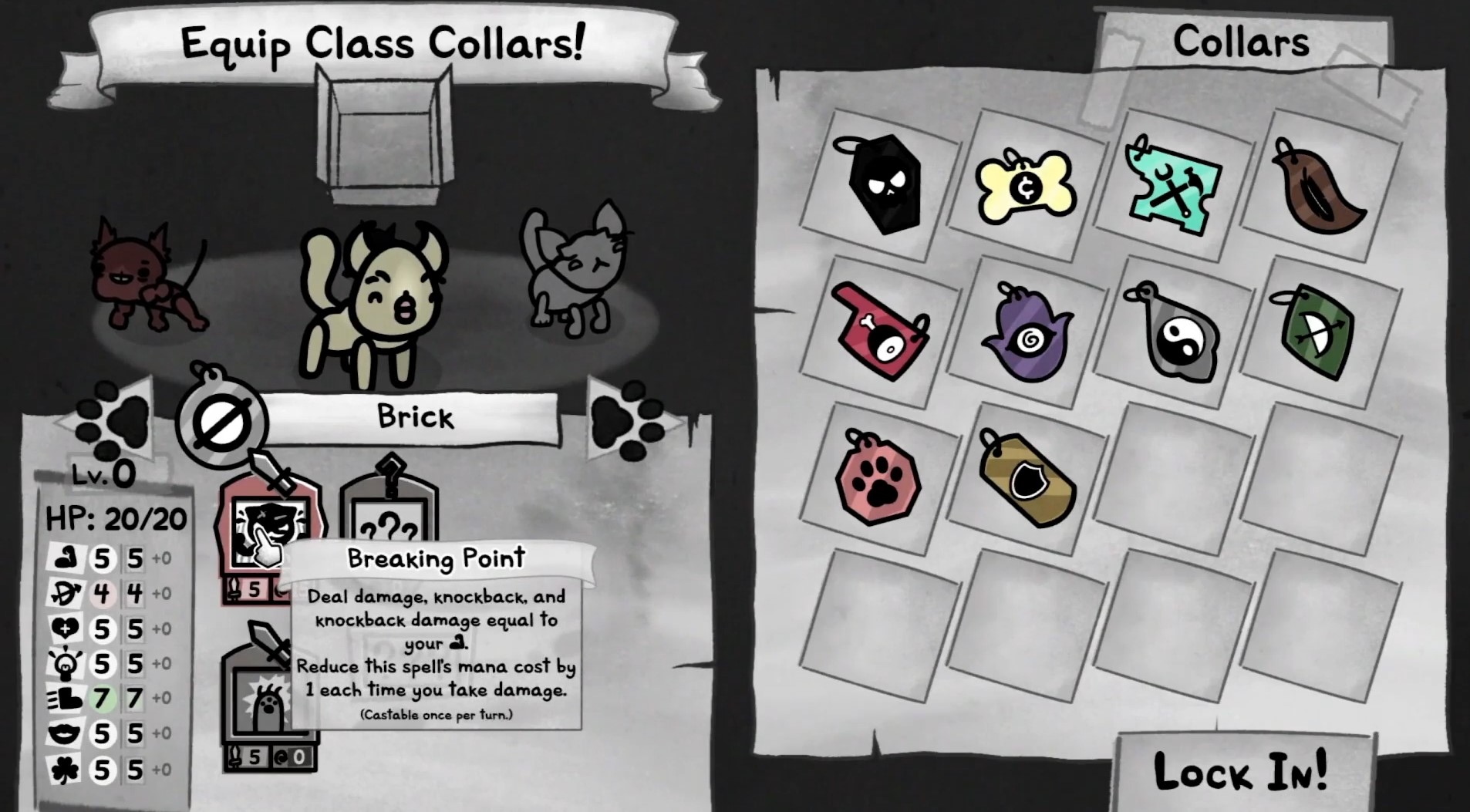
You start a run by choosing up to four cats from your starting house to deploy and assign collars
These collars act like D&D classes or MTG colors, and feature unique abilities, strengths, weaknesses, and stat preferences. You have red for Fighter, green for Hunter, white for Cleric, and so on. There are over ten classes to unlock and experiment with.
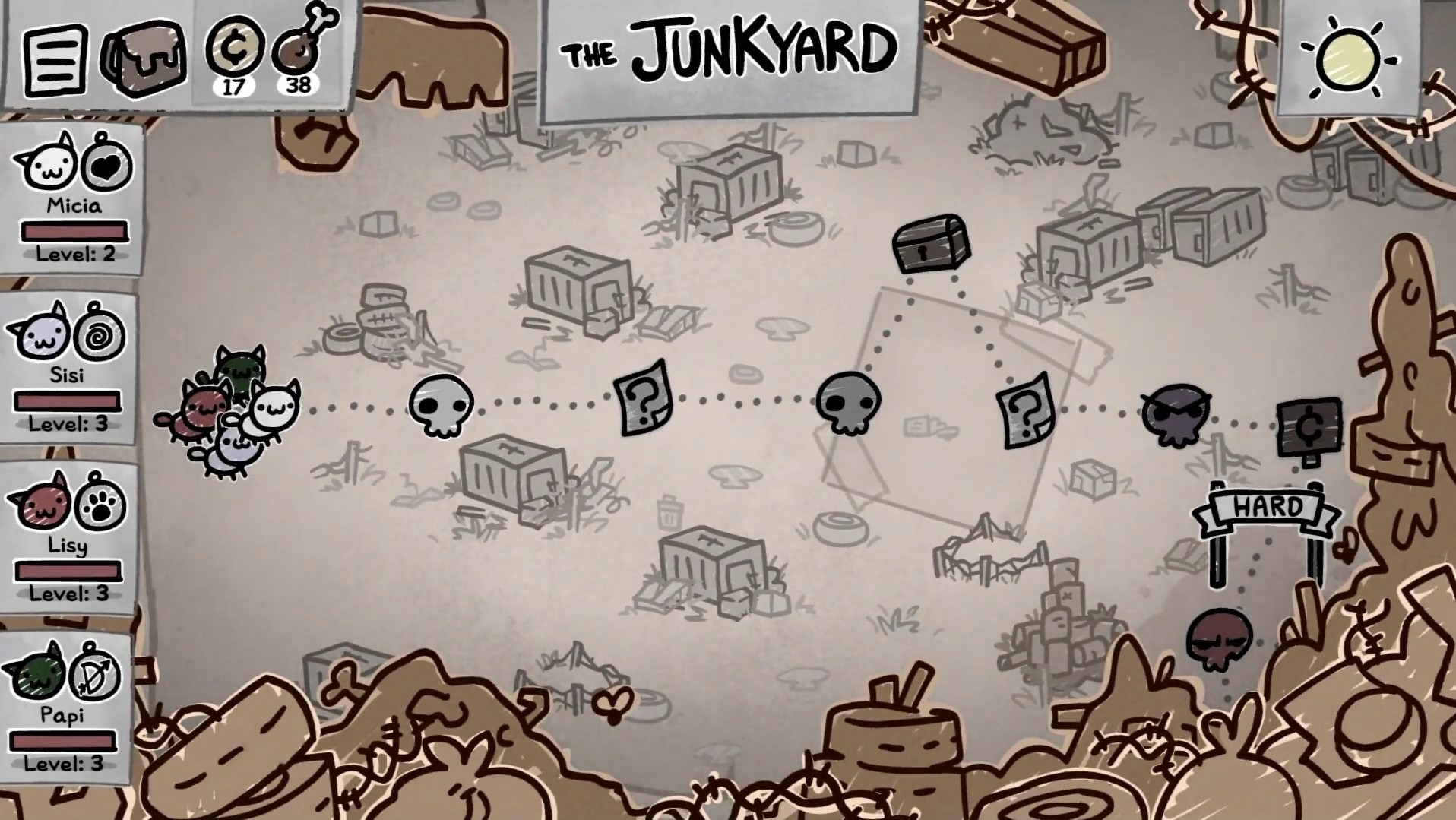
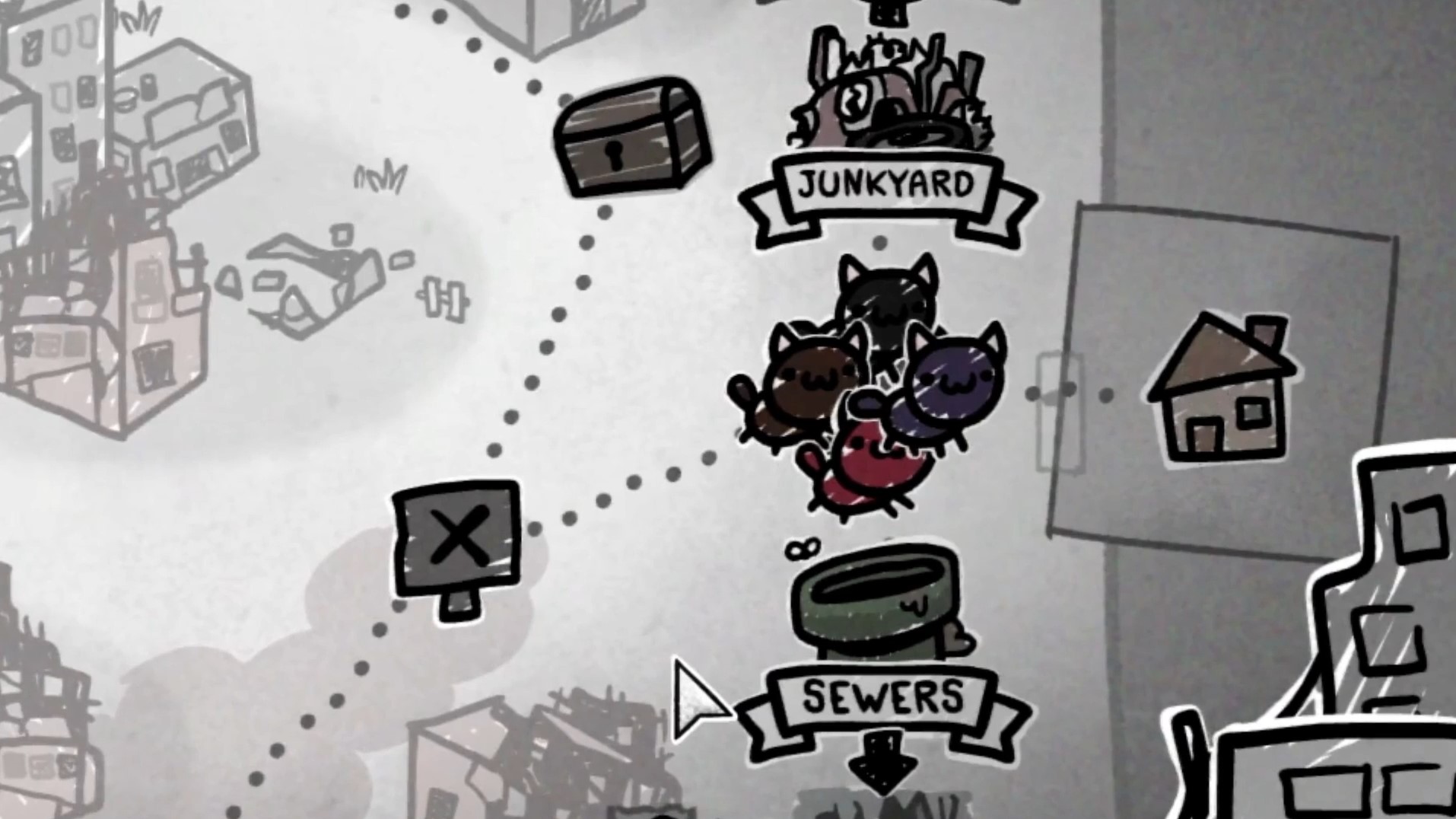
Once your party is selected, you’re presented with a roguelite map akin to Slay the Spire or FTL: Faster Than Light with combat encounters, events, shops, and of course, bosses.
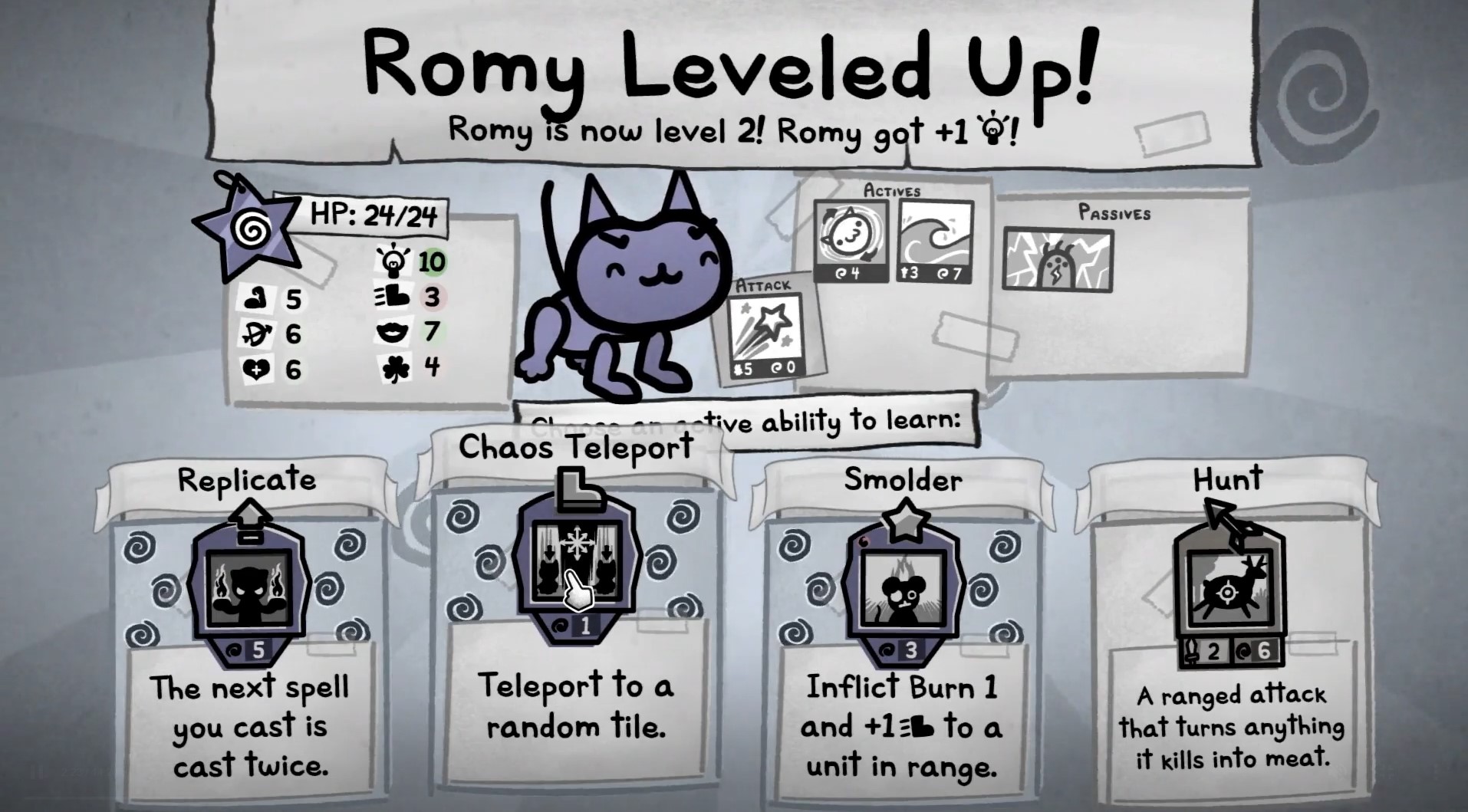
These give you currencies like gold and food, equippable items to make your cats stronger, and after each fight, a cat levels up, allowing you to draft new abilities and passives.
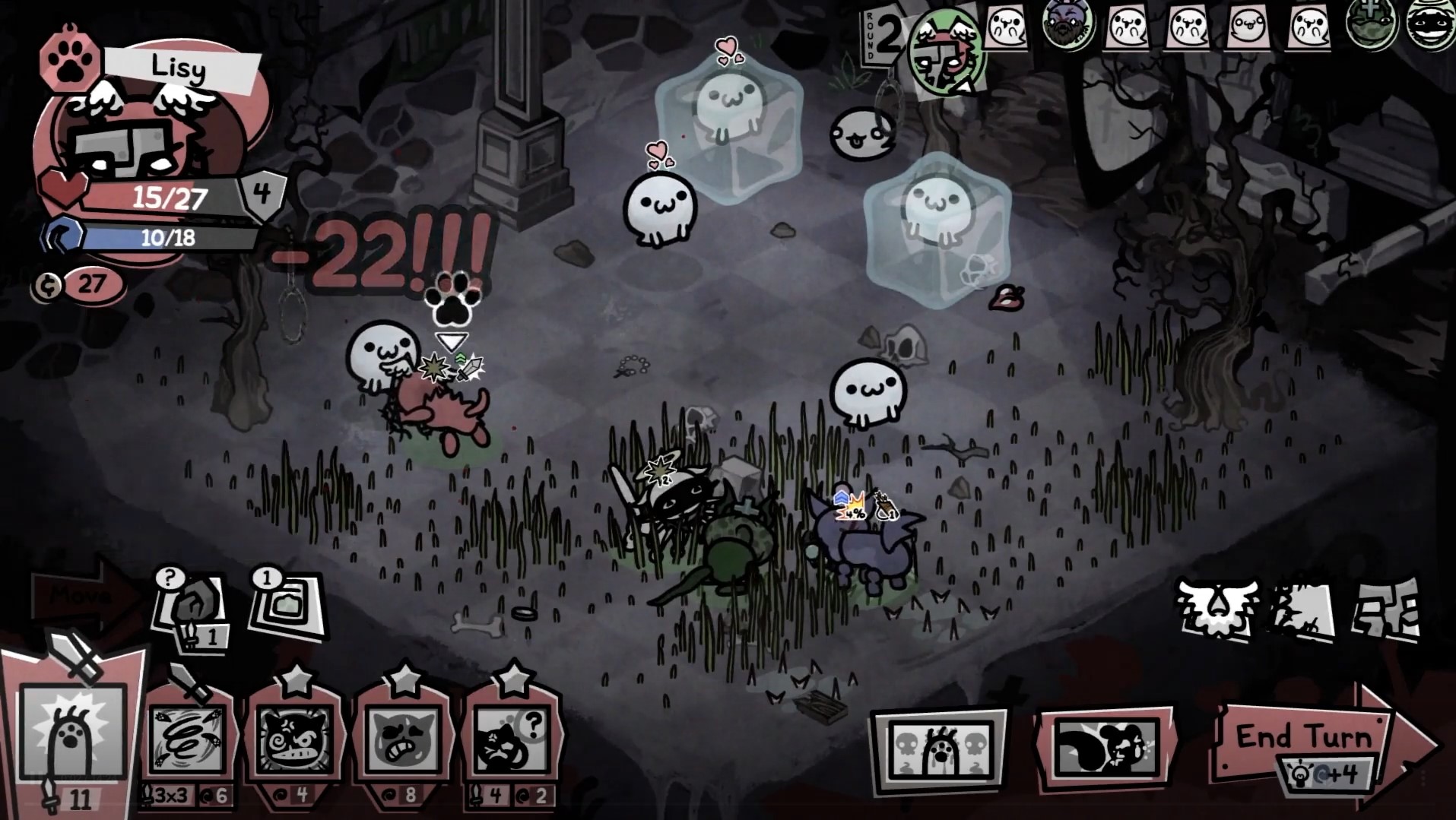
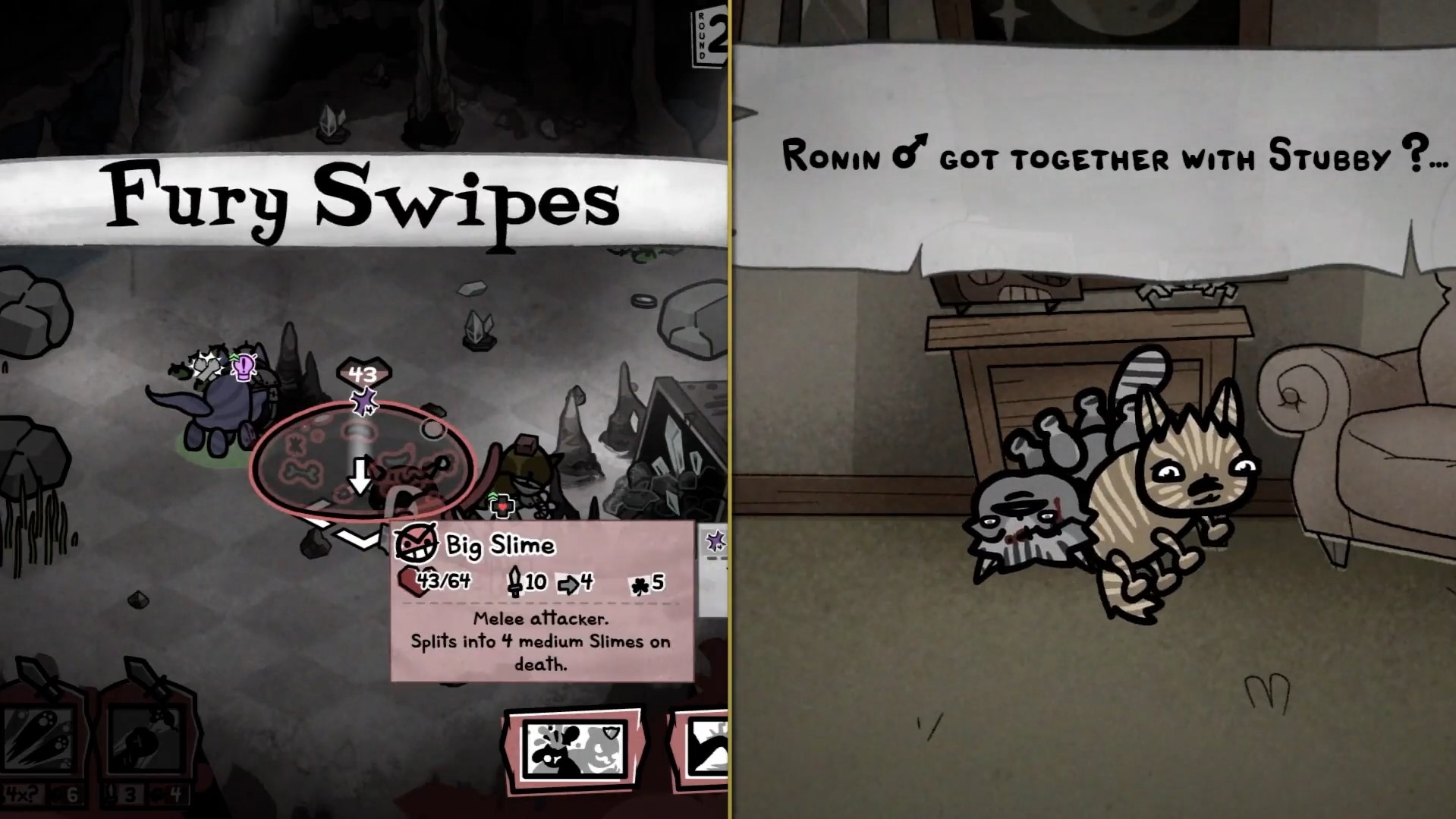
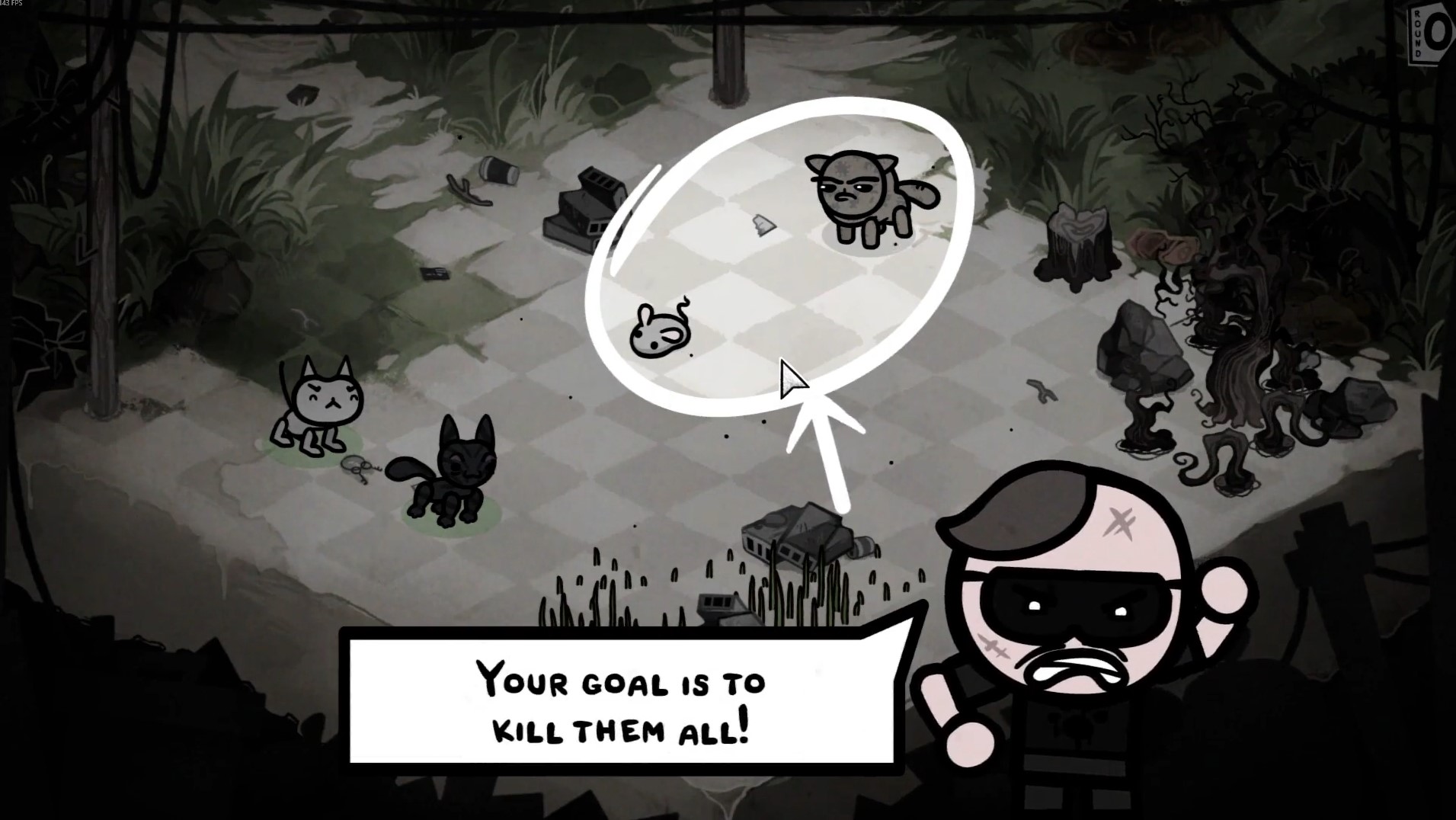
Within combat, Mewgenics is a grid-based tactical RPG, where fans of games like Final Fantasy Tactics, Fire Emblem, and The Last Spell will feel right at home.
Of course, there are environmental and elemental interactions like Baldur’s Gate 3 and Divinity: Original Sin.
Then add in a dash of the mortal dangers and permadeath of Darkest Dungeon and XCOM, and you get what is essentially a greatest hits of tactical RPGs in Mewgenics.
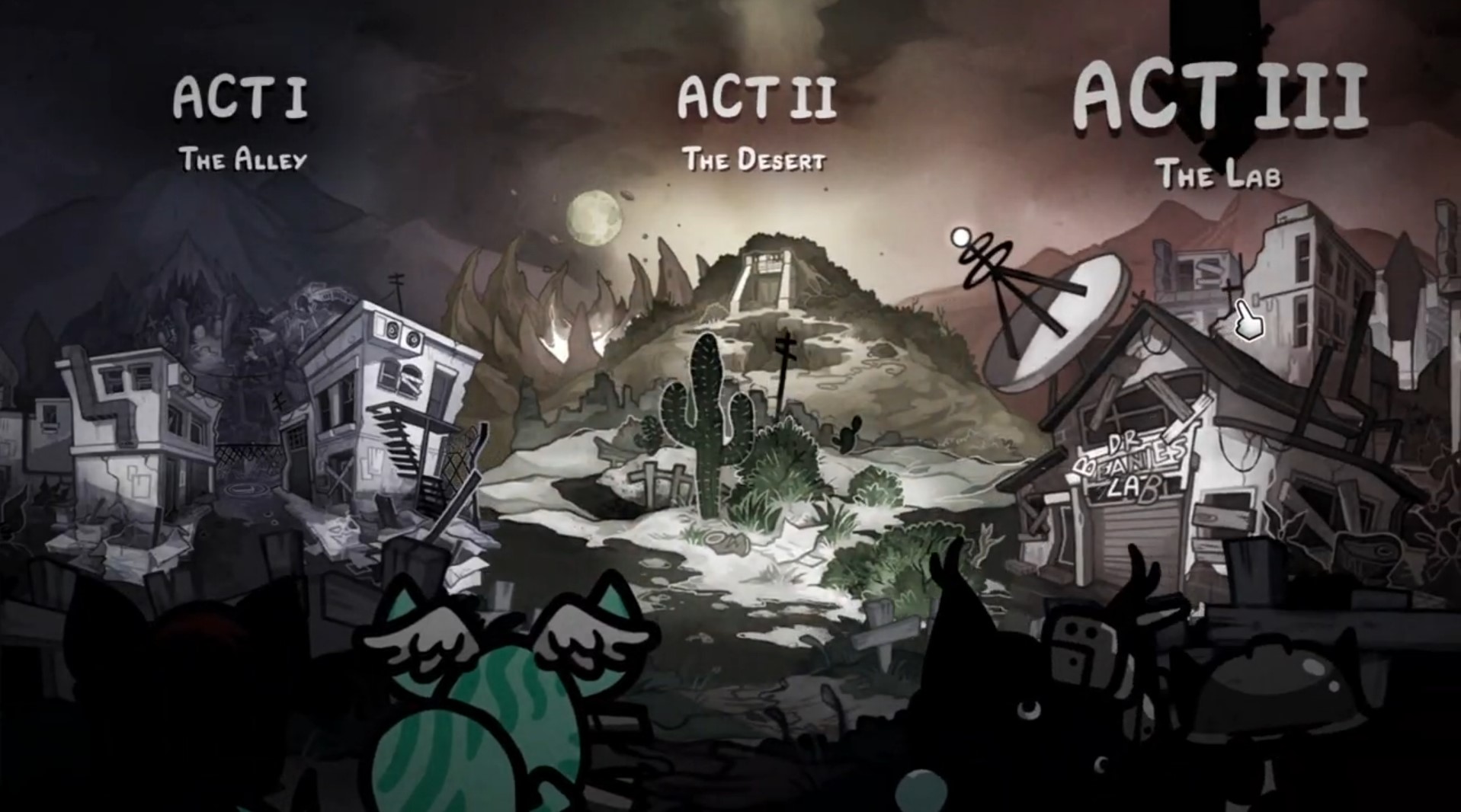
As you route throughout each Act, you can choose to go home safely early, or continue to push further into other chapter locations.
For example, in Act 1, you start from an alleyway that leads to either the Sewers or Junkyard, each having its own set of enemies, bosses, and environmental hazards.
Within each chapter, you can also choose more difficult routes that yield higher risks for better rewards.
While these scrappy beginnings have you face the likes of enemy cats, rats, bugs, and other street-level creatures, the story really escalates and brings you to lands of ever-increasing dangers.
When your cats return home, whether because you completed an Act or chose an earlier exit, they bring back all their loot and treasure.
The returning cats areretired and cannot go back on adventures. This is where the second part of the loop kicks off, becoming a breeding and house management sim.
It seems strange at first, but there have been other RPGs like Pokémon and Wildermyth with elements of parents passing on their genes to future generations.
However, no other game has placed as much importance on that than Mewgenics.
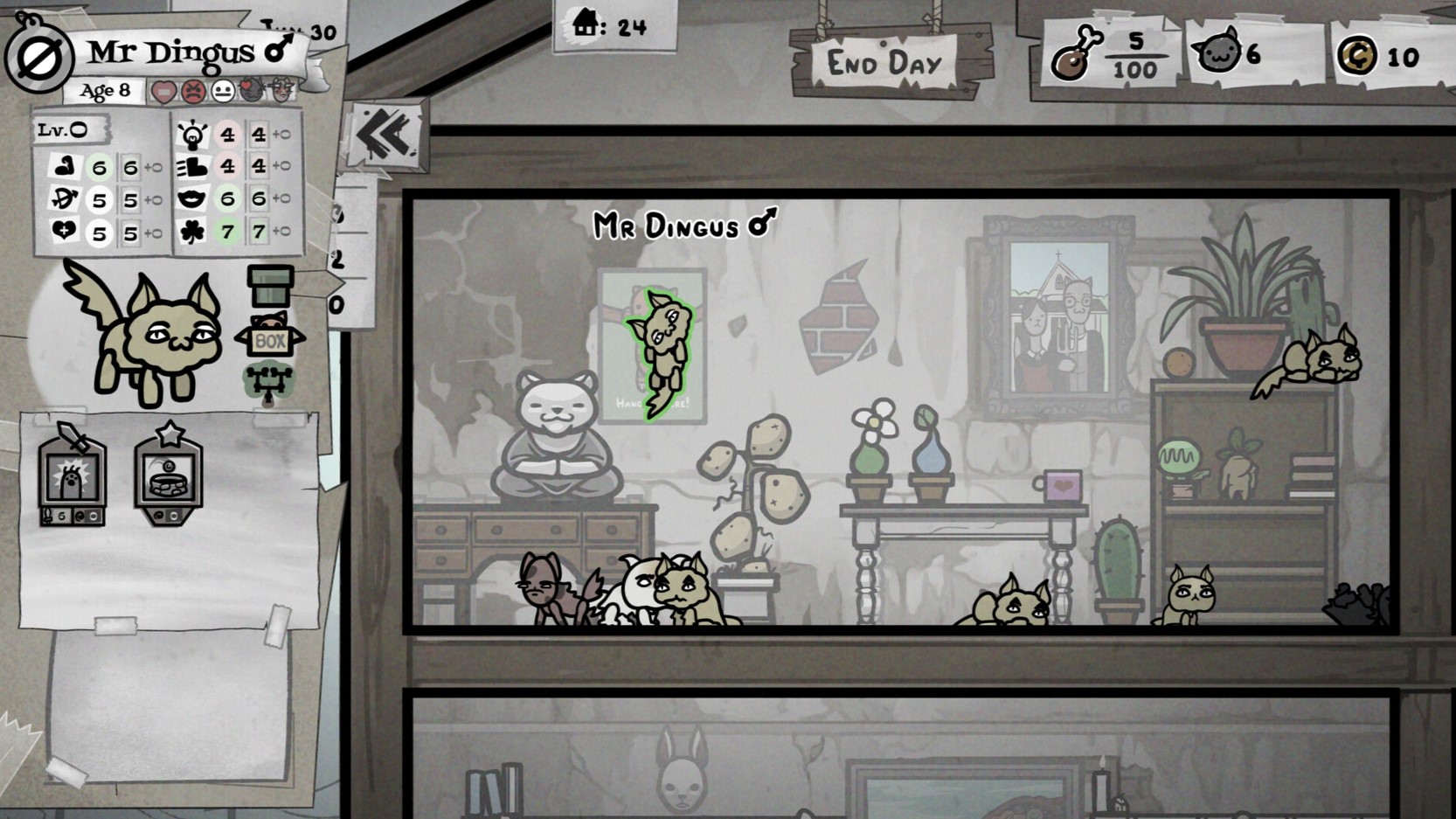
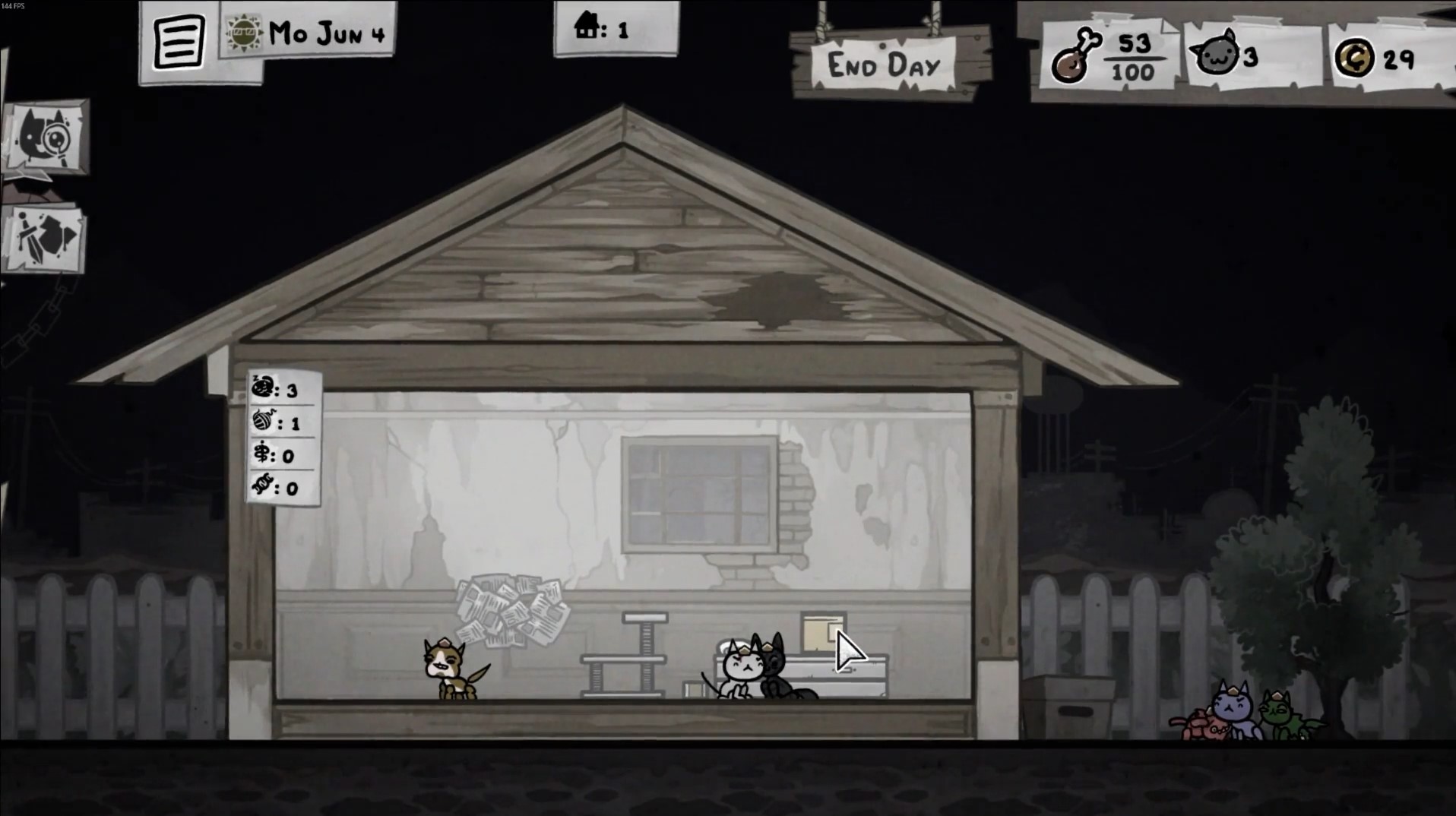
At first, your cat house will have just one room, and all the cats there will have a chance to interact at the end of the day.
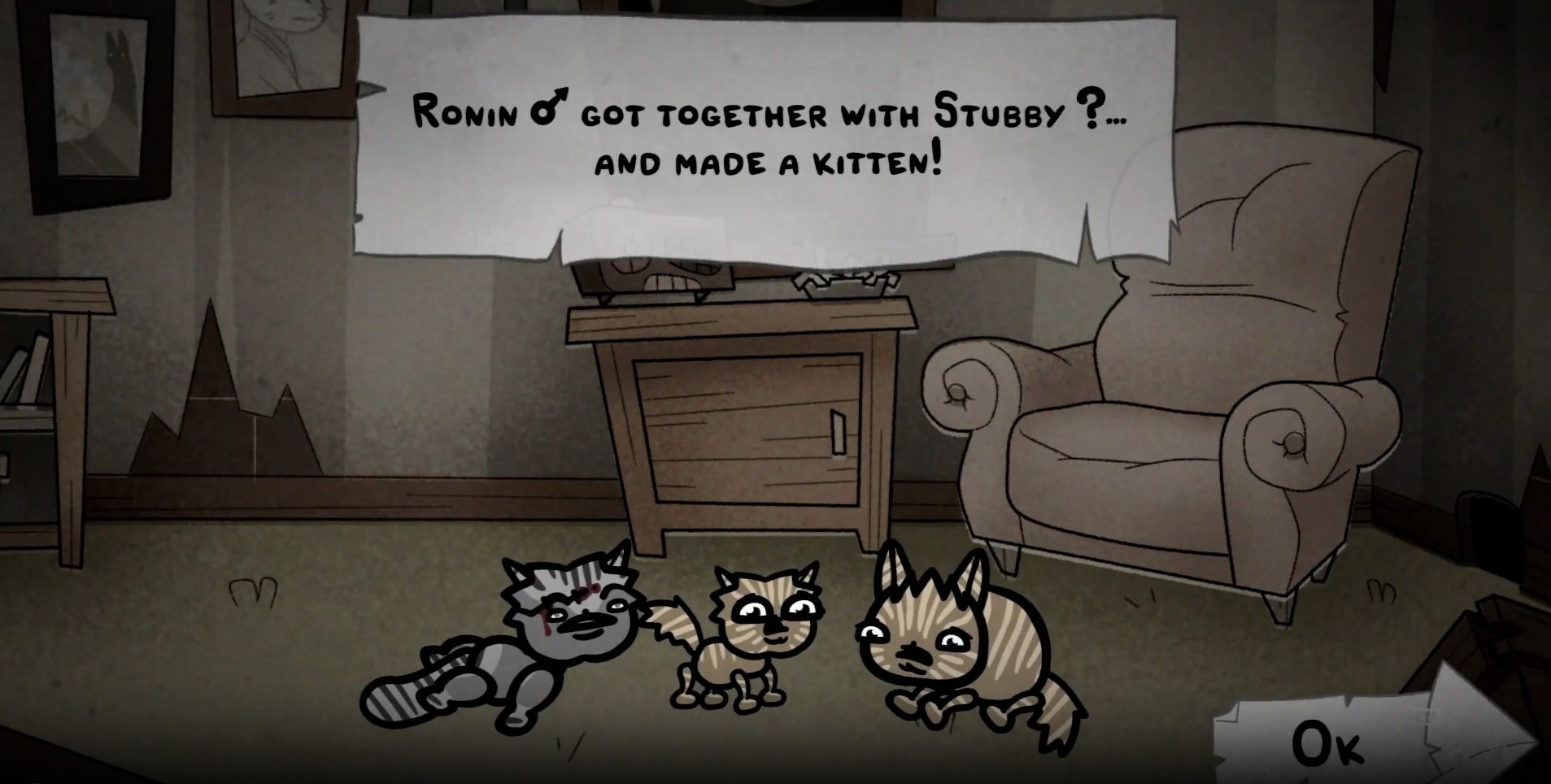
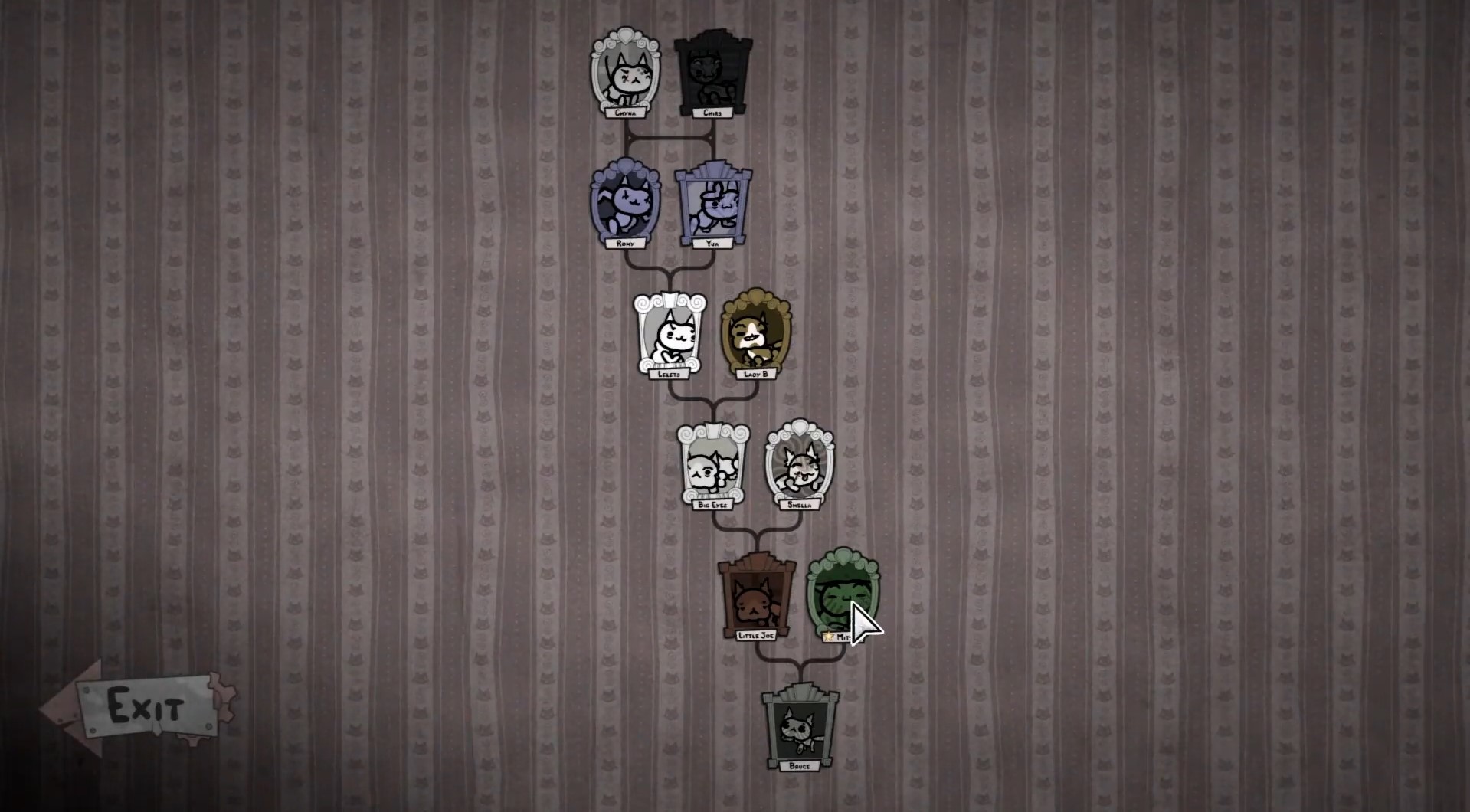
Cats that are compatible with a high enough libido can breed, creating kittens that not only inherit aspects from their parents’ appearance, but can also get their abilities and stats.
This is where some of that MTG coloring comes back in. Similar to you drafting or constructing a deck comprised of color combinations, breeding cats allows you to cross lines between collar classes and mix and match them.
For example, if you breed a Fighter with a Tank, you can end up with a kitten that has something akin to a Barbarian playstyle.
Or, if you have a Cleric with high Charisma (which determines the size of your starting and maximum mana pool) with a high Intelligence Mage (which determines mana regen), you can have a kitten that can constantly pump out high-powered spells from the get-go.
Then, those two kittens could later breed and then create a frontlining battle mage if you assign them a magical collar. The possibilities are endless.
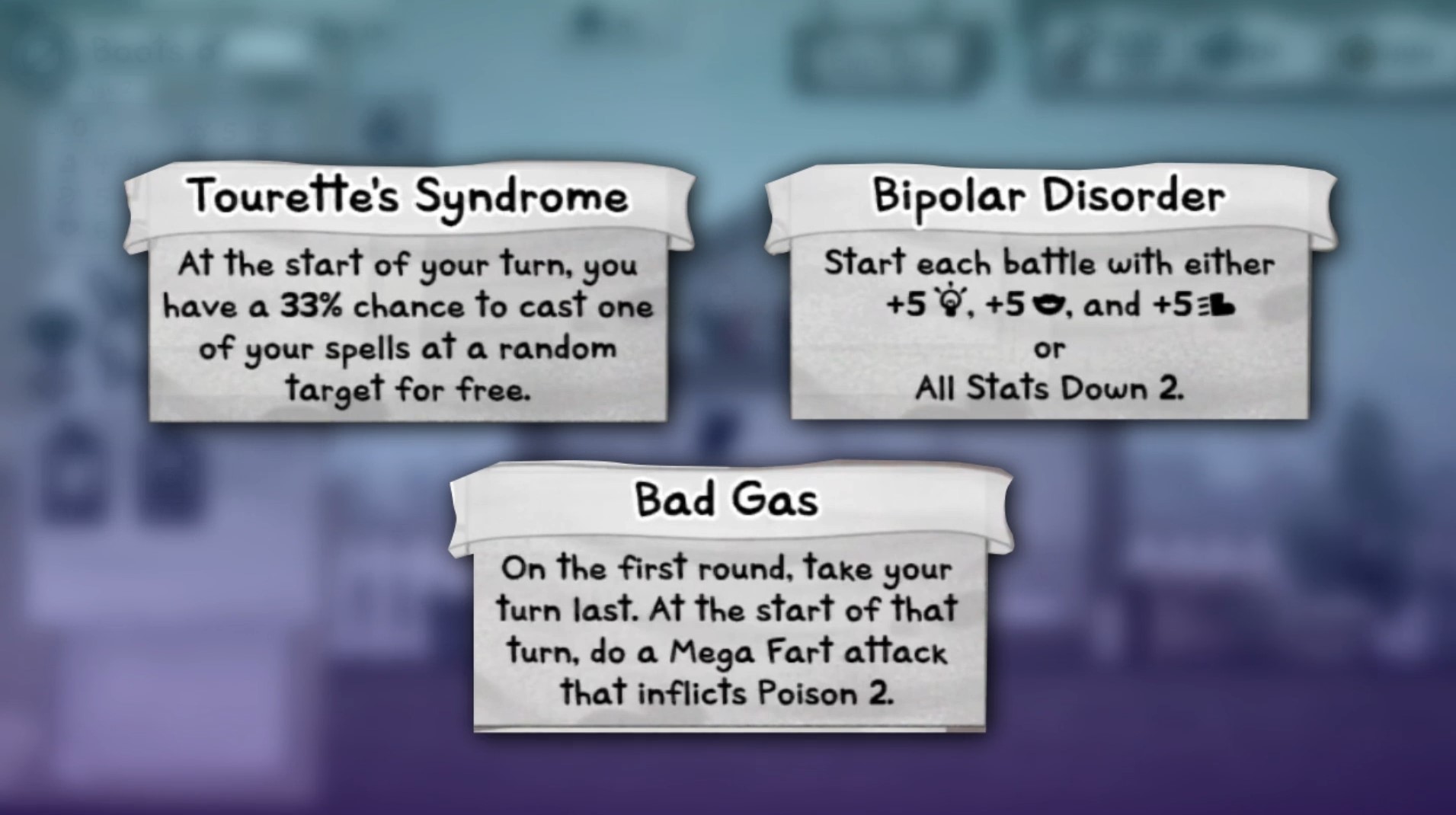
The breeding gets even more in-depth when you realize that the cats also inherit the genetic mutations and disorders of their parents.
This is where Mewgenics gets particularly interesting, as many disorders will have positives and negatives that you have to plan and build around.
For example, if a cat has ADHD, they have boosts to their mana regen and movement speed, but you have to make a decision with them in 5 seconds before they take things into their own hands.
If they have Autism, they’ll have higher Intelligence stats and lower costs for spells they were born with, in exchange for lower Charisma stats and their learned spells being higher cost.
There are many, many disorders in the game, and it’s a really creative design space that forces you to change the way you equip and play with your units.
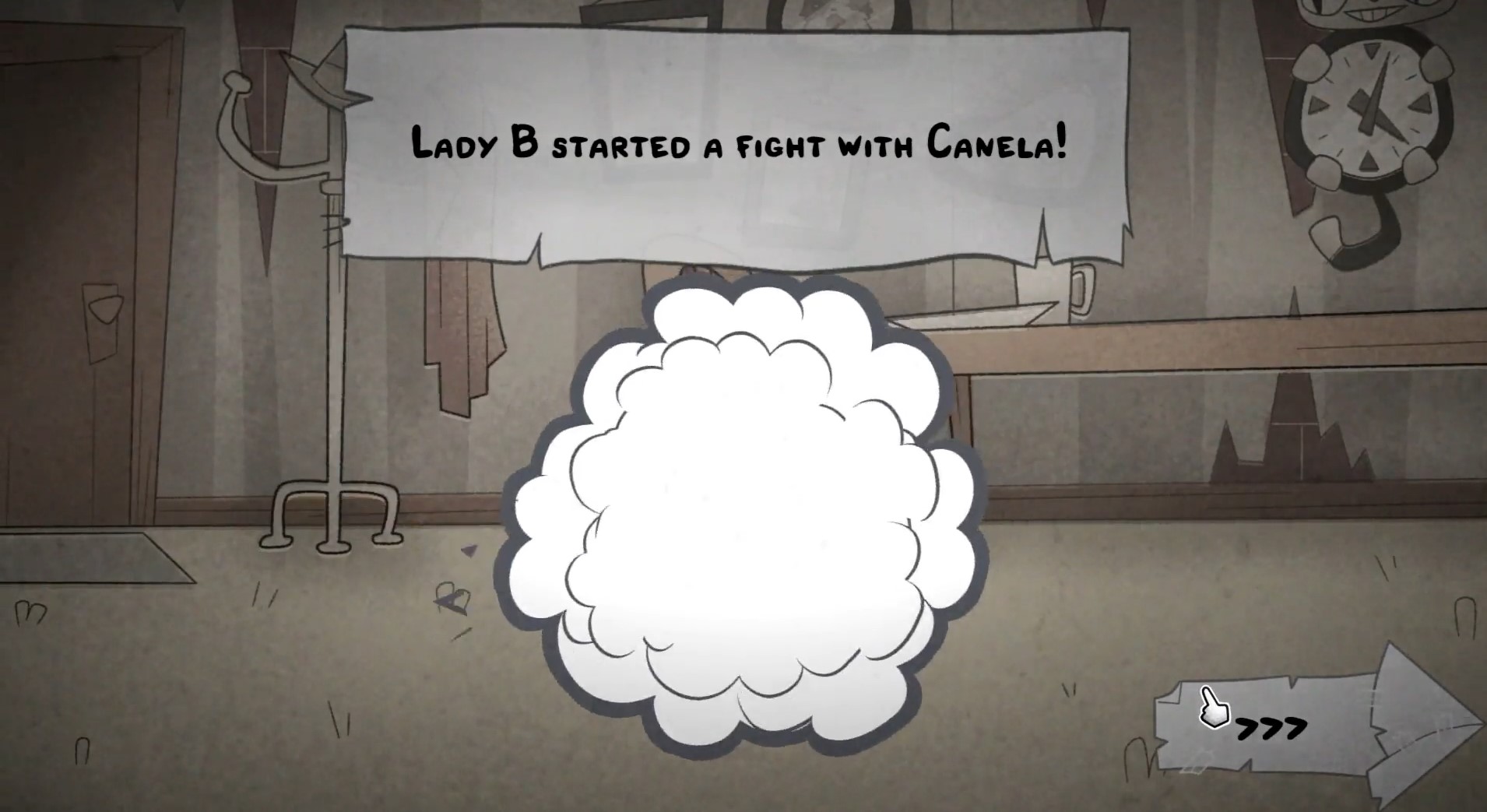
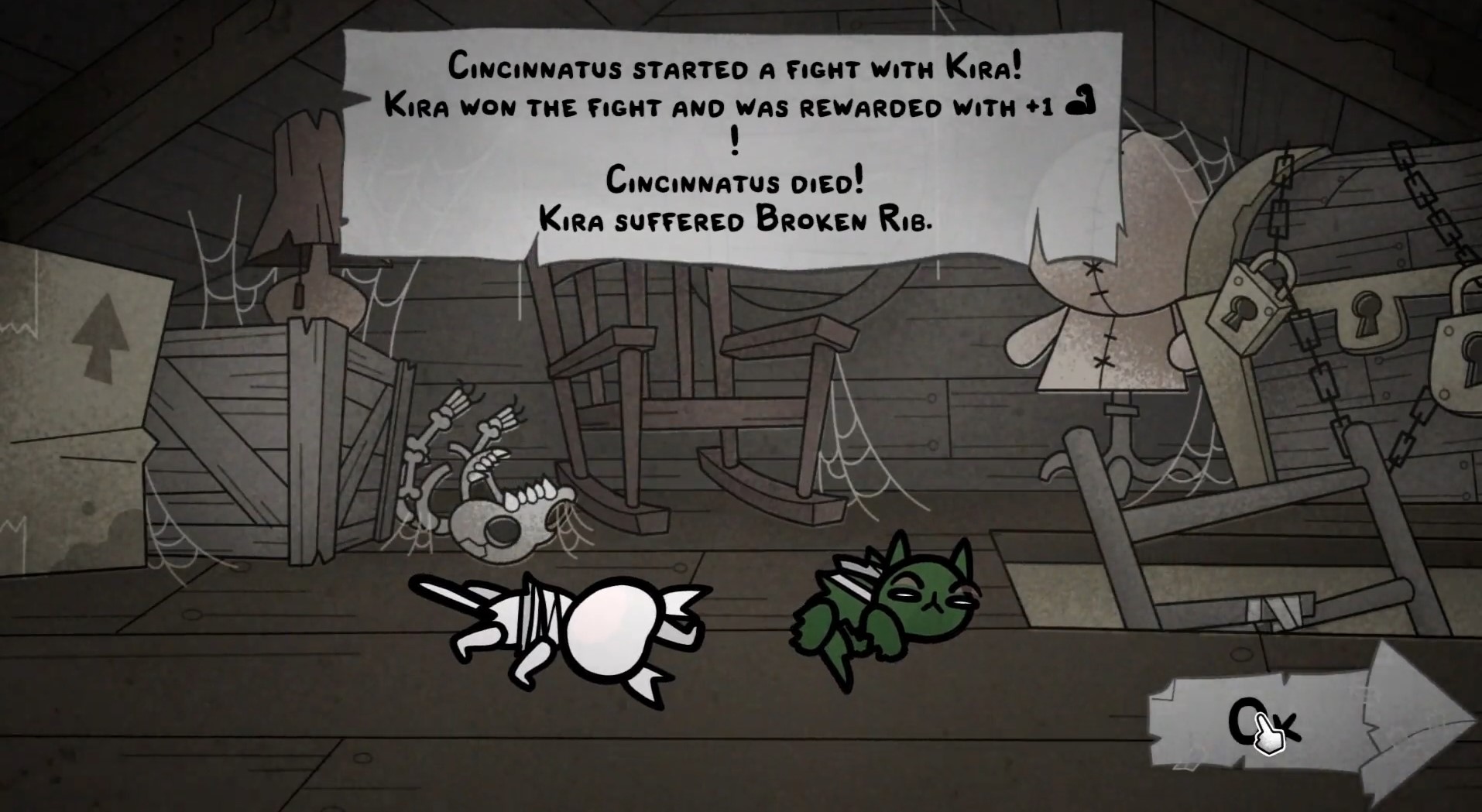
In the cases that you have aggressive or unhappy cats who don’t want to breed, you might end up seeing them fight each other.
When this happens, they can end up resulting in a tie, one cat being injured, or, in rare cases, one or both cats dying.
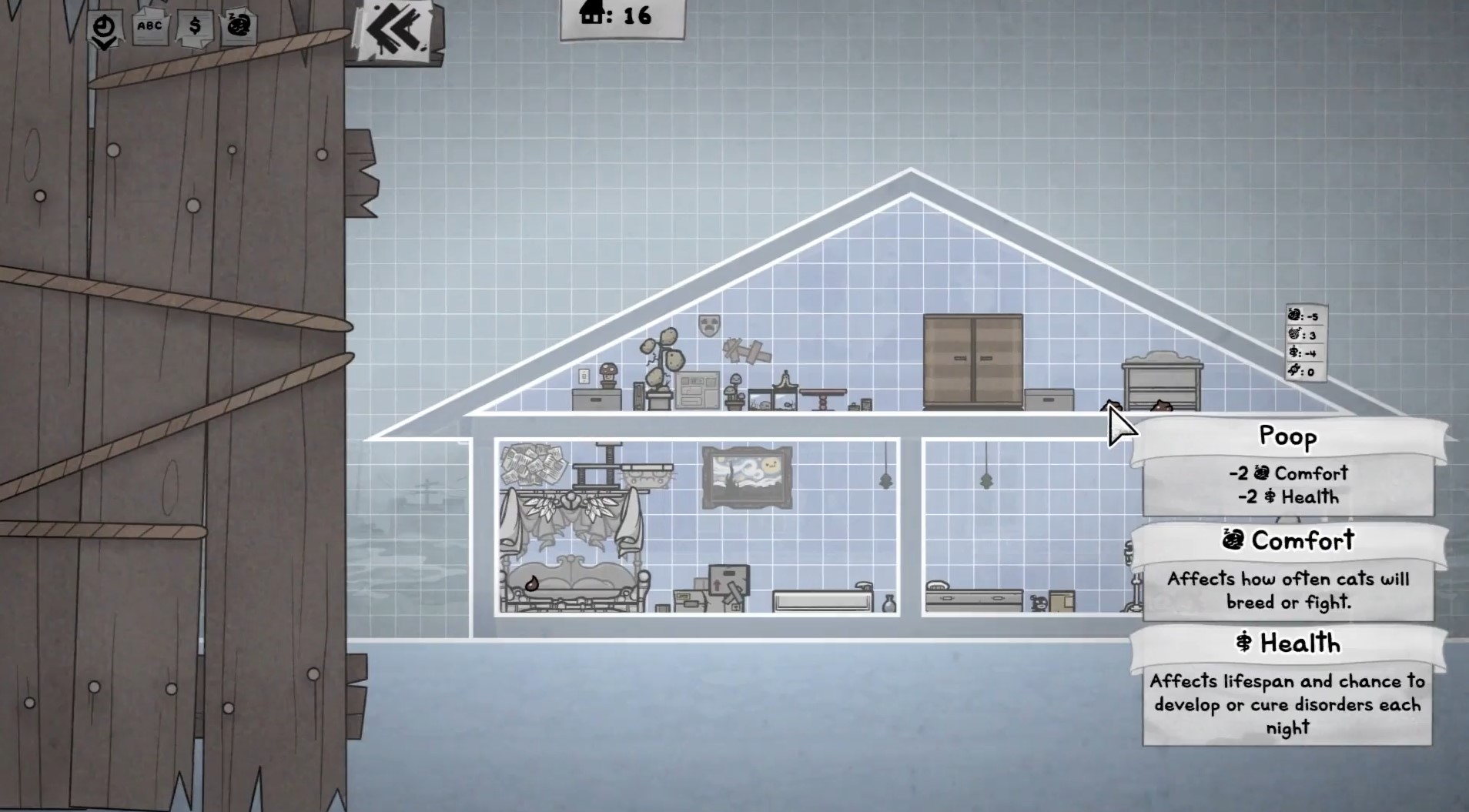
Thankfully, you can expand your house and strategically decorate it with furniture that influences their behaviors.
Have some cats that you really want to breed? You can put just the two of them in a fancy room, but that could cause the rest of your house to be crowded, making the rest of the cats mad.
When one cat kills another, the winner actually gains stats. So on the flipside, you can actually strategically make cats aggressive by making a poorly decorated/messy room to encourage fighting and leveling up off of weaker cats… but this risks your Goliath losing to a David.
Whatever decision you make here will affect future runs since you’re essentially birthing new party members. Over time, you can specifically target certain combos to be the perfect match for navigating a harsh climate or a favorable build into a tough boss battle.
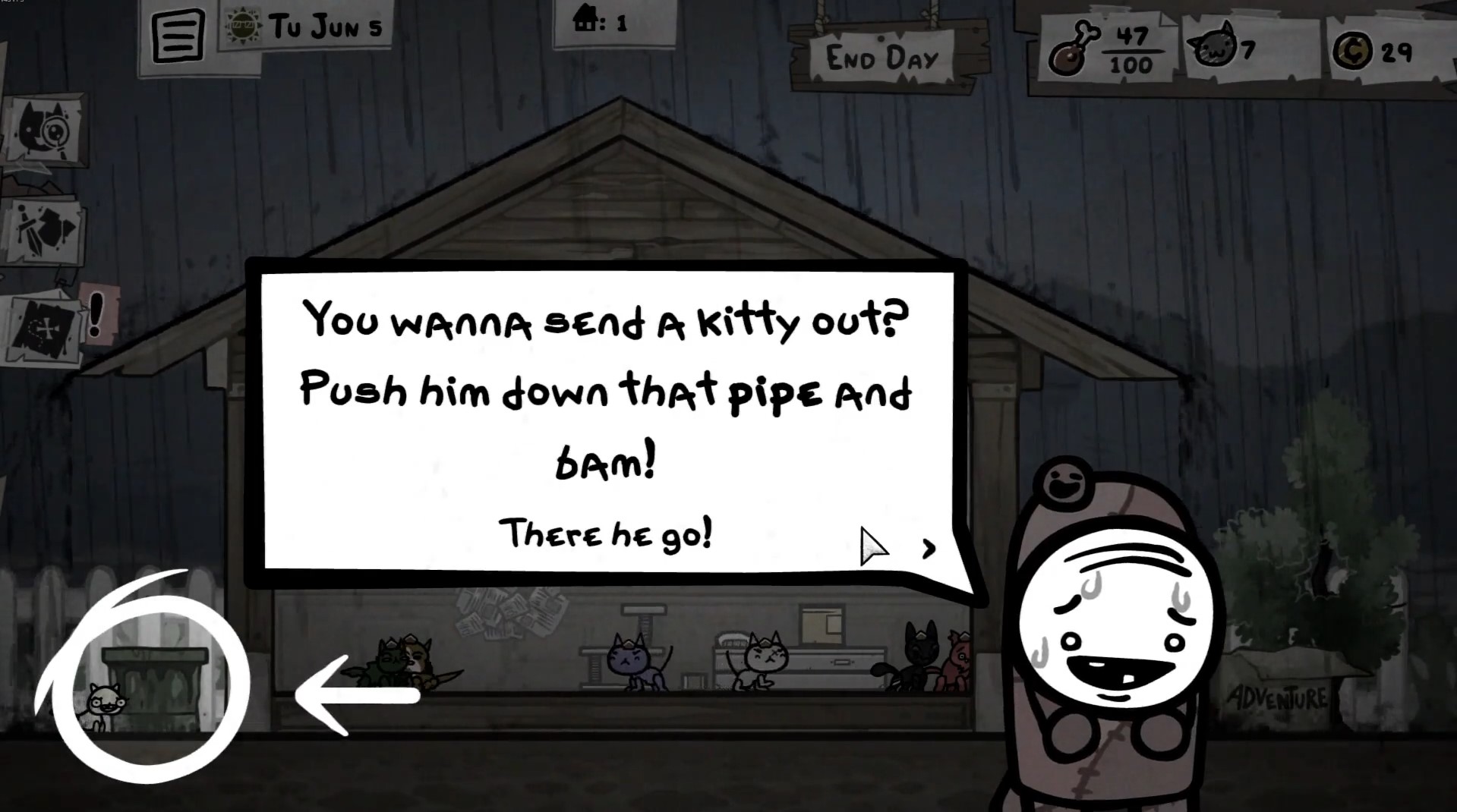
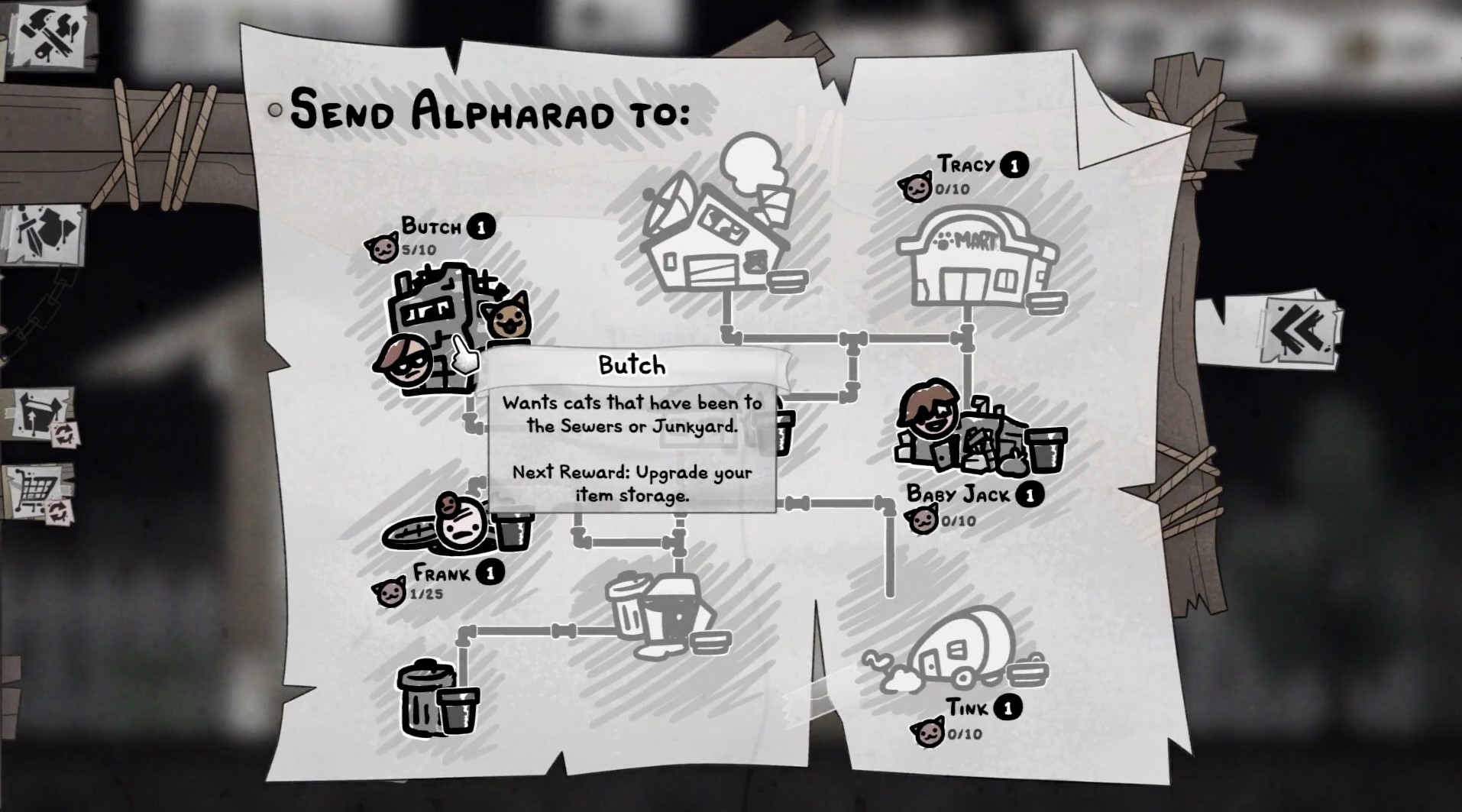
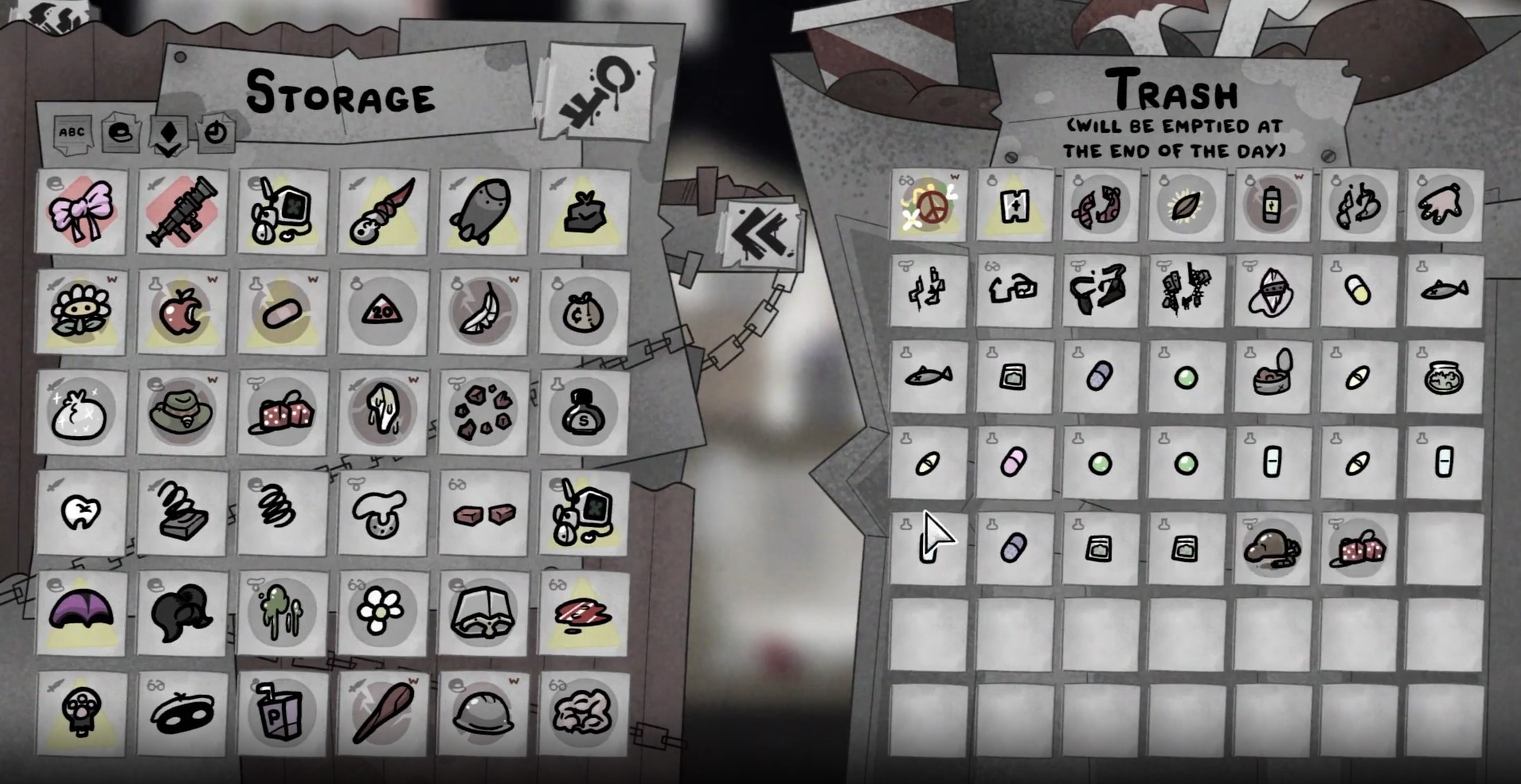
While you’re at the house phase, there’s also macro progression from your town of NPCs that accept cat “donations” of various types by dropping them into Mario pipes.
One only takes kittens, another only cats that have been injured, and so on. As you turn them in, your relationships with these NPCs level up and offer higher goals.
This allows you to expand your house, get more options at the furniture and item shops, and more.
The system here is incredibly smart because it makes every cat matter, even ones that would be hopeless on the battlefield.
Overall, the two sides of the tactical RPG with the breeding sim fit together beautifully, and every decision you make on either side of the loop can make an impact on future runs and cat generations.
A Staggering Amount of Content
Even by the standards of roguelites, a genre known for its replayability potential, Mewgenics has a stunning amount of content.
Imagine if Slay the Spire had four times as many classes or Hades had many more weapons and gods to draft choices from.
Compared to TheBinding of Isaac, which is known for players racking up triple-digit hours, we can confidently say that Mewgenics is in a different weight class.
The main campaign itself can reach over 200 hours of content, with multiple endings to be discovered. Yes, the main campaign.
As the game unfolded, we were impressed by how often a new mechanic or other gameplay twist was just around the corner. The gameplay loop just continued to mutate and evolve, like your cats.
You're constantly experimenting with new classes and party combinations. There are over 1000 unique abilities your cats can wield with nearly as many different items.
Since you’re running adventures with a different set of cats with varying genetic traits, you truly have a different experience every time - even if you’re choosing the same exact four classes every time.
No two players will have the same experience - if you compare their 10th, 20th, 50th, and 100th hours, they would have vastly different genetic stories and branches from their cats’ lineage histories.
It’s honestly insane for an indie game, and it never feels forced or lazily crafted.
Since the gameplay loop leaves a lot of room for creative freedom, it’s ripe for some sweet DLCs with additional classes, items, and chapter locations.
Banger Soundtrack
Don’t be surprised if this game is winning awards for its soundtrack alone.
Created by Ridiculon, a band that has worked with McMillen and Glaiel on past titles like The Binding of Isaac Rebirth and The End is Nigh, the madness of Mewgenics is complemented by songs that will be talked about for years.
With a setting that takes place sometime around the 1960s, you get a truly eclectic mix of genres like rockabilly, doo wop, surf rock, swing, and more. Genres that are rarely explored in the medium.
Hell, there’s even a track that sounds like Johnny Cash and another that will remind you of the jazzy Cowboy Bebop soundtrack.
Despite the cyclical nature of roguelites, the tracks never overstay their welcome. This is because you’re teased with instrumental versions of each song while you progress through a chapter.
It isn’t until you reach a major battle that the lyrics come in, adding that extra oomph to an already climactic situation.
If you liked the Sirens boss fight from Hades 2, you’ll love this because instead of just one level, it is a pattern across all the chapters and acts.
As you progress through Mewgenics, you’ll unlock these tracks and hear them on your radio rotation during the house management phase.
Overall, it acts as the glue between the elements of Mewgenics, embracing the whimsy and edge in a way that just clicks.
The Lows
You Need to Like Both Halves of the Gameplay Loop
Since both halves of the massive gameplay loop are intertwined, you'll need to enjoy both for us to recommend the game.
This leans more toward liking the tactical RPG side, because it is the more time-consuming aspect, and is a necessity, as you’ll eventually need to get food from adventuring.
If you’re playing to just have fun with cat friends, it might not sit well when they suddenly die in horrible ways and don’t come home.
Even if you try to keep your favorite cat safe at home, it’ll be at risk of getting into a fight with another cat unless you specifically isolate it in a room by itself.
If you’re a fan of tactical RPGs but not really a fan of breeding management, it’s a lot more doable since you can just make things work with random cats rather than breeding for specific traits.
Heck, you might even like the additional challenge of succeeding with weaker cats. However, your overall progression will be slower as you won’t be unlocking upgrades from the NPCs if you’re just jumping from one run straight into another.
Difficulty Takes Time to Ramp Up for Genre Veterans
Since Mewgenics is such a big game with many systems and a mountain of awesome content to get through, it does have a pretty lengthy Act 1, that for the majority, is essentially the game’s tutorial.
This will be an upside for players who haven’t played many tactical RPGs or roguelites, but if you’re a seasoned veteran who has played a wide range of titles at higher difficulties and with challenge modifiers activated, we won’t lie, it’s going to be pretty easy for several hours.
However, the difficulty level does inevitably ramp up, and at later stages, veterans will definitely be more engaged when the training wheels come off.
Once you see where the game takes you, you’ll understand why they needed to prepare newer players so much.
Skill Check Events Could Be Better
Since the entire Mewgenics package operates at such a grand scale, from the number of abilities and items to different enemies and bosses, and its highly produced soundtrack, we were surprised at how minimal its skill checks could be.
Oftentimes, we were just looking for the greenest option and avoiding the reddest without considering the wider context.
This is because the bad outcomes could often be really, really bad - like instantly losing a party member.
This did improve at later stages in the game as you bred more versatile cats with fewer weaknesses, but even then, it never really met the highs of the rest of the game.
Even when we did choose to take a risk and got the positive result, it could end up being unfulfilling or unimpactful.
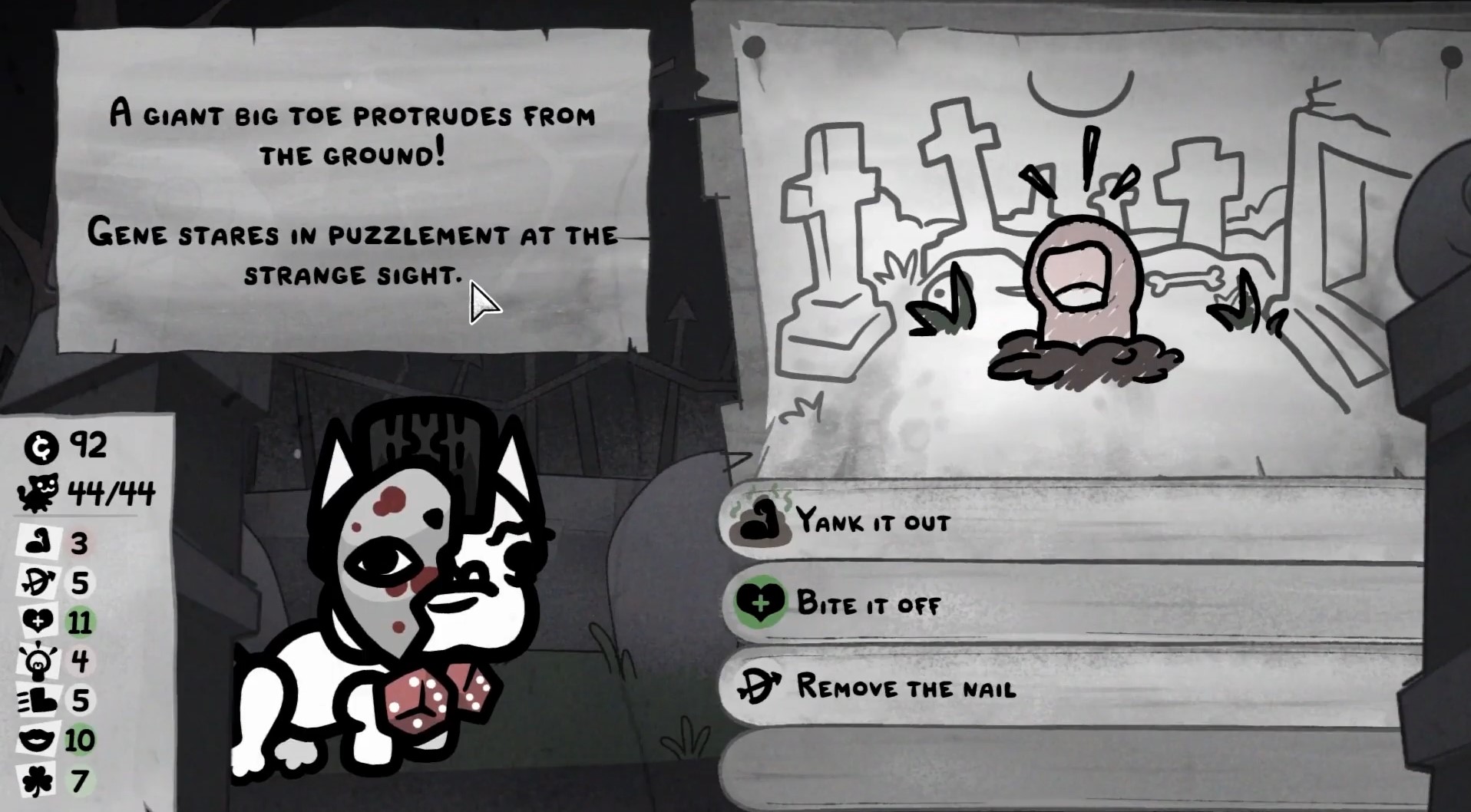
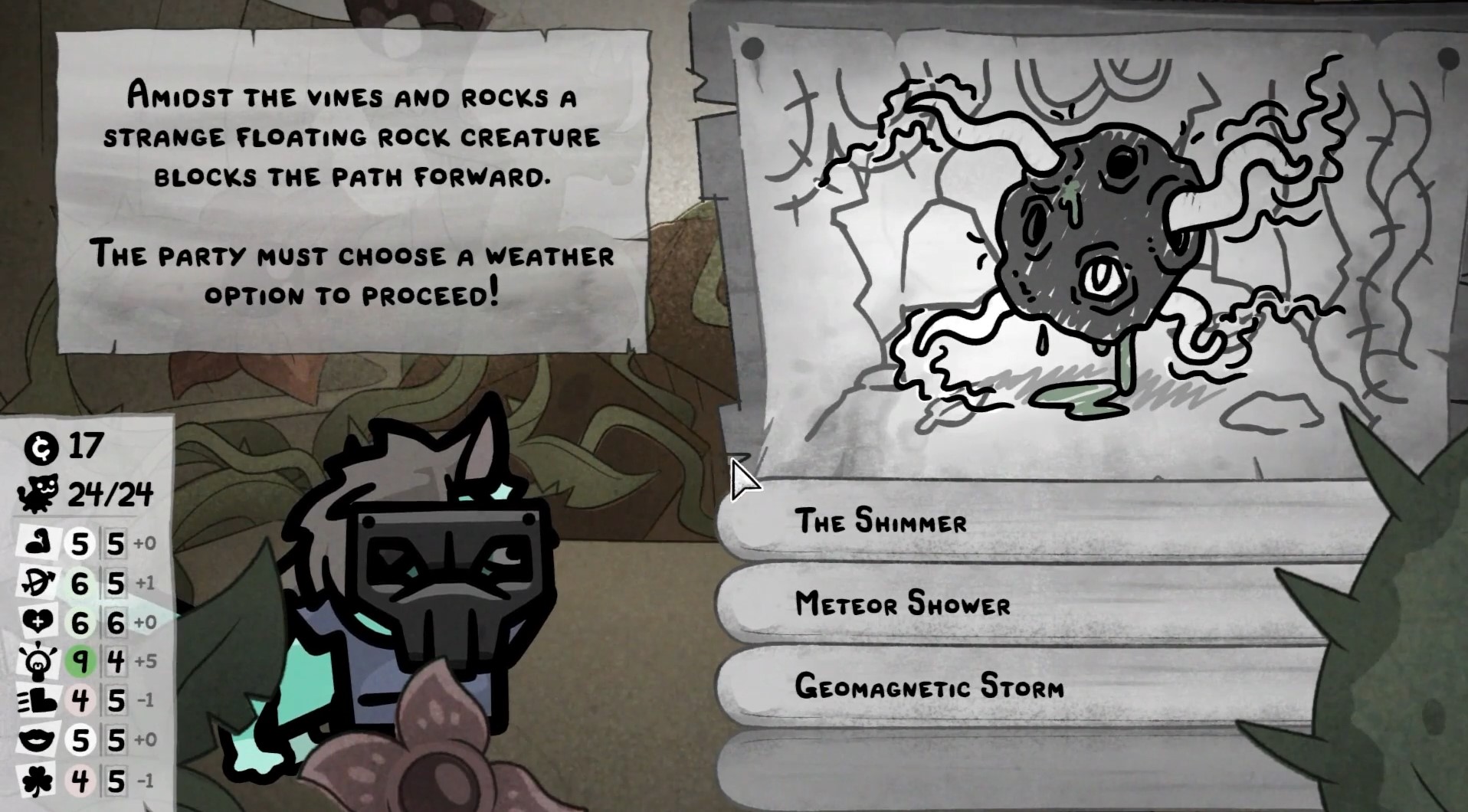
There were definitely a few skill check events that stood out, like having to choose between weather events to activate or knowingly sacrificing a cat to an altar for an unknown effect, but they could be few and far between.
Overall, they were just fine and met the standard you’d expect compared to other games, but in contrast to how deep the rest of Mewgenics was, we felt it was a more shallow point.
Our Score
9.5/10 (Indie GOTY Candidate, Dark Horse for Overall GOTY)
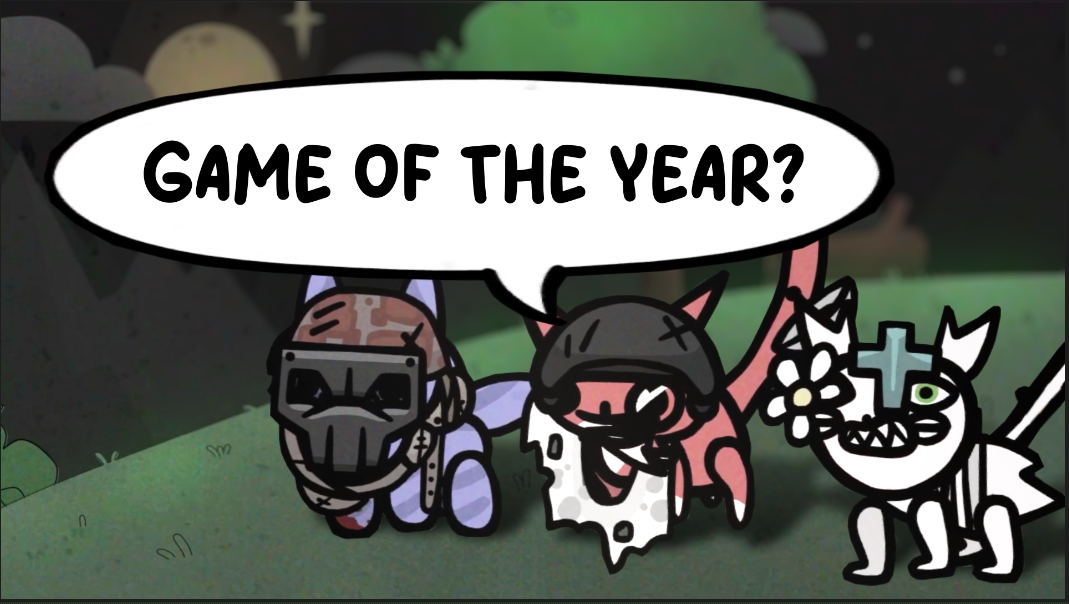
At the end of the day though, we loved Mewgenics and rate it as a 9.5. It’s safely an indie game of the year candidate and has a good shot at being on the overall GOTY list for many.
If you were already a fan of McMillen and Glaiel’s past works, there’s a good shot it's a 10 and your new favorite game for a while.
It won’t be for everyone, and at a surface level, there might be a portion of the gaming population that will overlook it by default.
However, we recommend anyone who enjoys either roguelites or turn-based tactical RPGs to give it a shot. Especially if you like to experiment and make crazy ideas work, rather than min/max the same party members over and over.
You might need to be patient for the challenge level to ramp up and the systems to be introduced, but once it gets momentum, it’ll really sink its claws into you.
There will be people who are absolutely consumed by Mewgenics, we definitely lost sleep playing it.
If you’re wondering — why cats? Well, it opens up the design space and really lets it go off the rails in ways that would only make sense with wacky cats as your baseline.
Not that many games out there can seamlessly make references to Diablo at times and Animal Crossing at others (okay, maybe Cult of the Lamb…).
Before we tried it, we found it hard to believe that McMillen thought it was his best game yet. But the more we kept playing, the more we were convinced he was right.
Reviewed by Agilio Macabasco (originally published February 5, 2026)