After its formation in 2009, Supergiant Games spent the next decade crafting an impressive run of highly-acclaimed indie titles like Bastion, Transistor, and Pyre.
In 2020, the studio broke into the mainstream with the full launch of Hades, an action roguelike themed around the Greek pantheon and fighting your way out of the Underworld to reach Mt. Olympus.
Hades similarly ascended to a strong claim to be the best of all time within the genre. It’s rare for indie games to be nominated for GOTY, but Hades won the title from multiple publications and media outlets.
Its success wasn’t just due to its addictive mechanics — Hades set a new bar with its distinct art style, layered storytelling, and polished systems that held their own against games with AAA budgets.
After the game’s success, it’s no surprise that a sequel would follow. In over a year since its Early Access began in May 2024, Supergiant Games has announced that Hades 2 is officially in its last patch before its full release later in 2025 on Steam, Epic Games Store, and Switch 1+2, with eventual releases for PlayStation and Xbox systems.
Whether you’re a Hades 1 veteran or didn’t try it at all, this Hades 2 preview will help you understand whether you should check it out.
This preview was written by Hookiedookie, who has played over 400 hours of Hades 2 Early Access, cleared every weapon Aspect at 32 Fear (Including a 62 Fear), and competes in High Fear ladder events.
Story Premise and Gameplay Summary
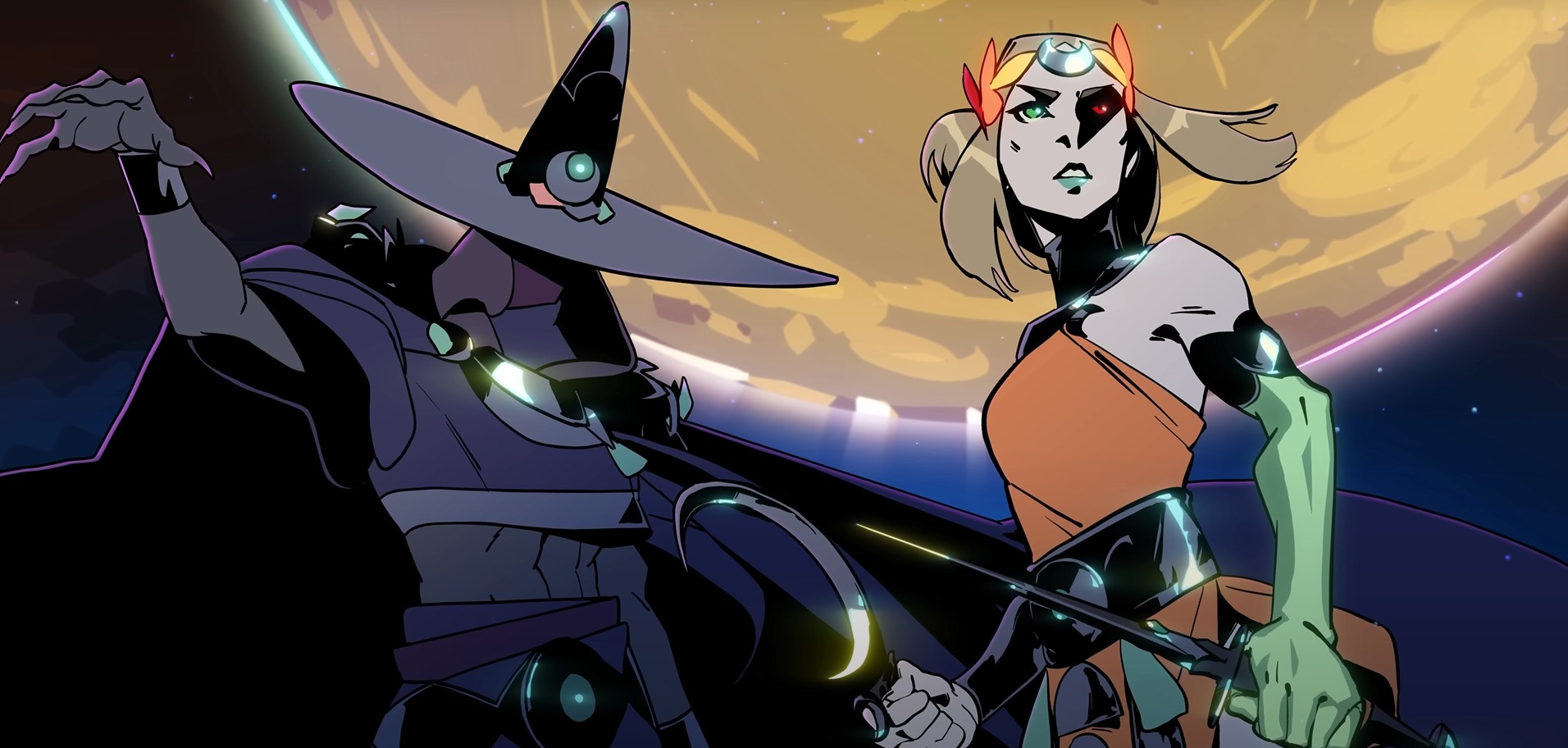
Hades 2 picks up where Hades 1 left off in both story and spirit. Zagreus the main protagonist of Hades 1, is nowhere to be found, and Chronos, the Titan of Time, has taken over the Underworld.
Instead, you play as Zagreus’s sister, Melinoë, with the gods of Olympus again coming to your aid - some returning faces along with some new ones.
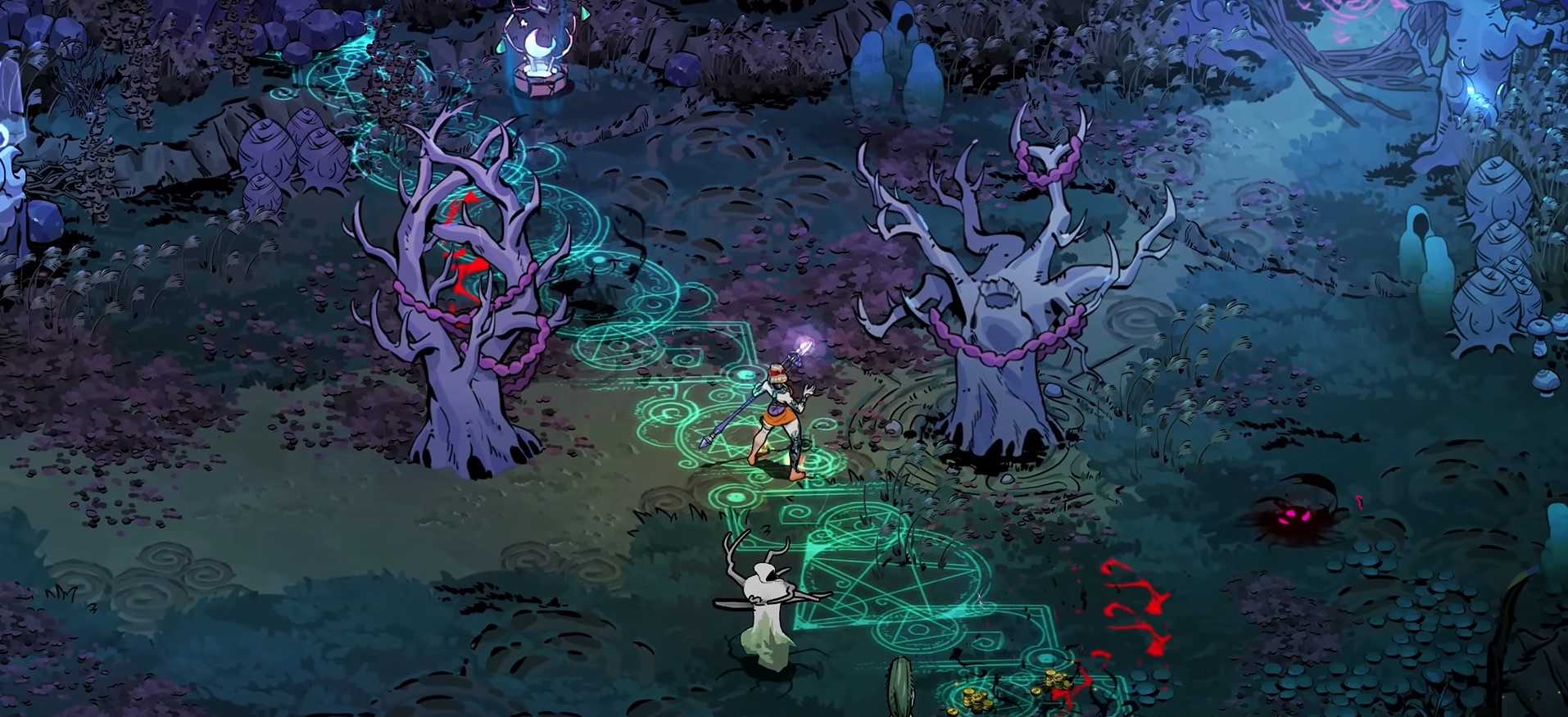
The core gameplay loop once again revolves around exploring procedurally generated floors filled with hordes of enemies and formidable bosses. Players grow stronger with each run through skillful combat involving dashing, dodging, sprinting, and unleashing spells across a diverse arsenal of weapons.
Some weapons are mashing-friendly, while others require trigger discipline. You can use melee weapons if you like getting right up in the face of the enemy, or take advantage of ranged attacks that allow you to position outside the enemy's attack range.
As a roguelite, each attempt begins anew at the first chamber. However, certain resources and upgrades carry over, making later runs easier and allowing for deeper strategic growth. The game offers an expansive array of loadouts, build possibilities, and synergies between weapons, godly Boons, and character upgrades, encouraging diverse playstyles.
Comparisons to Hades 1
Before we discuss what makes Hades 2 different from Hades 1, we want to make it clear that you do NOT need to play the first game to enjoy the sequel. You’ll miss out on some story nuances, but it’s set up to be newcomer-friendly.
Now that that’s out of the way, let’s dive into what sets Hades 2 apart from its predecessor.
New Mechanics
The new protagonist, Melinoë, is a witch who has some tricks up her sleeve that her brother didn’t have at his disposal.
To start, she has access to Omega Moves, which cause empowered versions of your Attack, Special, and Cast by holding down their buttons and expending Magick (a new resource that is essentially mana).
Rather than a projectile like Zagreus, her Cast ability is now a dropped AoE circle that can ensnare enemies and gain empowered effects from god Boons.
She also wields Hex powers instead of Calls - these require you to spend an amount of Magick in order to use them. For example, if you have Lunar Ray equipped, you can cast a deadly hyper beam after you’ve spent 30 Magick.
In addition, Melinoë has a new Sprint ability that can be held after a dash. This gives you an extended period of faster movement speed as long as you keep it held down. As you can expect, you can empower this with a variety of effects from god Boons.
Lastly, Melinoë has access to the Altar of Ashes, which provides Arcana Cards rather than the Mirror of Night system.
The most significant difference here is that no two Arcana are excluded from one another as they were in Hades 1. Instead, you have a point system that you can decide to spend before each run to best suit your intended build.
Twice the Content
The most obvious improvement in Hades 2 is that there is literally double the amount of replayability, as we already have two completely separate routes available in the Early Access.
Whereas Zagreus was limited to the same route with the same enemies every run, Melinoë has two paths available to her every run. You can either choose to fight upwards towards the surface, or below to the underworld. Both routes have their own unique set of enemies, chambers, and bosses!
Early Game Difficulty
Starting out in Hades 2 feels a bit more challenging than Hades 1. The bosses in Hades 2 seem to have more health and take longer to defeat than those in the first game. There are also more enemy types in Hades 2, which means more attack patterns to learn.
Heat vs Fear
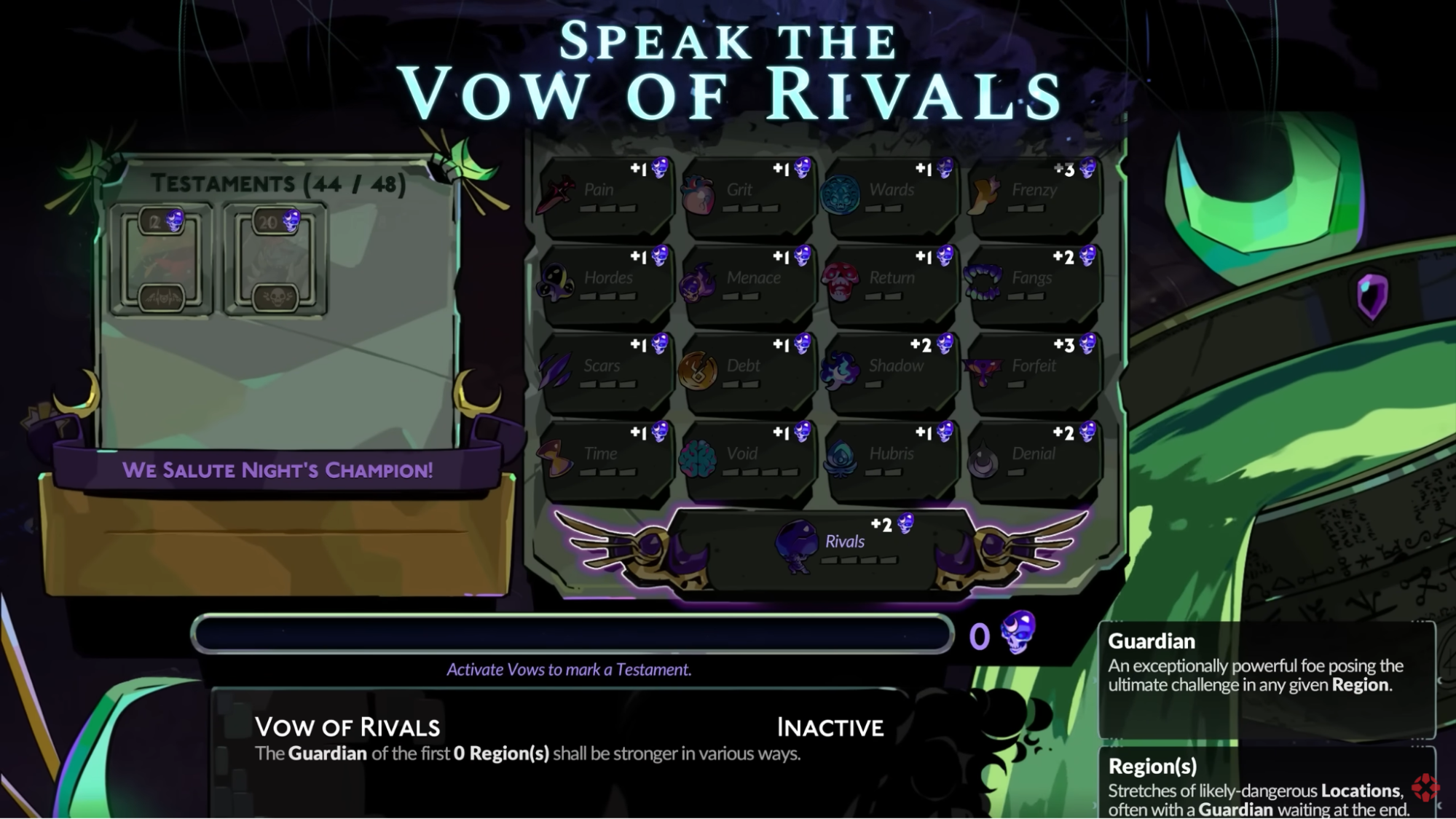
Hardcore players who pushed Heat (difficulty modifiers) as high as possible in Hades 1, now called Fear in Hades 2, generally agree that the Vows of Fear are less punishing than the Pact of Punishing from the first game.
Considering it took nearly 4 years for the first person to beat Hades 1 at the max 64 Heat difficulty, Hades 2’s current Fear levels are definitely easier than the equivalent Heat level from the first game.
More Build Versatility and Customization
There is also more versatility in builds because you have more gods and NPC boons to choose from. Also, the Weapon Aspects have a more individualized feel from one another compared to the Aspects in Hades 1.
Thanks to the new Arcana Cards that replace the Mirror of Night, you can now start every run with 10 rerolls, whereas Hades 1 only gave you 4. You also don’t have to pick between door rerolls and Boon offering rerolls because in Hades 2 they share the same resource.
After you’ve unlocked all 10 rerolls, you have significantly more control over your desired build and greatly reduce the headaches of RNG.
Does Hades 2 Do Anything Worse?
Storyline
While Hades 2 is still in Early Access, and we don’t have the complete picture, player reviews about Melinoë’s storyline have been mixed.
Many feel that Hades 1's conflict and character relationships were more compelling than Hades 2's. On the official launch, we’ll have a fairer comparison of the two games' storylines.
Less Defensively-focused Weapon Aspects
There are no defensive weapons like the Shield of Chaos, where you can block indefinitely in Hades 2. Similarly, while there are weapons with ranged attacks, no dedicated ranged weapons like the Rail and Bow from Hades 1 exist. If you enjoyed a more patient play style, you may be missing these options.
Is It Worth Playing?
Whether you want to jump in now or wait until its full release, Hades 2 is absolutely worth playing!
For fans of action roguelites, there is no better series. Hades 2 perfectly builds upon the legacy of Hades 1, keeping the best features while also expanding the combat system to reach new heights.
While the game has yet to be finished, what the devs have given us so far has exceeded our high expectations based on the success of Hades 1. The skill ceiling is incredibly high and gives players tons of room for mastery and skill expression. At the same time, the game feels accessible, and even players new to the genre should be able to complete Hades 2.
Even in Early Access, the gameplay is polished, and annoying bugs have been consistently patched out. We’re happy to see some of our favorite Olympians returning and are even more excited about the new ones like Apollo, Hestia, and Hephestus.