menu
MobalyticsUse your favourite features in-game with our Desktop App
Gamebase Guide

Marvel Tōkon Tier List (All Characters Ranked)

Guides
Updated on Aug 28, 2026
Aug 28, 2026

Overview

Welcome to our tier list for Marvel Tōkon: Fighting Souls. Compared to many other popular tag fighters, Tōkon sets itself apart with a single shared team life bar and unique assist mechanics as the foundation of its 4v4 format.

These rankings are based upon the overall strength of each hero. Viability as your team's Leader is given more weight, but a hero's Shooter, Vertical, and Assault assists are taken into consideration as well.

We are very early in Marvel Tōkon's life, so expect these rankings to change frequently as the meta develops and heroes and teams are optimized.

As with all of our tier lists, we recommend starting with whichever heroes and teams you personally gravitate towards and feel best suit your individual playstyle and preferences, then use these rankings when you want help optimizing your team. Playing a team you personally enjoy is the most important component to finding success in a fighting game.

If you don't know the roster yet, check out our explanations of all the Marvel Tōkon heroes and their playstyles.

Hero Rankings

S+ (Meta)
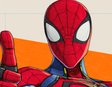
Spider-Man
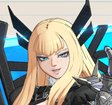
Magik
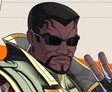
Blade
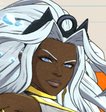
Storm
S (Top Tier)
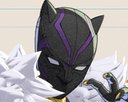
Black Panther
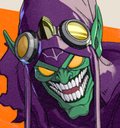
Green Goblin
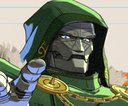
Doctor Doom
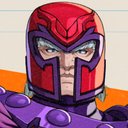
Magneto
Ghost Rider
Loki
Iron Man
Carnage
A (High Tier)
Deadpool
Captain America
Peni Parker
Star-Lord
Wolverine
Hulk
Danger
B (Mid Tier)
The Champion
Ms Marvel

S+ tier

The four best and most versatile heroes in the early meta. These are the most consistent characters in the game, offering exceptional potential as your lead hero, while also providing powerful options in assist roles. They have some of the best mixups and neutral tools, good mobility and team utility, and can fit into a wide variety of compositions. They have already been dominating early ranked and tournament play.

Spider-Man
Magik
Blade
Storm

S-tier

Extremely powerful heroes that are highly competitive with the S+ picks. Similar to top heroes, the S-tier heroes have strengths that can feel oppressive. Each of these heroes has the potential to move up to join or replace the current meta choices. They are reliable additions to any team and can easily be the focus of a strong team.

Black Panther
Green Goblin
Doctor Doom
Magneto
Ghost Rider
Loki
Iron Man
Carnage

A-tier

Strong and viable heroes with powerful tools and clear strengths, but generally more specialized or limited than the S and S+ tiers. They can perform extremely well in the right team composition and matchup, though they may require more specific setups or have more noticeable weaknesses.

Deadpool
Captain America
Peni Parker
Star-Lord
Wolverine
Hulk
Danger

B-tier

In B-tier, you'll find heroes with niche strengths and whose weaknesses are more easily exploitable. These heroes can still succeed in competitive play, especially with the right team and player. Given the nature of a 4v4 Tag fighter, expect to see each of these heroes mixed into teams with the top-placed heroes across all ranks.

The Champion
Ms Marvel

S+ tier Commentary

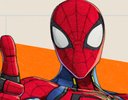
Spider-Man

Spider-Man has one of the most complete kits in Tōkon because his movement, neutral, and offense seamlessly flow into one another. Web Swing and Web Zip give him exceptional mobility, which he can use to mix up his approach angle, timing, and side, bait out the opponent's defensive options, and avoid them. Combined with a decent projectile game, these tools make Spider-Man extremely difficult to pin down in neutral and make him the best in game at forcing his turn and starting his offensive pressure.

Once Spider-Man gets you blocking, his layers of high/low pressure, varied timings, and movement give him so many mixup options, it's nearly impossible to be prepared to react to every option. Thanks to his popularity, pros are getting a bit more consistent at fuzzy-guarding some of these high/low sequences, but the reaction window is still very tight in the heat of battle.

Another component to his dominance is how threatening his resourceless offense is because of his quick movement. Unlike most heroes, he doesn't rely as heavily on assists for block strings and pressure.

His assists make him just as valuable off-screen. Spider-Man's Vertical assist has enough hitstun to make combo conversions very consistent when it connects. The web Shooter assist also provides good screen coverage in neutral and is a popular choice for a starting slot when Spidey is not starting as Leader.

Magik

Magik is the perfect combination of low investment and high reward. While Tōkon doesn't have fully traditional Shotos, Magik's kit is the closest all-rounder shoto-style with her fireball, dragon punch, and straightforward design. Portals and their setplay give her some sauce as well, but her gameplay being likened to a standard fighting game archetype is one reason why she has been so dominant in the early meta.

Compared to the rest of the roster, her normals are fast and have great range thanks to her wielding the massive Soul Sword. Magik excels at checking approaches, contesting neutral, and converting successful pokes into high damage combos.

Once she has the advantage, Portal setups enable her to keep the gas on and force tricky wake-up mix. Once a Portal is active, the defender has to account for teleport movement alongside Magik and her assists.

There are also blockstring sequences where Magik remains plus on block, meaning the defender can successfully block the string of attacks and Magik still gets to act first afterward. Altogether, her base kit, projectile, movement, and Portal setups give her a lethal layered offense in neutral and oppressive oki.

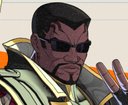
Blade

Blade's placement as a meta hero is based heavily on his team utility in addition to his capabilities on point. As the Lead, he is already a strong hero with good normals, projectiles, high damage meterless combo routes and the ability to convert full-screen attacks. Blade can alter his positioning around the opponent and make it difficult to immediately identify which side his next attack will come from, especially when an assist covers and obscures his attack angle.

The main two reasons you see Blade featured on so many teams is for his Assault assist, and tag-in combos. Blade is among the best at tagging in after a teammate wins neutral and starts the combo. When you want max damage, it's generally optimal to swap in Blade for the bulk of the combo. Using Blade in this manner also neutralizes his primary weakness of lacking the same level of neutral and mixup capabilities that the best Leader heroes possess.

Moreover, Blade's Assault assist has played a key role in shaping the early meta. It can place Blade behind the opponent and establish a sandwich situation where the lead hero threatens and Blade attacks from opposite sides. This also lets the player tag to Blade mid-attack for the left/right and high/low mixup.

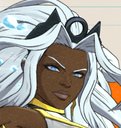
Storm

Although she hasn't yet seen the same level of immense popularity as the other S+ heroes, Storm's wind mechanic gives her unique options for offense and defense that earn her a top spot in the rankings.

Proper use of her wind stocks allows her to dictate where interactions happen and if neutral happens or if she just neutral skips. In addition to tricky block string mixups, she can use wind movement to set up her command grab so quickly it's incredibly difficult to defend against the strike/throw mix.

Compared to a hero like Magik, Storm requires a bit more specialized mastery in that her buttons are more stubby, and Storm players need to have a deeper arsenal at their disposal in order to know the best move to use in various situations, whereas Magik's fast and large normals work as cover-alls.

As the Assault assist, she can pull opponents out of the corner and set up her lead hero for left/right mix. The pull positioning can be somewhat ambiguous, which makes it even harder for the defender to predict and defend against.

Even considering we've placed her in the number four spot, Storm has the potential to climb even higher as she boasts some of Tōkon's strongest screen control from wind movement manipulation, neutral skips, 50/50 mixups, command grab, high damage, and good assists.

S-tier Commentary

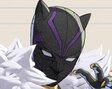
Black Panther

Black Panther sits immediately beneath S+ because she may be one of the strongest dedicated Leader heroes in the game, but her total team value hasn't shown to be quite as universal as the four characters currently in S+ tier. She could easily move up to meta tier as the game develops, and the gap between the two tiers is not insurmountable.

As long as she has Bast's Blessing Gauge available, she can use her Unique to quickly dash and reposition. Panther can use her movement to create left/right and high/low ambiguity, and her extremely fast air movement is both fun to pilot and difficult for opponents to predict. Additionally, her EX overhead adds another layer to her mix and is another reason the mental stack Shuri puts on her opponents is so heavy.

One notable weakness, therefore, is her resource dependence. Black Panther can feel lacking in options when she finds herself with low meter. While she's easily a meta Lead hero, she falls behind just a bit in the team enabling department.

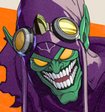
Goblin
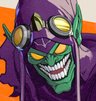
Green Goblin is a high-ceiling mixup, setup, and assist specialist who becomes terrifyingly oppressive once his team establishes advantage. His Glider gives him exceptional mobility for tricky movement and ultra-fast mixups. For assists, his Vertical is great for anti-air coverage and conversions, and his Assault is perfect for creating sandwich mix.

He has the best Oki in the game because he is able to deploy bombs and set up his glider before the defender recovers. These oki setups can allow him to snowball rounds after the first successful combos. Unlike most other heroes, he doesn't need to cover his wakeup pressure with an assist to start a mixup. Trying to defend against his lightning-fast and deceptive high/low mix feels like a guess for game situation.

The tradeoff of this lethal glider play is that Green Goblin's raw neutral without time to set up or without glider is not nearly as dominant. Also, he's quite complicated and doesn't synergize as universally as some of the higher-ranked heroes. Generally, you'll see him paired with an ally who can enable his kit or earn him a knockdown, then Tag in, then tag out after using up glider resource.

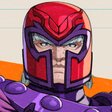
Magneto

Magneto is likely the best zoner in Tōkon, and his assist package is equally great. Especially his Vertical assist, which excels at controlling aerial space and setting up tag-in combos. Then his Assault assist can pull opponents out of the corner to enable left/right or sandwich setups for teammates.

Rather than simply functioning as an assist bot, Magneto contributes to combo routes and cash-outs through Magnetize. The biggest weakness of Magneto is that anti-zoning tools are abundant in Tōkon. Basically every hero has ways to disrupt or avoid his projectile play.

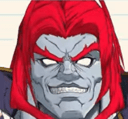
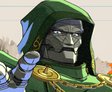
Doom

Doctor Doom is kitted out as both a zoner, and an anti-zoner. He's an excellent counterpick against the projectile and assist-heavy strategies defining the early meta.

Nullify Shield lets him directly challenge projectiles and create cover for his own zoning or for his approach. Beams, Flight, and fast full-screen Super let him control space and punish careless assist usage or movement from the opponent.

Having not only a lunging attack, but also having the invulnerable portal EX variation, gives him a strong mixup tool for sandwiches or baiting and countering attacks.

Loki

Loki's strength comes from layering the mental stack of options the opponent needs to defend against, rather than relying on one overpowered gimmick. A tricky combination of good normals, projectiles, traps, feints, and movement gives him a flexible neutral game, while his ability to cancel attacks allows Loki to use conditioning to break through the opponent's defenses.

He's also one of the better solo-pressure characters and can use his own kit to establish control and run mixes without needing to overly rely on assists for every action.

Where he's a bit weaker is that none of his assists are obviously amazing, although none are terrible. Also, he performs best when the entire team is built around enabling his point play, and isn't a straightforward fit into any team like some other heroes are.

Carnage
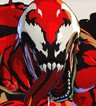
Carnage relies more on setplay than the heroes ranked above him, but he can certainly hold his own on both point and assist. Parasite Bombs are a powerful tool for running his offense and allow him to loop blockstrings and make the opponent feel overwhelmed by attacks.

Often it takes some work to earn these opportunities as he's not quite at the same caliber as the top-ranked heroes when on point. On the upside, his armored options, overheads, long-reaching attacks and command grab give him a lot of options. Once his team earns the advantage state, Carnageis allowed to shine. Carnage often starts on assist and gets tagged in to continue the offense or cash out for big damage.

Ghost Rider

Ghost Rider has huge normals, excellent reach, good damage, and a dangerous strike/throw game. His buttons allow him to zone and control ranges where many characters struggle to challenge him.

His go-to offense layers an instant overhead, resets, and command grab to punish opponents for becoming too comfortable blocking. His enormous hitboxes are also great at punishing predictable assist calls as these attacks are consistent to scoring happy birthdays.

Deadpool

Deadpool's design in Tōkon feels true to his unconventional characteristics as the merc with a mouth. He's equipped with zoning and screen-control tools that can be used to cover every angle from grounded horizontal to aerial diagonals, and manipulated bomb paths.

The glaring weakness of Deadpool is that the best parts of his moveset are locked behind his self-damage mechanic. Any failed offensive attempts can easily result in him losing his gray health on top of taking the standard damage from the opponent's attack. In this way, he's like a glass cannon and ends up with many rounds being lopsided one way or the other. Therefore, anyone looking to play Deadpool needs to be confident in their decision-making and matchup knowledge, but he has the potential to reward the effort.

A-tier Commentary

Peni Parker

Peni Parker is a trap character who wants to create space for her to deploy drones, then force the opponent to navigate around them, which gives Peni the upper hand. Her win condition revolves around combining deployables with assist calls and Tags to overwhelm the opponent and keep them on the defense. She also has some good buttons such as her 5M & 2M, which both come out quickly and have good range, or her 2H, which puts out a massive launcher hitbox in front of her.

The drawback of her character design is needing to earn free time to set up, and the fact that the extremely fast pace of the game makes it difficult to do so. When a player pulls it off, she can become oppressive, but overall her kit is a bit lacking compared to the heroes currently dominating ranked and tournament play.

Captain America

Captain America's build is honest, tried and true, just like him. He's another hero that feels similar to the standard shoto archetype, where he is carried by player fundamentals and doesn't rely on knowledge check gimmicks. Cap has solid buttons and useful screen control with his shield. His shield can occupy space while Cap advances behind it, giving him a natural path to transition from neutral into close-range pressure.

The issue isn't that Cap has a glaring weakness; it's that he lacks the extreme strengths that define Tōkon's current meta. Other characters bring neutral skips, oppressive setplay, piercing projectiles, elite mobility, huge conversion reward, or premium assists on top of otherwise strong fundamentals. Cap can play conventional fighting-game situations well, but in a roster filled with characters capable of bending those situations in their favor, being well-rounded is less valuable than having a truly dominant specialty.

Iron Man

Iron Man is a well-rounded hero who can do everything from projectile zoning and flying, to rushdown and high damage combo conversions with his EX moves. Flight and flight cancels make his keepaway particularly difficult to challenge because he can alter his positioning and disengage from situations where conventional zoners might be forced to commit. His Shooter assist is also an excellent source of projectile coverage for any point hero.


A weakness of Iron Man compared to the top tiers is that offense doesn't have the same snowballing potential. Generally, after his combos, he has to choose between going for low damage and reset for better oki, or committing to damage but giving the opponent the freedom to recontest in neutral.

Wolverine

Wolverine is a dedicated rushdown character whose close-range offense can be much scarier than his placement suggests. Once he gets in, safe pressure, shimmies, high/low threats, movement, and delayed attacks shred through the opponent's defenses. The resulting combos have good damage routes and he has good oki pressure to help him keep the advantage.

His primary weakness is having lower team utility and a difficult time finding safe and effective approaches. Wolverine has to navigate zoning, projectiles, assists, and large normals without the same neutral skips or screen-control tools available to many stronger characters. On assist, he doesn't have a unique value that would make him a must-pick on certain teams. Overall, as long as he has Assemble meter available to cover his approach and keep the opponent locked down, he's lethal in his close-range niche.

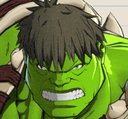
Hulk

Hulk smashes with gamma armor and incredible damage. While he doesn't have the fastest attacks, his huge hitboxes are great for close to mid-range brawling, especially when he has gamma resource built and armor. Some of the highest damage combos in the game are performed by Hulk teams, so you'll often see the lead hero tag in Hulk to cash out and delete the opponent's life bar.

A not-so-incredible component of Hulk's kit is that he lacks an air dash. Against zoners, he struggles more with keep-away and long physical attacks due to his large size and slow speed. At least he has Thunder Clap to help deal with projectiles, but overuse of claps can easily be baited and punished by a prepared opponent. Hulk has top-tier damage, but reaching that damage consistently is the problem.

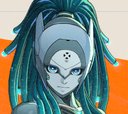
Star-Lord

Star-Lord has high mobility, strong anti-zoning tools, and the potential to rise significantly as the meta develops. Flight and fast-fall are great for defensive maneuvering and for tricky high/low and left/right pressure during his offense. When combined with assists, his projectiles give him enough ranged control to weave between neutral poking and rushdown strategies.

Restands add another layer to his offense by letting him sacrifice a conventional knockdown for continued pressure or tag sequences, but only time will tell how the mixup routes and defensive counters balance these scales.

Thanks to his invincible projectile Super, he also gets used as a counterpick against projectile-heavy team comps. His main drawback is that his offense can be assist-hungry and rely heavily on meter usage.

Danger

Danger has the most unorthodox setplay and movement, which makes her ranking the most ambiguous on the roster. Her actual ceiling is likely higher than current representation shows, but the game being so young does not favor unconventional kits like hers.

Using her Unique and projectiles for setplay and zoning can be very effective, and she has her TP to help with her approach, movement, and mix. For now, however, that strength comes with a substantial execution demand, requires setup, and team-building requires precise pairings rather than plug and play any hero. Danger is better described as pending and unsolved rather than weak.

B-tier Commentary

The Champion

The Champion has so much pride that he doesn't even use Assists. As Tōkon's premier grappler, he relies heavily on conditioning his opponent to be hesitant with their decision-making and catching them with his strike/throw mixups.

Although he can't use assists, he still has decent teamwork because he can set up tag outs and use lingering attacks like his medium Void Knuckle to cover his allies' follow-up attacks.

His low placement is defined by the lack of assists and the large gap between his normal and Awakened states. Once Awakened, Champion becomes dramatically more threatening with improved mix, unblockable threats, stronger conversions, and his own assists. However, other characters access their primary win conditions almost immediately, while The Champion spends too much time building the match, investing in Pride Gauge for a payout that is not an instant win.

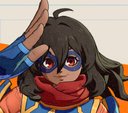
Ms Marvel

Ms Marvel is the flexible hero whose stretchy normals let her contest and fight from range. Her assist package can also be used for unique setups because she actually has one of the slowest assists in the game. While you typically want a fast assist, a slower one can be used for some cheeky setups to follow your point hero's attacks.

Her main issue is that she lacks any sort of a meta-defining win condition. She doesn't dominate neutral, her setplay isn't amazing, her mobility is poor, and her grabs only lead to mediocre damage. Don't sleep on her, however, because Ms Marvel is still viable to use in a team, she'll just need some buffs to compete at the same level as the rest of the roster.

Table of Contents

See More

Onimusha: Way Of The Sword - Collectibles, Trophies & Puzzles
Updated on Sep 7, 2026
Onimusha Way Of The Sword - Mysteries Of Kyoto Guide - Demystified Trophy
Updated on Sep 7, 2026
Onimusha Way Of The Sword - Oni Armaments Locations Guide
Updated on Sep 7, 2026
Onimusha Way Of The Sword - All Genma Note Locations - Genma-ologist Trophy
Updated on Sep 7, 2026
Onimusha Way Of The Sword - Hidden Path Puzzle Guide
Updated on Sep 7, 2026

Like our guides?

Add Mobalytics as a preferred source on Google!