

This guide was created by Agilio Macabasco.
Understanding Diablo 4 defenses can be complex due to all its layers, so in this guide, we’ll be breaking down its parts.
The three main parts we’re organizing the topic into are Hit Points, Reduction, and Avoidance.
There’s a decent amount of math involved so feel free to ask any questions in the comments below!
The highly anticipated Spiritborn class has been introduced in Diablo 4’s Vessel of Hatred expansion. Get the scoop with our best Spiritborn builds!
Here’s a handy infographic version below, or feel free to jump to the text.

TLDR
Defenses can be separate in Hit Points, Reduction, and Avoidance
Hit Points
- Life
- Barrier
These are the base of your defense, the more you have, the more benefit you get out of scaling it with reduction and avoidance.
Reduction
- Damage Reduction
- Armor
- Resistances
- Fortify
These are how you scale your defenses, each percent you add makes your Hit Points more valauble.
Avoidance
- Dodge
This is another way to scale your defense. When looking at the average case scenario it works exactly like Reduction.
Effective Health Pool (EHP)
How much actual damage your HIt Points can withstand after scaling is called Effective Health Pool.
Effective Health Pool = Hit Points / [(1 – Reduction) * (1 – Avoidance)]
This is the average effective health because avoidance is based on probability.

Note:
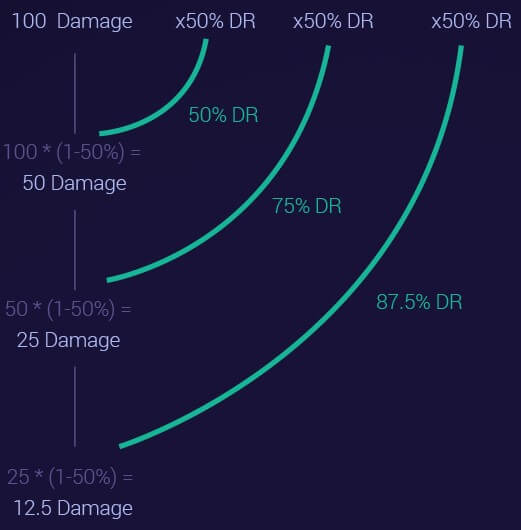
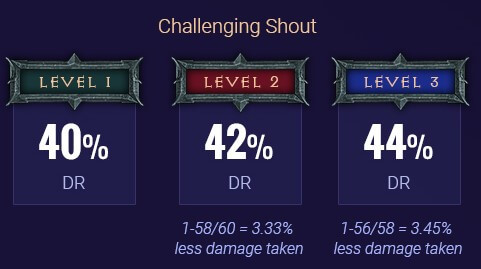
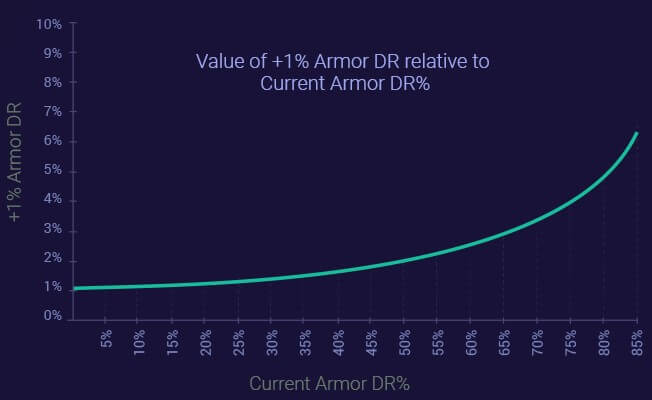
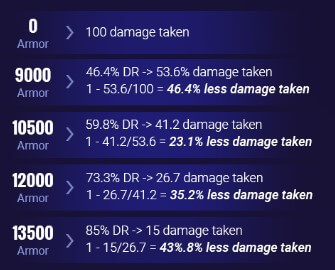
A quick glance at how damage reduction works, in combination with the in-game tooltip, gives the impression that it has diminishing returns. However, if we include our health pool in the equation and consider our actual tankiness, we see the opposite is true, damage reduction scales exponentially. This is why the best Diablo 4 builds do not forget about defences, and every build you come across has a plethora of defencive options whether they come from skills, affixes or both.