When players talk about “diving” in Overwatch, they are referring to a strategy of suddenly attacking and earning a quick KO. Dive can be an entire team, or just a single hero whose playstyle is built around mobility, timing, and burst damage.
At its core, Dive is about using superior mobility tools to suddenly collapse onto a vulnerable target and secure a quick elimination before the enemy team can react to save them or counterattack. In pro play, you'll often see Dive comps dominating in the Asia region.
Compared to the other main team comp styles of Brawl, Rush, and Poke, Dive is considered by many to be the most difficult to execute successfully, requiring team coordination, patience, the ability to read both teams, and keep track of a large number of resources.
Dive Team Comp Example
Best Dive Heroes
A standard dive team composition includes a highly mobile Tank like D.Va or Winston paired with high-mobility DPS such as Tracer, Genji, or Vendetta.
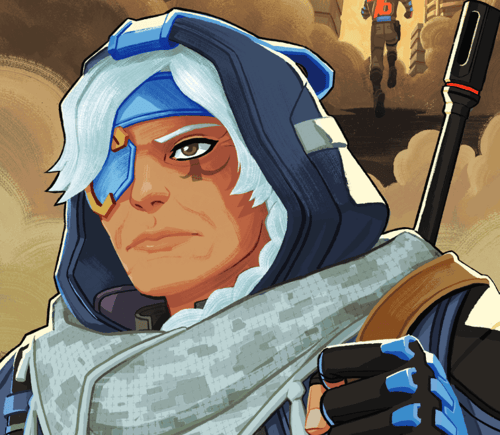
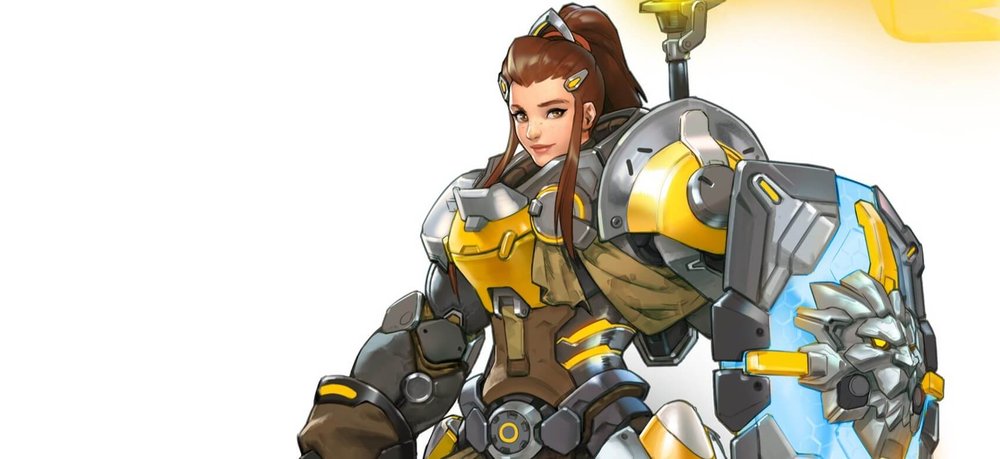
Support choice is where you'll find the most amount of variation. Some try to match mobility with Supports like Kiriko who Swift Step to teleport around with her allies, and Lúcio for his speed. Even more popular is to fortify the backline with one Support who brings high ranged healing output like Ana, with another Support that can protect her while she focuses on healing. The best for that job is Brigitte, but you'll also see Lúcio and Mizuki used to perform the same function.
Making the Heroes Work Together
No matter what heroes you play, the main component creating effective Dive synergy is the ability to attack in the same place at the same time. This can be done by Doomfist slamming into the back line with Sombra waiting behind them to join the attack. Alternatively, you could swap out Sombra for Emre and have him be ready to shoot Doom's target from long-range, without needing to physically follow his Tank.
Example of a Dive Team
Tank: D.Va
DPS: Tracer, Vendetta
Support: Ana, Brigitte
The reason this team works so well as a Dive comp is that it combines extreme mobility from Tank and DPS, with high sustain and survivability from the Supports. As a backline, Ana and Brigitte are equally good at enabling their team's Dive, as they are at shutting down the enemy team's Dive with their CC and cooldowns.
How To Dive
Target Priority
Target priority means which hero on the enemy team should be the focus of your setup and attack. Knowing how to select an appropriate target is the foundation of every successful Dive. Rather than engaging the closest enemy, Dive heroes use their mobility to identify isolated and vulnerable targets, then bypass the rest of the enemy team to attack the one they can KO the quickest and easiest.
Example: The enemy team has a Widowmaker setup behind the rest of her team, sniping at your teammates. Your allies have difficulty dealing with her because they also have a Reinhardt holding up Barrier Field to protect her from ranged attacks.
In this example, Widowmaker is the high-priority target. Instead of trying to fight Reinhardt or attack his Barrier Field, take advantage of the fact that Widowmaker is focused on sniping your allies, and sneak up on her to unleash your best burst damage combo for a quick KO.
The Dive Checklist
The #1 mistake players make when trying to play a Dive hero or comp is trying to Dive straight at their target without taking an assessment of the entire fight.
Here's a list of the types of questions you should be asking yourself before committing to a Dive attack. While this list is not exhaustive, these are fundamental questions that will apply to every match.
Who can I get a 1v1 advantage against?
Where can I attack from where my target enemy won't see me?
Flank routes, high ground, walls? What kind of environment can I use?
Where is your team positioned?
Can anyone help with my attack?
Where is each member of the enemy team?
Can anyone help defend the target?
Where am I at an advantage, and where is the enemy at an advantage?
Who is threatening whom?
Do I need to defend my team, or am I free to go offensive?
What cooldowns and ultimates are available?
How can I play around those resources?
Here we see Winston first set up on some high ground, and take a quick peek at the enemy's positions. He drops back before taking too much poke damage. As soon as his team is ready, they all collapse onto the enemy Anran, and punish her for poor positioning and being isolated from her team.
Setting Up a Dive
Staging refers to the time it takes to slowly move closer to your target and get into position before actually using your cooldowns to engage or attack. Rather than going from point A to B instantly, you advance and take space in stages.
Example: You are playing Winston. Don't Jump Pack through four enemies to target the fifth right behind them. Instead, use Jump Pack to first access a high ground position that overlooks the enemy team. Assess the positions of all players as you wait for your cooldown to refresh. Then walk or regular jump off the high ground onto your selected target.
Taking the time to stage or set up before an initiation greatly increases the odds of a successful Dive. You will have your cooldowns available, and minimize poke damage taken while getting closer in stages.
The opposite is using Jump Pack to dash past the enemy team and straight into your target without knowing where each player is positioned. You drop Barrier Projector, it gets destroyed, and you get yourself killed before Jump Pack is available again.
Use the entire map!
Proper staging involves taking high ground, controlling off-angles, and spreading out across the map to avoid telegraphing your attack plan. Dive compositions rely heavily on map control, using verticality, flank routes, and multiple angles to create pressure. If you stand there staring at your target, then dash straight at them, don't get mad when they very easily counter your plan.
Resource Management
Resource management plays a major role in winning these fast-paced fights. Cooldowns should be used deliberately, with players ensuring they have a plan or ability to escape alive after Diving. Tracking enemy defensive tools is extremely important.
Example: You are playing Genji and try to Dive an enemy Juno. You saw her use Glide Boost, so you think now is an easy time to go for the KO. However, you didn't realize her ally Mizuki was nearby and had Binding Chain available. You get tethered and die.
Instead, if you knew that Mizuki is nearby and ready, you could plan ahead. One option would be to wait to visually see he used Binding Chain on a different teammate, then engage. Another option is being prepared with Deflect to react to the start-up of Binding Chain
An even higher value way to outplay the Mizuki would be to save Deflect and instead use Cyber-Agility double jump to bait out and dodge Binding Chain.
Either way, the important factor is to know what resources Juno has available to her. Health, ally abilities, her own cooldowns, and even the map itself are all resources you need to factor in before attacking.
Be Smart, Not Desperate
In this clip, we see the follow-up. Genji and Winston jump to the high ground to contest the remaining enemies. Both Tanks exchange cooldowns, but by now Winston already has another Jump Pack.
Instead of full sending, he takes the next area of high ground above the enemy, and slowly chips at their health as his team moves into position with him. Once the enemy drops back, and his team has the opportunity for another pick, he commits both Jump Pack and Barrier Projector to chase the and KO the Kiriko.
Now his HP is too low to force any more kills, so he uses Jump Pack to escape to the high ground behind him, before his barrier breaks, and before his HP becomes critical.
Sometimes, eliminating an enemy is not possible. Even if you get the enemy Baptiste down to 10 HP, but they still have Immortality Field available, they are not actually close to dying. In this scenario, if your health is already low, and you've already used your defensive resource (Defense Matrix, Recall, etc.) don't get desperate and try to force the kill anyway because your odds of succeeding are slim to none.
Better to escape, reset, and try again. Think about what factors helped the enemy to survive. Did they receive healing? Had a cooldown you forgot to plan for? You don't have enough burst damage, and you didn't have an ally to help you? Use this new information to make your next Dive even more effective!
Staying Alive!
We've all seen the Genji meme, "GG no heals." Don't be this guy. Instead, realize that "heals" are way down the list of resources you should be using to stay alive during your Dives.
Be self-sufficient. Health packs, defensive and movement cooldowns, walls, cover, corners, and angles are your first line of defense. Don't Dive into 3 enemies by yourself, out of your Supports LoS, then flame them for your bad play. Even with healing, you still can't afford to Dive a target that has 2 or more allies available to peel for them.
Remember the questions under The Dive Checklist; attack from an angle outside the LoS of your target's teammates. If only one enemy can see and attack you, you're unlikely to die, and you won't need to rely on healing that may or may not arrive.
Winning Without Elims
Not all successful Dives end in you getting an elimination. Soft engagements are where you hold onto a high-value long cooldown but force the enemy to use theirs. This gives you a major advantage you'll be able to exploit a few seconds later.
Example: You are playing Winston. You properly approach in stages, then engage an enemy Kiriko who is positioned by herself. Both of you have all cooldowns available.
Because you know there is no threat of being killed by her, you don't need to use Barrier Projector. She lands a couple of headshots as you fight, then she Swift Steps away, and uses Protection Suzu to heal herself.
This interaction is 100% a win for you. Had you used Barrier Projector, the exchange would essentially be even, but because you saved it, you can now disengage, then re-ingage during the long 14-second cooldown of Protection Suzu.
Picking up from the above example:
Disengage instead of immediately chasing with low HP. Jump Pack to cover, and grab a health pack or get healing from your team. Even if this takes you 8-seconds, you'll still be Jump Pack to Kiriko's new position, use Barrier Projector to commit and fight.
Also, there is still 6 more seconds until she has another Protection Suzu.
How to Counter Dive
When executed properly and left unchecked, Dive comps feel extremely oppressive. There are a few strategies you can utilize to counter Dive comps. Depending on your playstyle, hero pool, and team preference, each of these methods will help you shut down those pesky Dives!
Brawl or Deathball
Technically, Brawl comps beat Dive comps.
To win when playing a brawl team, set up first, control space, and cut off as many engage routes as possible. This means using corners and cover to encourage or force close-range engagements where the brawl team has the advantage.
Don't stand on low ground next to a bunch of high ground. Don't leave your back and both sides exposed. Obviously, it's not possible to cover every angle at once, but take positions that minimize where the enemy Divers could path and attack from.
No Dive hero is going to beat Reinhardt if their only choice of attacking is being in range of Rocket Hammer. Force close range battles with multiple nearby allies to assist you.
Example of a Dive Counter Brawl Team Comp
Tank: Reinhardt
DPS: Symmetra, Ashe
Support: Brigitte, Mizuki
Dive Weaknesses
The main weaknesses of Dive comps are low sustain and low point presence. If their Tank is Wrecking Ball, he can't stand at a choke point and hold his ground against Junker Queen walking into his hamster face.
Importantly, brawl and deathball comps win by drawing out the fight and winning through their superior sustain. Don't hard commit to a risky play; instead, slow and steady will win this race. Stay grouped up where you won't end up in a 1v1 trying to duel a Dive enemy.
Predictions > Reactions
First off, the most important factor in countering Dive is not the hero or map, but the player. Consider the aforementioned How to Set Up a Dive list of questions. Reversing the questions to the defenders persective will help prepare you to properly shut down any Dive team:
"Who can get a 1v1 advantage against me?
Where can the enemy attack from that is out of my LoS?
Flank routes, high ground, walls?
What kind of environment can I use for protection?
Where is your team positioned?
Can anyone help defend me if I get Dove?
Where is each member of the enemy team?
How many of them have an angle to attack me?
What positions on the map am I at an advantage, and where is the enemy at an advantage?
Who is threatening whom?
Whose attention and resources are already being occupied?
Do I need to defend my team, or am I free to go offensive?
What cooldowns and ultimates are available?
How can I play around those resources?"
When you've already considered these questions and possibilities, you can be prepared to defend and counterattack. If you try to rely on raw reactions, the enemy has a major advantage.
Defensive Resource Management
Similar to the person playing a Dive hero, as the player who may be vulnerable to a Dive attack, managing your resources and tracking the enemy's is vitally important.
Example of How to Counter Dive
Let's flip the example from Winning Without Elims section to Kiriko's perspective. In this scenario, you are playing Kiriko, positioned at an off-angle and assisting your team at range.
The enemy Winston lands on you. Both players have all cooldowns available.
Because you are smart, you already planned for this. You know you can Wall Climb up and over the wall next you.
As you do this, Winston tries to chase with Jump Pack. As soon as he does so, you use Swift Step to TP away.
Now he is unable to chase you, and is standing there completely useless while waiting for another Jump Pack.
Because he already committed his leap, he may also need to waste Barrier Projector to stay alive.
You've won this engagement, and created a window of opportunity for your team to make a fight-winning play during Winston's down time.
Now, you don't need to escape immediately. It's ok to still counter-attack with a few Kunai, but only when you are still able to get out before your health gets too low, or if you have an ally nearby to help you.
Also, it would be ok to use Protection Suzu if the Winston hard committed and used Jump Pack and Barrier Projector to Dive you, and you had no other way to survive. In this scenario, the exchange is essentially even,
Anti-Dive
Some heroes have kits that are specifically designed to be strong against Dive enemies.
Tanks
When playing Tank, Orisa can counter the knockback and movement abilities of enemy Dive Tanks like Doomfist and Wrecking Ball with Fortify and Energy Javelin. Similarly, one good RoadhogChain Hook can equal death for any Dive enemy.
DPS
DPS heroes like Torbjörn can also be a good choice. When he or a nearby ally is the Dive target, activating Overload gives him the over health needed to survive the attack, and increased damage to force the enemy to retreat, or stay and die. Deploy Turret is also one of the best abilities in the game for easy Dive counter because it will automatically attack flanking enemies as soon as they enter its LoS. It also doesn't miss against slippery targets like Tracer.
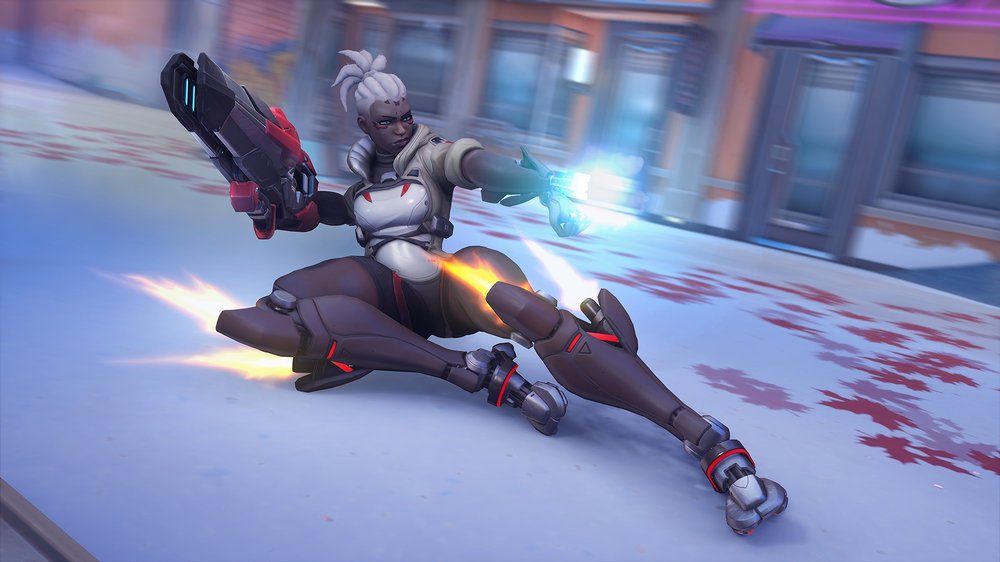
Another DPS strategy is to play someone like Sojourn or Tracer who has the mobility required to escape Dives. Just make sure to save Power Slide or some Blink to quickly dash away after the enemy has already used their movement cooldowns to chase you.
Supports
Supports are the highest-priority target for Dive comps. Their lower damage output make them a less threatening target, and without their sustain, the rest of their team will die shortly after.
The best Supports to counter Dive are those with strong crowd control or mobility like Brigitte, Kiriko, Lúcio, and Mizuki. If the Dive is coming from ground-based or melee heroes like Vendetta or Tracer, Jetpack Cat can just keep flying away, and no one can keep up with her mobility.
Your top priority when playing Support against a Dive comp is shutting down their mobility. When you see D.Va use Boosters towards you or a teammate, Binding Chain to stop her in her tracks. The same can be said for any other Dive enemy's movement cooldowns and countering with your crowd control ability.
Peel
Don't forget it's not just about you. If you want to win, keep an eye on your allies. Pay attention to the enemy's intentions and be ready to assist your ally when the enemy team ignores you and tries to dive your teammate.
Sometimes, focusing on peeling defensively is also the best strategy to get an elimination. While it feels great to go in deep and assassinate an enemy Support in the back of the map, waiting until the enemy comes to you, then swiftly counterattacking is a potent plan.
Eliminate their flankers and Dive heroes by peeling for your backline. Doing so generally puts you into a mini-numbers advantage (e.g., you + 1 or 2 Supports vs one enemy). Together, your team can quickly eliminate that enemy. Then, go back to the full fight now that you are in a 5v4.