Mortal Shell II is a sequel that shows Cold Symmetry understands exactly why players connected with the original’s bleak identity, then pushes those ideas into something heavier, stranger, and more tactile. It’s still a game about fragility and resolve, about wearing borrowed strength like a second skin, but now the world feels hungrier and more deliberate in how it tests you. Combat hits with a denser rhythm, Shells carry more distinct personality, and exploration leans harder into that “lost pilgrim in a dying land” vibe that defined the first game’s best moments.
The biggest shift is how confidently Mortal Shell II commits to its own pace. It’s slower, more methodical, and more punishing in a way that feels intentional rather than abrasive. Every encounter is a small thesis statement on timing and nerve. Every new area feels like a place that’s been rotting long before you arrived. And every Shell you inhabit pushes you to rethink how you approach the world, with not just stat spreads, but unique abilities, animation timings, and how much risk you’re willing to shoulder.
If the original Mortal Shell (released in 2020) was a promising experiment, Mortal Shell II is the studio doubling down on the strangest, most compelling edges. It’s very much a AA release, and uses that tighter scope to deliver a focused, polished experience without the bloat or overreach you’d expect from larger productions.
It’s more atmospheric, more oppressive, and more confident in its identity. Whether that identity resonates with you will depend on how much you enjoy games that demand patience, observation, and a willingness to feel small in the face of something ancient and uncaring.
Our review for Mortal Shell II was conducted with the PC version on Steam.
Highs
Strong Worldbuilding and Presentation
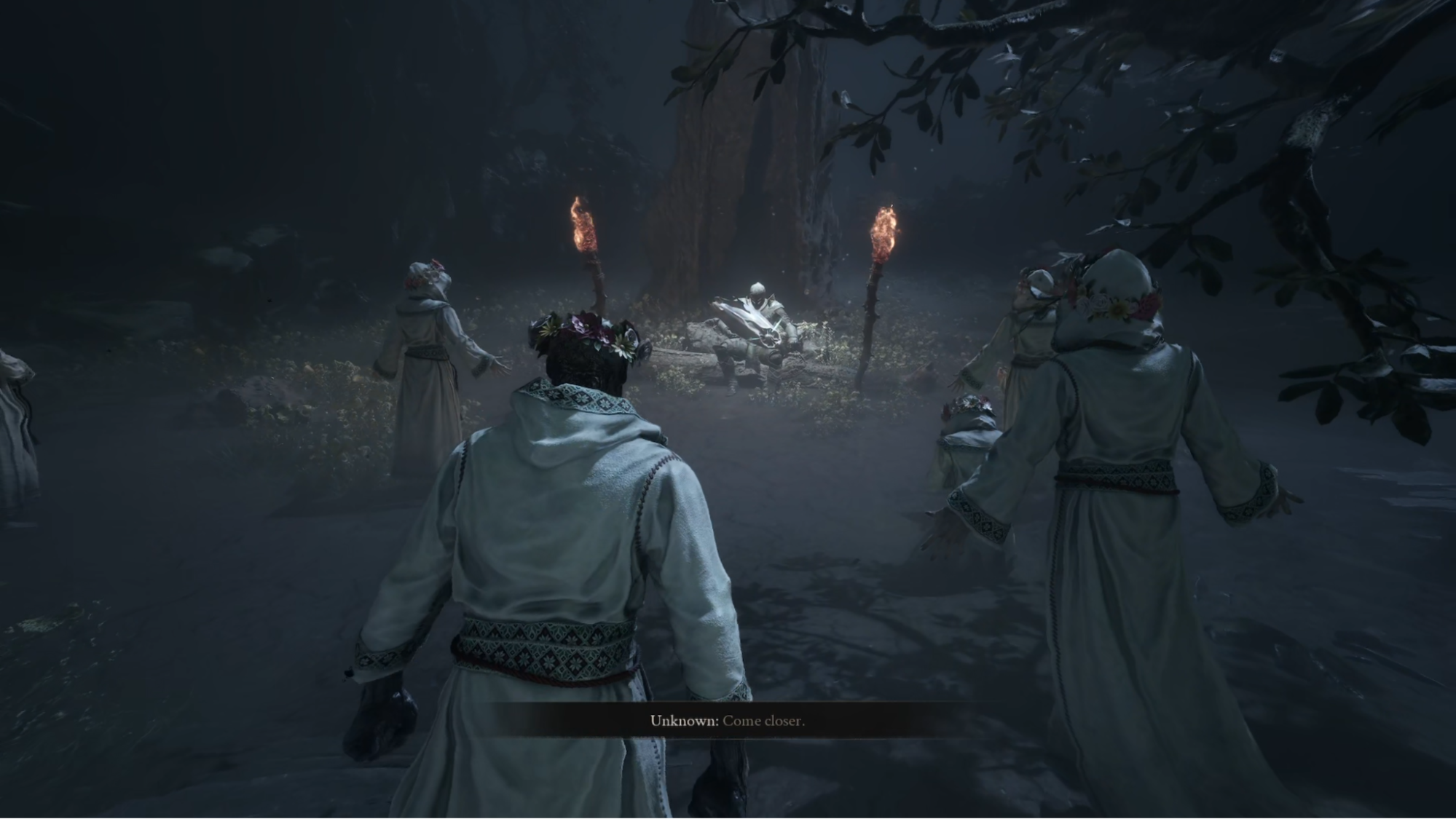
From its first minute, Mortal Shell II pulls you into a dark and brooding world filled with undead, monsters, and cultists. The atmosphere is heavy and oppressive, and every biome feels like a place that has already suffered long before you arrive. You play as The Harbinger, a warped entity chosen by The Undermether to recover her stolen and corrupted Ova scattered across the broken lands.
Your journey takes you through desolate castles, cult‑bound villages, black‑tainted forests, and other regions that feel distinct yet connected by the same sense of decay.
The Harbinger is a tool of prophecy, and like the Tenno in Warframe who don the bodies of soldiers, they are granted the power to possess the “Shells” of fallen warriors. As you gain new Shells and strengthen your bond with them, you relive their memories, which deepens your connection not only to the Shells themselves but also to NPCs who once knew them.
When you unlock the Shell, Proxima, for example, the shopkeeper and his dog become noticeably friendlier toward you than they were when you approached them in your raw Harbinger form.
Throughout your journey, you uncover crypts, dungeons, and other points of interest that contain shopkeepers, boss encounters, or torn journal entries. Each discovery adds another layer to the game’s plot and backstory, encouraging exploration not just for loot but for narrative context. The cutscenes also stand out with surprisingly high production value, especially during the intro and tutorial.
It is a stark contrast to many Souls‑like games that drop you into the world with little explanation or motivation beyond moving forward. Because of this stronger narrative foundation, players are driven not only by combat and exploration but also by the desire to uncover the lore behind each weapon and Shell.
The world feels intentionally crafted, and the story of The Harbinger becomes more compelling as you learn how each Shell lived, died, and continues to influence the world through you. It’s a Souls-like where progression feels meaningful, and where discovering your own fate becomes just as engaging as mastering its combat.
A Fluid and Satisfying Combat Core
The combat design in Mortal Shell II is far more flexible than the stiffness of the first game. There are more Shells to choose from, and they are now completely independent of weapon choices, which means any weapon and sidearm can be paired with any Shell.
Players can combine the heavy two‑handed Martyr’s Blade with the stealthy dodging Shell, Tiel, creating a slippery duelist who can weave through attacks and deliver massive hits. In contrast, the tank Shell, Eredrim, is a walking damage sponge, yet he can equip the dual‑bladed Axatana to unleash fast single‑target bursts or wide crowd‑control strings.
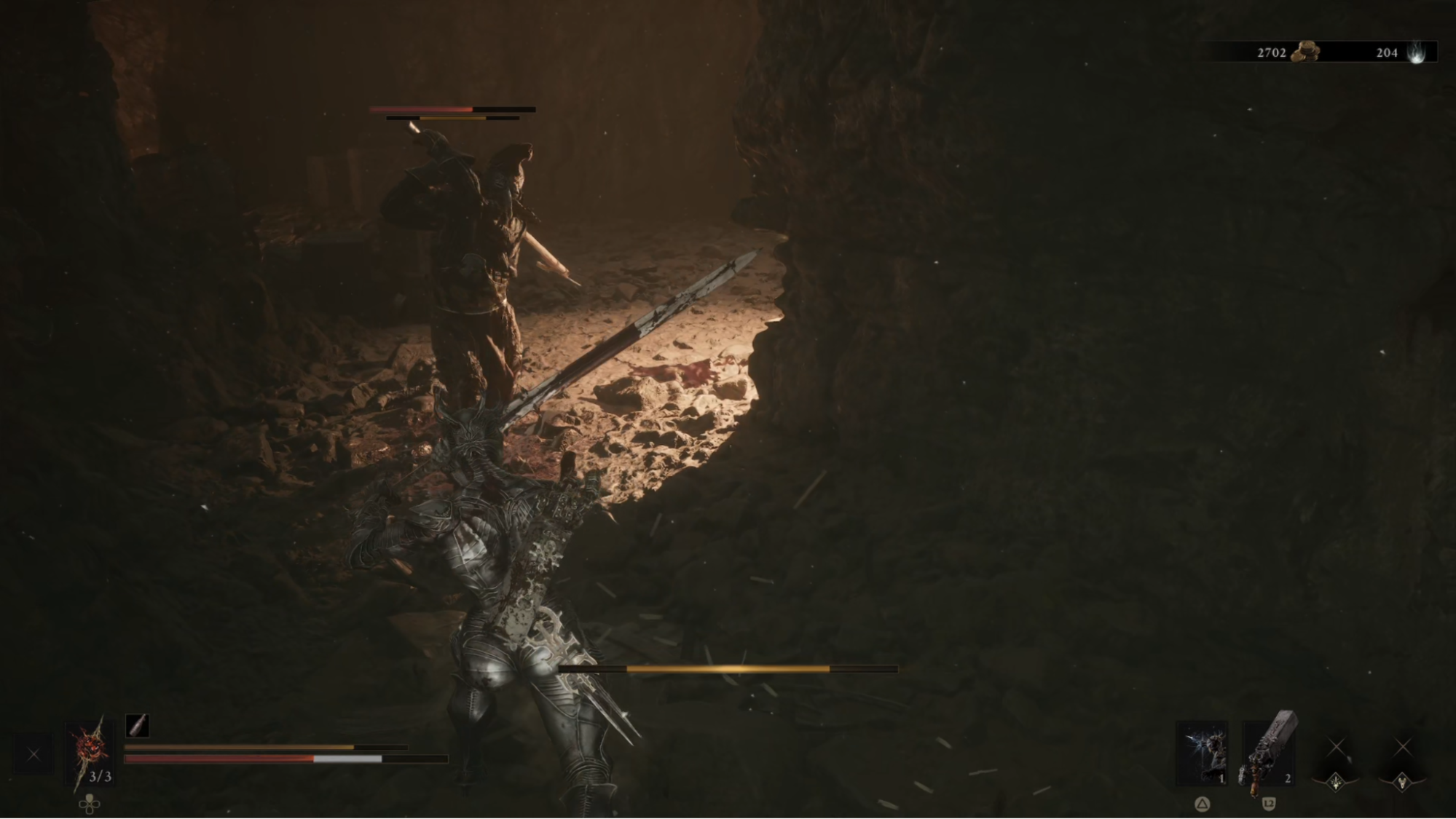
Unlike other Soulslikes, Mortal Shell II has no stamina system, which dramatically changes the pace of fights. Players can dodge, parry, and attack at whatever tempo they choose, creating a more aggressive and fluid combat rhythm. Instead, the game uses a posture meter for both enemies and the player. Parries and dodges do not build posture, but repeated blocking and taking hits will raise your posture until you stagger, leaving you vulnerable to enemy follow‑ups.
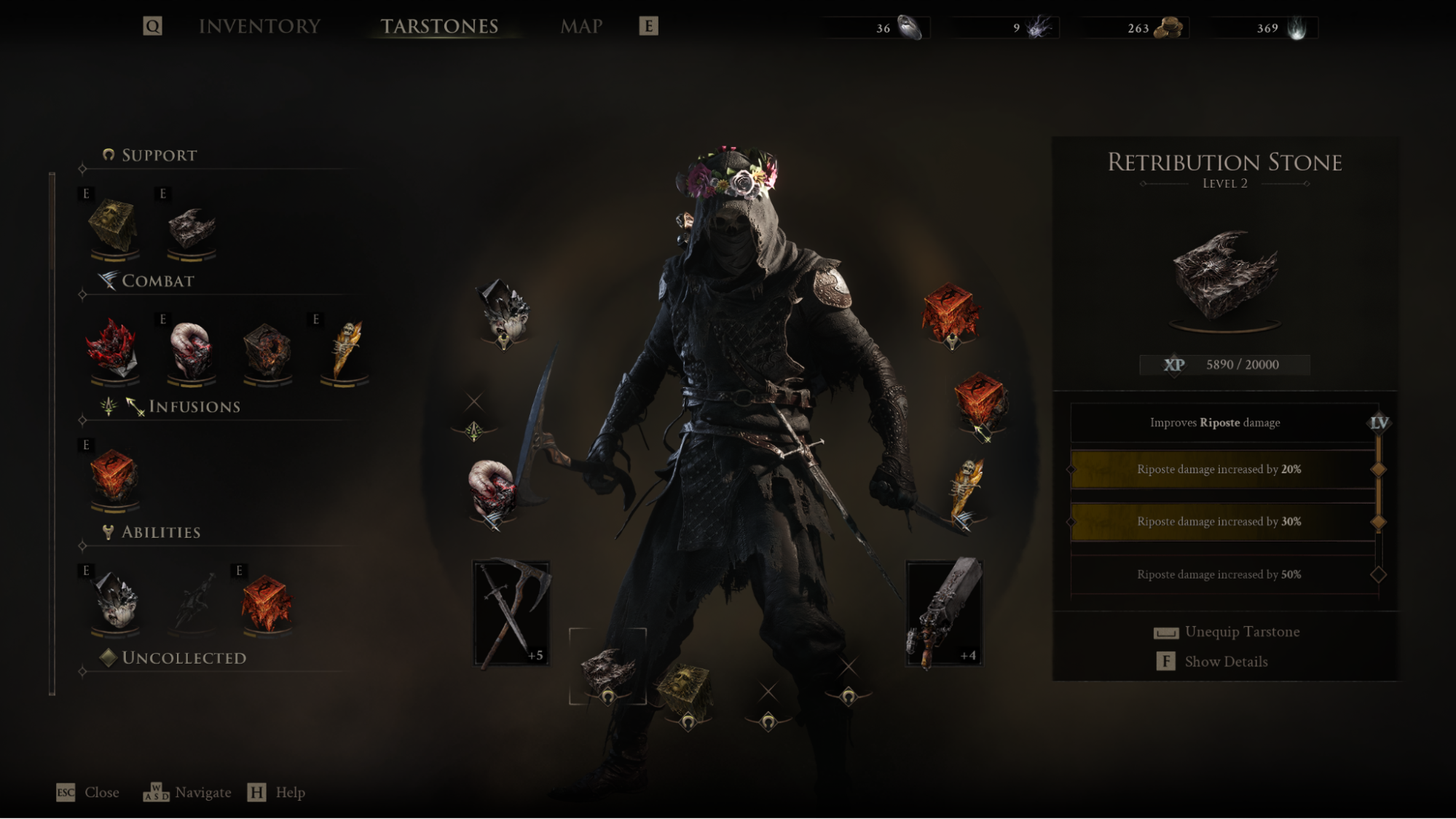
Players can also build posture on enemies by applying break damage through timed blocks, parries, and certain weapons and items. Once enough posture is applied, enemies become open to a riposte that deals massive damage and grants i‑frames that protect you from incoming attacks.
Players can equip different items as passive or active abilities, and the modular Tarstones system augments weapons, abilities, and support options. Players can upgrade items by collecting duplicates, while other equippables improve through experience and resources. This allows players to min‑max their chosen playstyle or design builds tailored to specific enemy factions and bosses.
The iconic stone‑hardening ability returns through swappable Seals, each changing how your block behaves. Vatra’s Seal turns you to stone, while the Untarnished Seal lets you block and parry with your weapon. There is even a Slayer’s Seal, a clear nod to Doom, that heals you and unleashes large pools of damage to make the game easier for new players, though it disables achievements on that save file.
Together, these features form a combat model that rewards high‑risk, high‑reward gameplay. I never felt like I failed because of poor design or unfair boss mechanics. Every death came from my own mismanagement, and each failure taught me something that helped me clear the dungeon or defeat the boss on my very next attempt.
Mechanics That Shape the Journey
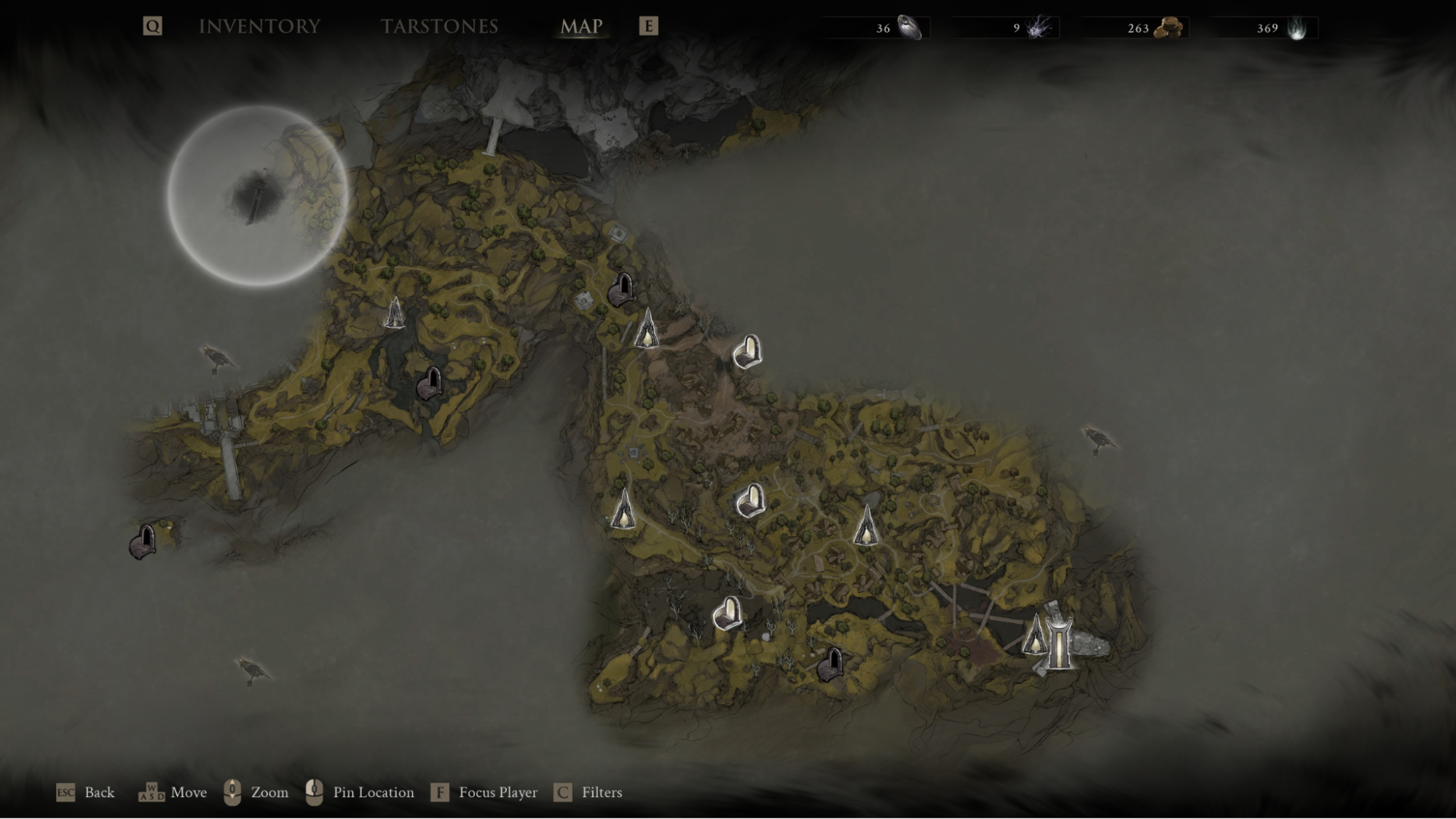
The world design in Mortal Shell II is more spread out and diverse than its predecessor, offering a compact open world that is dense, interconnected, and filled with meaningful systems. Every biome branches outward from Marrow Keep, which eventually becomes your fast‑travel anchor once you unlock the Mether’s Breath item.
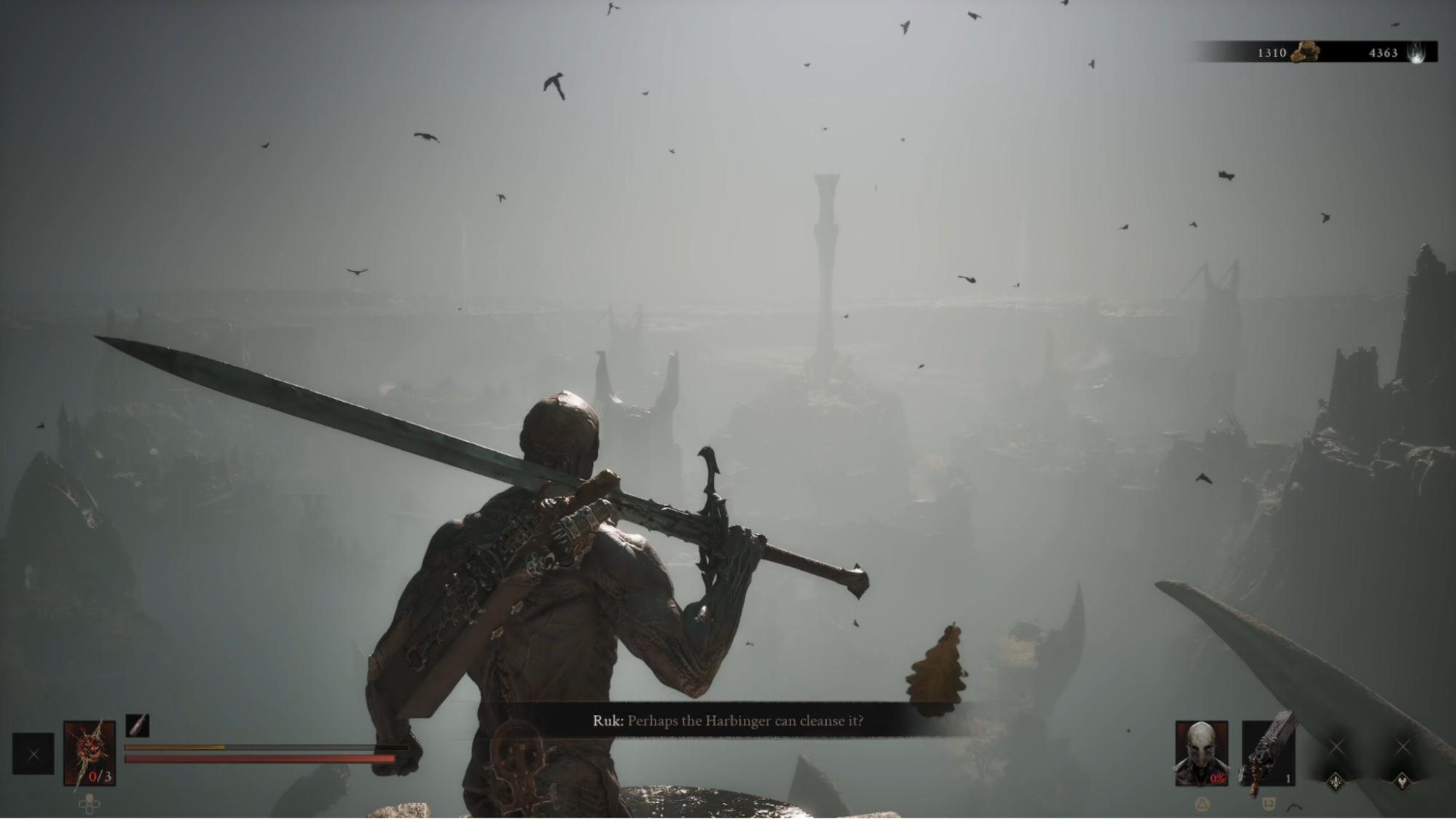
Fast travel is not available early, so exploration relies on points of interest, landmarks, trial and error, and Beacons, which are the genre’s staple bonfires. The map is also fogged, which can only be cleared when talking to Ruk, a giant skull-donned vulture, who sits on perches shown on the map. Every route you open feels earned and encourages players to learn the world through movement rather than menus.
Crypts and dungeons form the backbone of the game’s structure, with over 60 handcrafted dungeons layered directly into the overworld. These spaces range from small combat arenas to sprawling mini‑mazes that contain bosses, merchants, or lore fragments.
Many crypts hide torn journal entries or inscriptions that expand the world’s backstory. Others contain unique weapons or Tarstones that push you toward deeper buildcraft and experimentation.
Gates and barriers also shape the pacing of exploration. Some gates require cleansing through boss kills or specific items, and act as good distractions from the main world that are filled with rewards, enemy encounters, and plenty of upgrade resources. Cleansing corrupted zones with Mether’s Breath often changes enemy density or opens up new traversal pathways.
Bosses are scattered across major biomes and optional dungeons, and the sequel features significantly more boss encounters than the first game. Many bosses have phase‑based mechanics tied to posture and break damage, and Shell-specific abilities can be used to help mitigate the boss’s raw or elemental damage.
This design encourages players to navigate through observation and memory rather than UI markers. Together, these systems create a world that feels dangerous, deliberate, and rewarding to unravel. Mortal Shell II encourages exploration not just for loot or progression, but to understand how its broken lands fit together and what secrets they hide beneath the surface.
Lows
Minor Issues With Major Impact
Parrying in Mortal Shell II has a noticeable delay that makes it feel less responsive than other action games. When you succeed with a parry, the animation does not cancel, so you cannot immediately press the button again to chain another counter.
Games like Ghost of Tsushima, Rise of the Ronin, and Sekiro stop the animation the moment a parry succeeds. This lets you rapidly tap the next parry input to deflect consecutive strikes without waiting for the animation to finish.
Mortal Shell II does not allow this kind of rapid chaining. If you press parry too quickly after a successful deflect, the game reads it as a block and keeps you stuck in a blocking stance.
This forces you to wait a full second or so before pressing parry again, which breaks the rhythm of countering fast enemies. Some enemies attack faster than that waiting period, so you end up dodging instead of parrying to avoid getting staggered and killed.
The problem becomes worse when multiple enemies are fighting each other. Some enemies can spin around and use their unblockable attack on you at the last second without showing the warning UI, because they were not targeting you before they started the swing.
This creates situations where you cannot rely on visual cues to react. You either dodge preemptively or risk getting hit by an unblockable attack that never displayed its indicator.
The camera also has issues that disrupt combat flow. It sometimes begins spinning on its own, and the only reliable fix is to exit to the main menu and reload your save. In conjunction, when locking onto targets, your attacks will rotate clockwise around them instead of hitting the target, which means normal attacks, and even ripostes and abilities, will miss or not trigger.
Players have also reported camera problems in Immersion Mode, where the tighter field of view and closer shoulder angle can behave unpredictably. Swapping to Action Mode usually fixes the issue, but it forces players to choose between visual preference and functional stability.
These issues make the parry system feel slower than the games it draws inspiration from. It works, but it lacks the fluidity and immediacy that make reactive combat feel satisfying in similar titles.
Many of these problems are expected to be addressed in the already‑announced Day 1 Patch, which the developers have confirmed will target several of the technical issues present in pre‑release builds. However, all of these quirks were still present in the review copy, so they meaningfully affected the experience at the time of evaluation.
A Soulslike That Feels Restrictive
Mortal Shell II has several design choices that differ from traditional Souls games, and some players may find them less appealing. One of the biggest differences is how boss encounters work, because you can walk into an accidental boss fight without warning and still be locked inside the arena even though the fight is technically optional.
Most Souls games use a clear fog gate to signal danger, but Mortal Shell II often places bosses directly in the environment with no visual cue. Some dungeons also cannot be abandoned once entered, which creates similar problems. This can lead to situations where you enter a fight unprepared and lose all your collected Tar with no way to retrieve it.
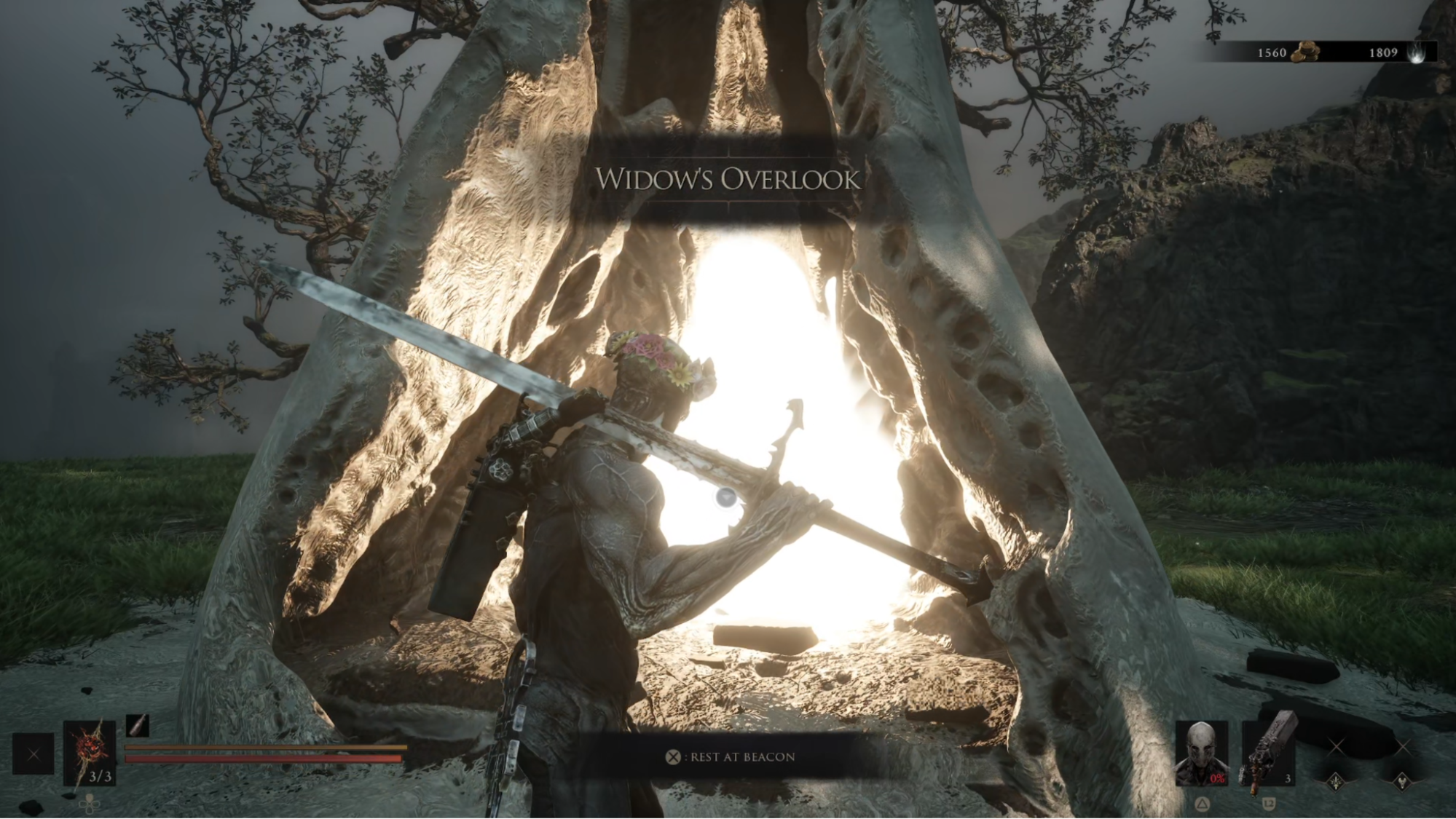
The leveling system also works differently. You cannot simply use a Beacon to level up or just check your items, because interacting with one automatically triggers a "Rest At Beacon", which heals you and respawns all enemies in the area. You cannot bank your Tar and upgrade safely, or swap out equipment, without resetting the world around you.
Another major difference is the absence of individual stats to level. There is no Strength, Dexterity, Vitality, or similar attributes, so you cannot min‑max builds in the way Souls players expect.
Instead, progression is tied to Shell bonds, Tarstones, and item upgrades, which offer depth but lack the granular control of traditional stat systems. Some players may enjoy the simplicity, but others will feel it removes the satisfaction of shaping a build from the ground up.
Together, these differences create a game that feels more committed and less forgiving than other Souls titles. Mortal Shell II still offers strong atmosphere and combat, but players who expect familiar Souls conventions may find these systems restrictive or punishing in ways that feel unintuitive.
Early Game has a Clunky Beginning
If you’re interested enough to go in completely blind, consider skipping this section, as we’ll be revealing aspects of the first few hours.
The early game in Mortal Shell II can feel rough in ways that catch new players off guard. The tutorial is streamlined and teaches you how to use Shell Revive, Shell Ability, and the bonus health and damage from your starting Shell, which makes the opening feel controlled and manageable.
Right after the first boss, however, the game removes all of those abilities at once. You lose your Shell, your revive mechanic, your Shell ability, and the stat bonuses that made the tutorial feel forgiving.
This leaves you wandering the world with no armor and only the basic sword, which makes the difficulty spike feel abrupt. You have almost no tools to fall back on, so every encounter becomes a scramble for survival rather than a continuation of what the tutorial prepared you for.
The game also gives no direction on where to go next. As a result, players may often run straight into high‑level areas long before they are ready, leading to sudden deaths that feel more punishing than educational.
The problem is worse because some early enemies look identical to the tutorial enemies. Players will see familiar silhouettes and assume they are safe, only to get killed in two hits by enemies that are far stronger than they appear.
Finding that first new Shell becomes the moment the game starts to feel playable again. Until then, the early game after the intro feels like a harsh reset that strips away your power and leaves you guessing where safety actually is.
Taken together, the early game feels like a steep drop in power that pushes players to survive through uncertainty rather than confidence. It becomes a scramble through danger until you regain the tools the tutorial taught you to rely on.
Our Score
9/10 (A Focused Soulslike With Strong Identity)
Mortal Shell II is a confident step forward for the series, delivering a heavy, satisfying combat system, strong world design, and a clear visual identity that stands out in a crowded genre. It knows exactly what kind of game it wants to be, and that clarity shows in its atmosphere, pacing, and mechanical focus.
The game’s biggest strengths come from its commitment to weighty combat, smart world structure, and a presentation style that feels more polished and cohesive than the first game. The Shell system remains the standout feature, offering meaningful build variety without overwhelming players with stats or micro‑optimisation. The world is dense, readable, and rewarding to explore, and the game’s tone stays consistent from start to finish.
It isn’t without quirks. The early game is rough, some progression decisions feel unusual compared to other Souls titles, and a handful of technical issues can interrupt the flow. But none of these problems overshadow the core experience.
They’re bumps in a journey that is otherwise tightly crafted, atmospheric, and engaging. Additionally, the lower price point makes the package even more appealing, especially for players who want a high‑quality action RPG without committing to a 60‑hour marathon.
It’s absolutely the sort of confident, well‑executed action RPG that could make a serious run at GOTY for anyone who prefers polished, deliberate experiences over sprawling open‑world epics. As an AA release, it delivers an impressive amount of polish and identity for its scale, proving that a tightly scoped game can still stand shoulder-to-shoulder with this year’s biggest releases. Its focus, identity, and consistency give it the staying power to keep a game in the conversation long after the credits roll.
Mortal Shell II is ideal for players who enjoy Soulslikes with weighty combat, atmospheric worldbuilding, and focused progression systems. It’s also a great pick for anyone who wants a challenging action RPG that doesn’t demand dozens of hours to see its best content. If you appreciate games that deliver quality over scale, Mortal Shell II is one of the strongest releases of the year.
Reviewed by Jack Briggs (originally published August 17, 2026)