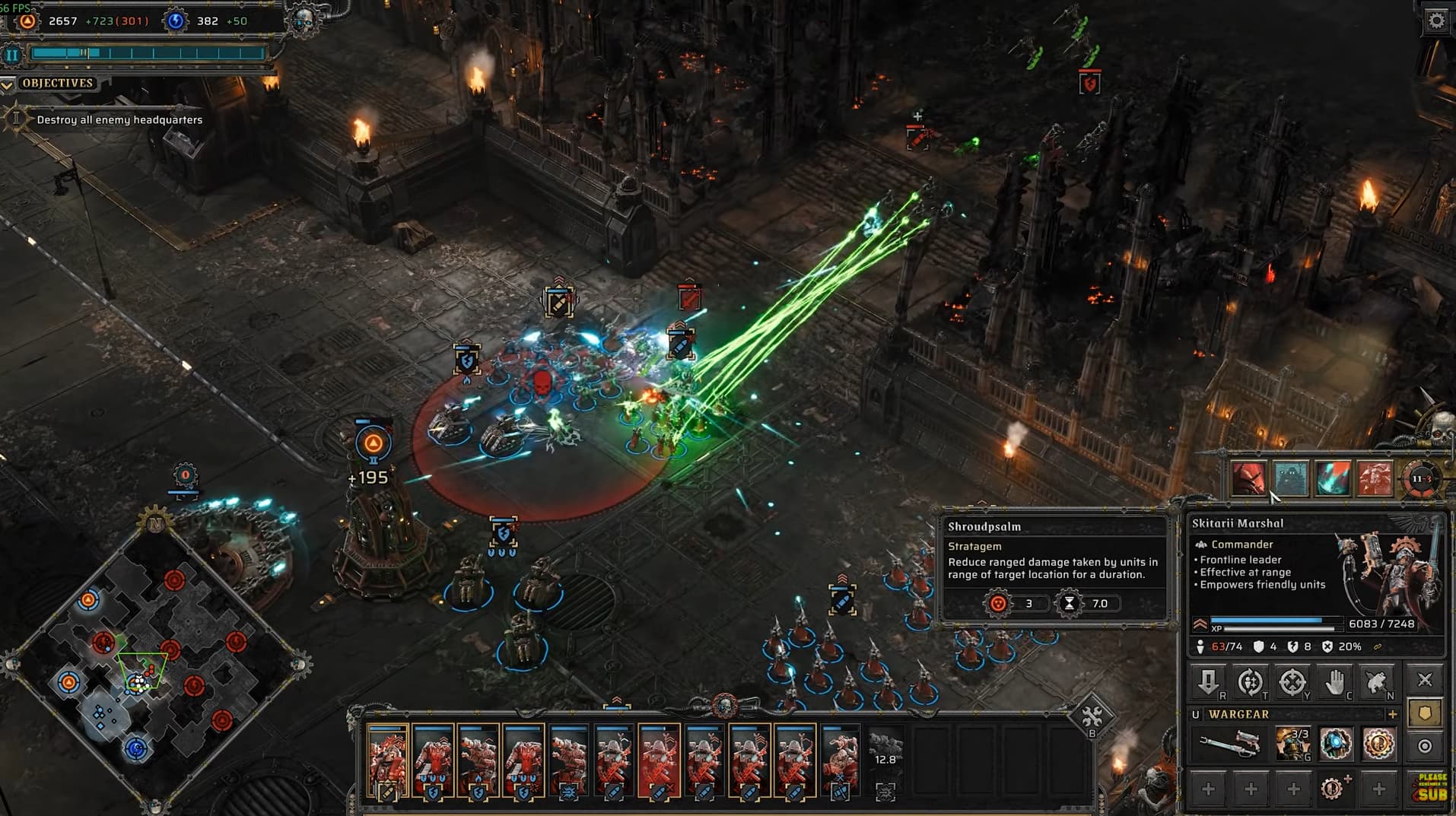
Dawn of War 4 features four main playable factions: Space Marines, Orks, Necrons, and Adeptus Mechanicus. Each approaches the battlefield differently, from deploying elite reinforcements behind enemy lines to expanding a network of fortified positions.
Choosing your faction affects more than your unit roster. Construction, upgrades, reinforcement systems, and battlefield abilities all change how you build your army and control the map.
In this guide, we’ll explain each faction’s main mechanics, how they play, and what type of player they suit.
Thanks to ItalianSpartacus for his detailed breakdown of the factions and their mechanics, which helped inform this guide.
This guide covers prerelease gameplay. Mechanics and balance may change before launch.
All Dawn of War 4 Factions at a Glance
Each faction has its own campaign within the game’s wider story, alongside distinct gameplay systems.
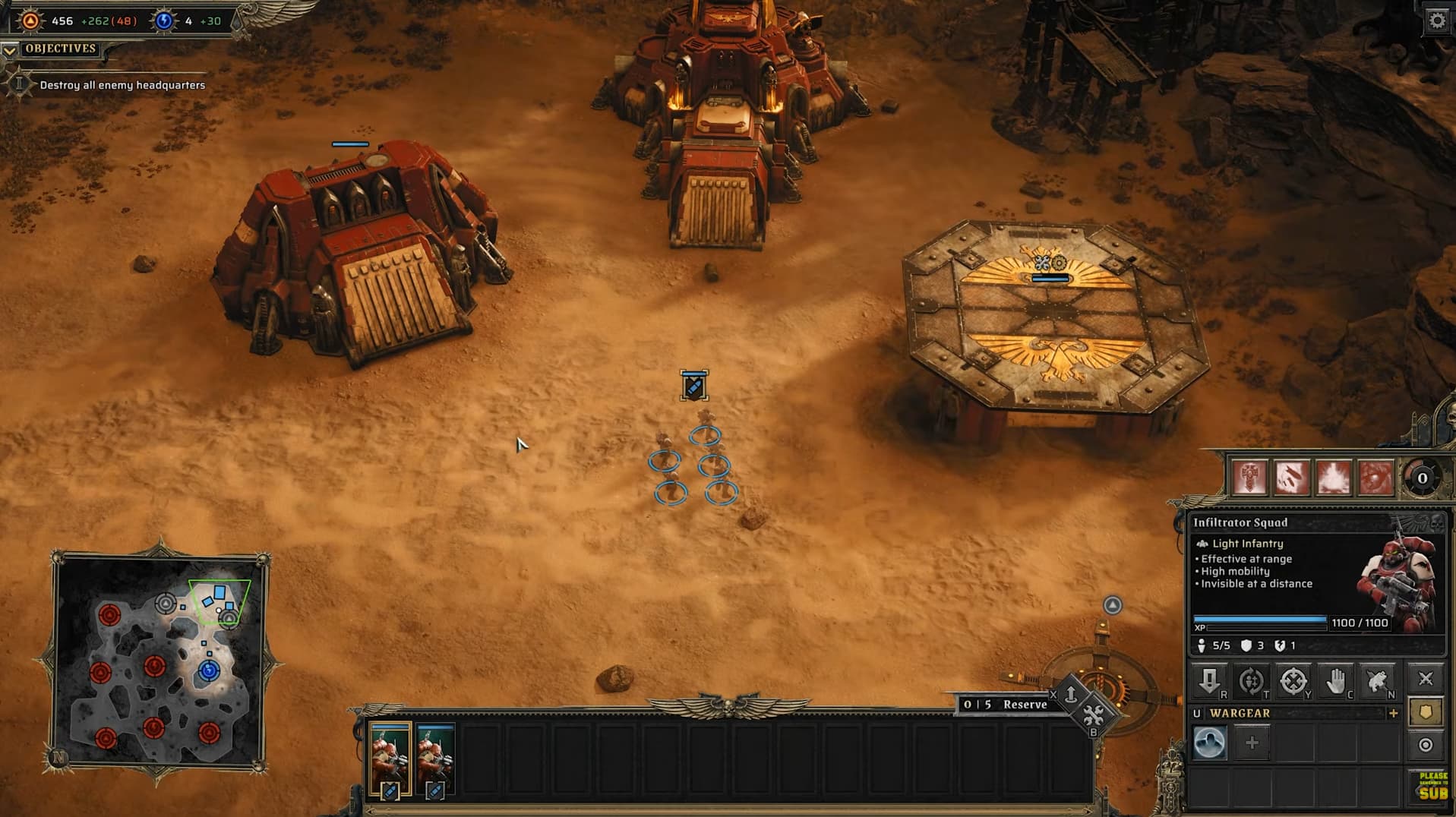
Space Marines: Durable, adaptable squads supported by Drop Pods, redeployment, and flexible equipment.
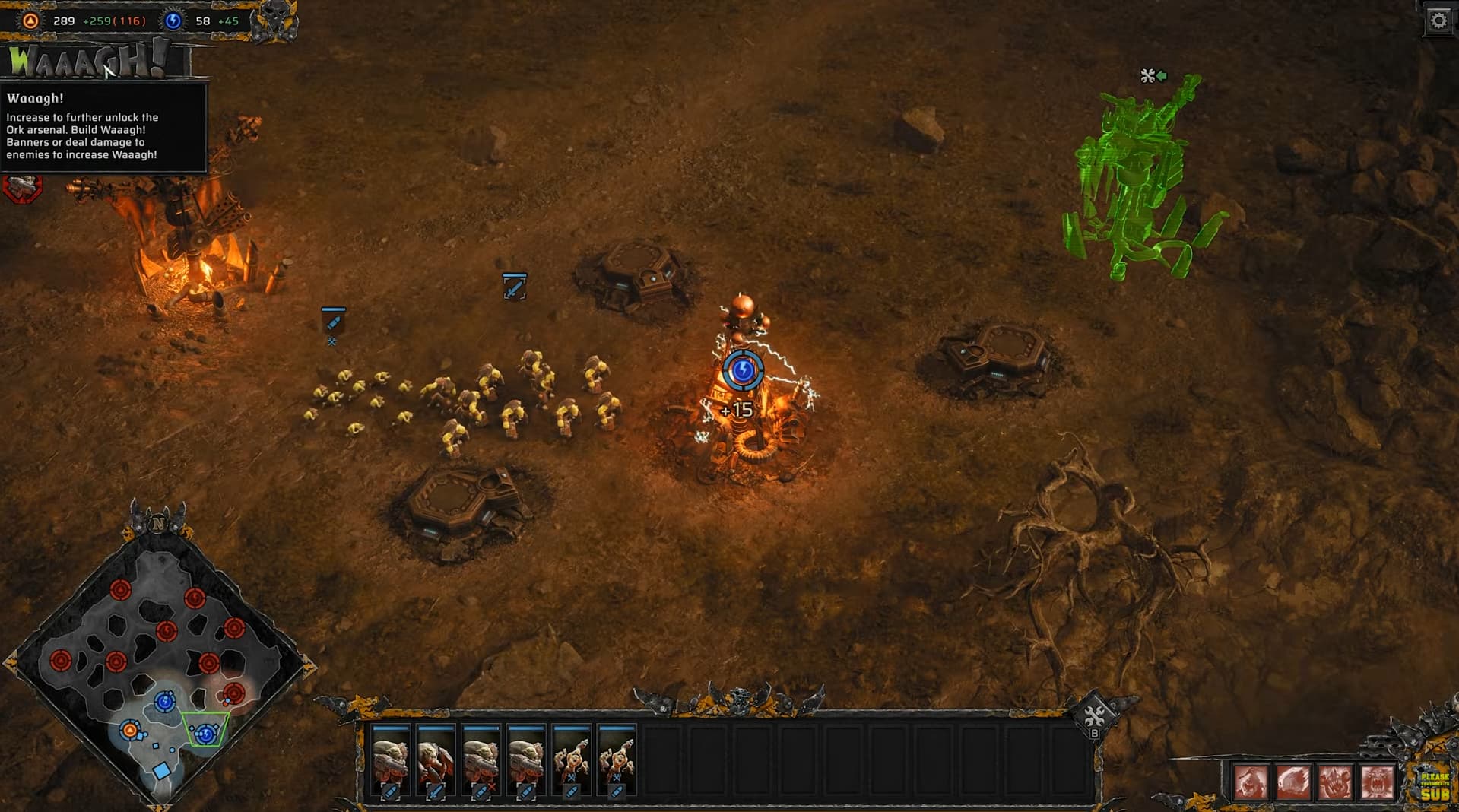
Orks: Aggressive armies that overwhelm opponents with numbers, armed production buildings, and Waaagh! support.
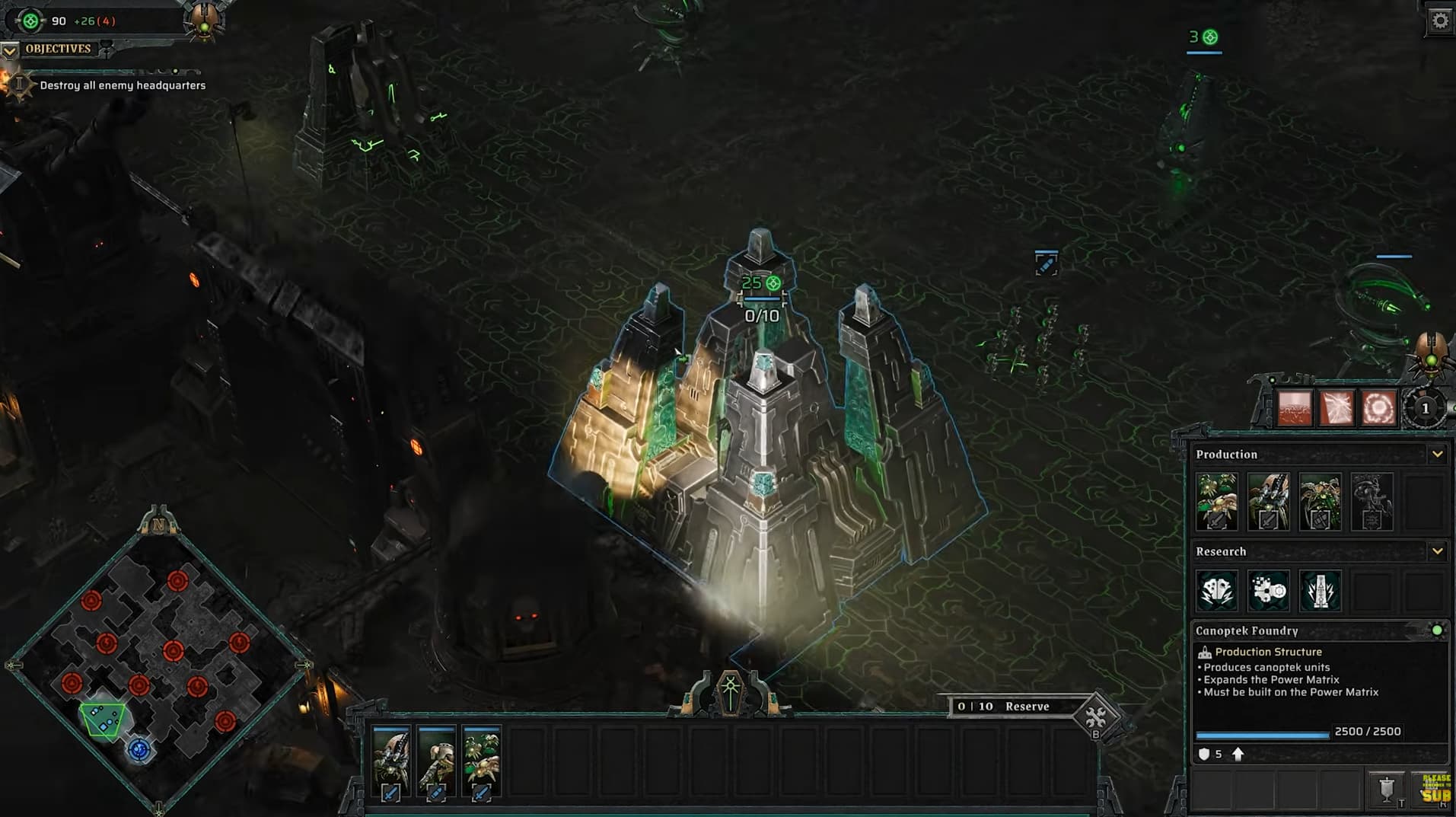
Necrons: Resilient forces that combine powerful ranged attacks with resurrection and teleportation.
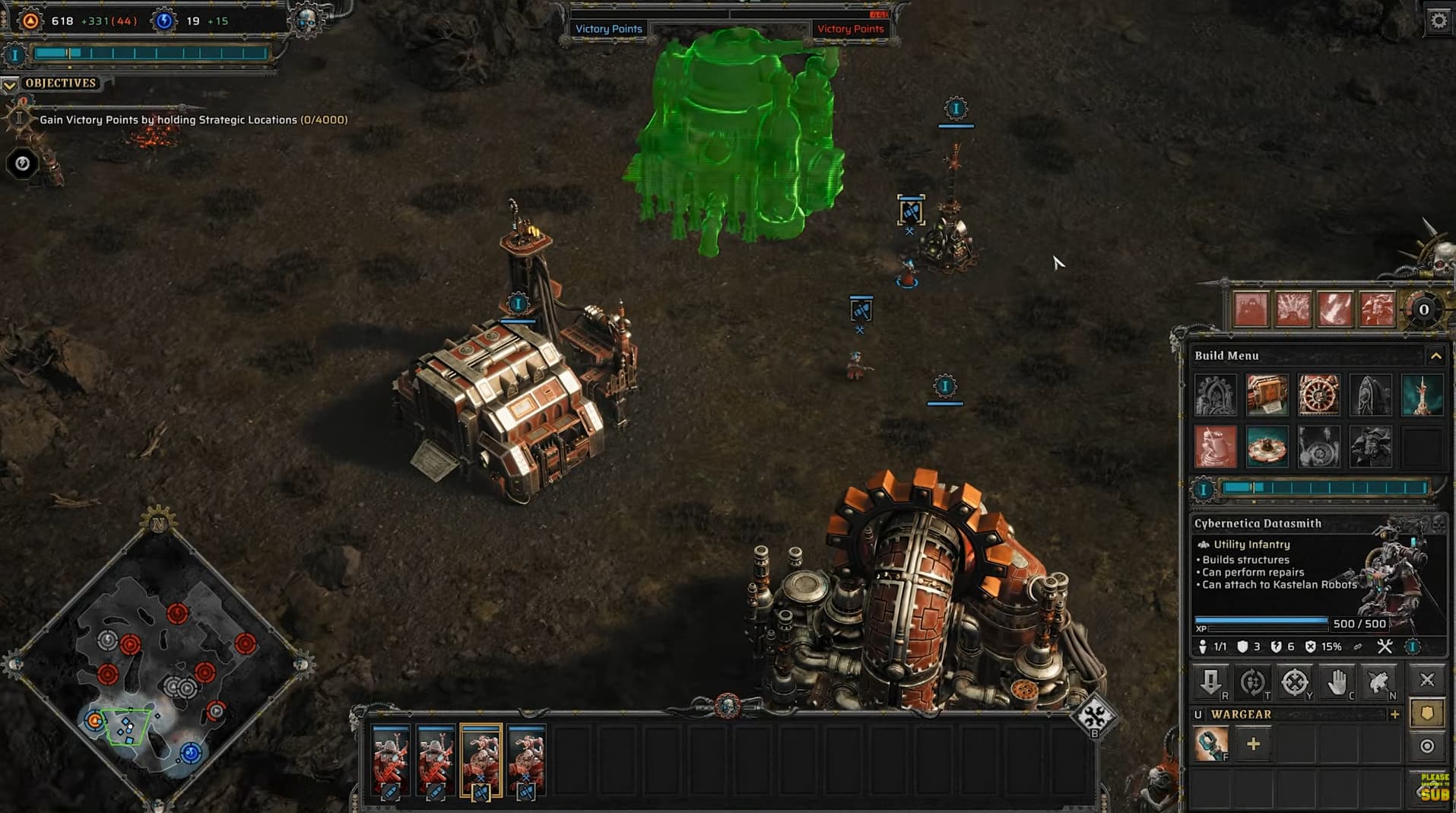
Adeptus Mechanicus: A faction built around expanding its Noosphere network, protecting firing lines, and unlocking advanced units.
Your preferred approach to combat matters, but so does how much attention you want to give construction, positioning, and individual squad management.
Space Marines
Space Marines combine durable troops with a versatile roster and several ways to move reinforcements into position. Their smaller squads reward careful management, especially when adapting equipment to counter an opponent’s army.
The faction includes the Blood Ravens and Dark Angels, with the Dark Angels appearing as a playable Space Marine sub-faction.
Construction and Drop Pod Reserves
Space Marine buildings arrive directly at their selected location and construct themselves, removing the need to assign a worker to build them.
Their Reserve system allows selected units to be prepared for deployment by Drop Pod. This gives you a way to reinforce a fight or establish a presence elsewhere on the battlefield.
The Drop Pod remains behind with a mounted weapon, providing additional fire support after its passengers deploy. Its landing position therefore matters beyond simply delivering the squad.
Reserve deployment comes with a trade-off: eligible units can cost more and take longer to prepare than when produced normally. You are paying for the flexibility of deploying them where they are needed.
Thunderhawk Relay
The Thunderhawk Relay lets you redeploy units you have already produced.
This is especially useful for moving experienced squads into another fight. Instead of recruiting a replacement force, you can reposition troops that already have upgrades and battlefield experience.
Thunderhawk redeployment does not provide the armed Drop Pod that accompanies Reserve deployment, so the two systems serve slightly different purposes.
Upgrades and Adaptability
Space Marine production buildings have upgrades that unlock additional units. Advancing your army therefore involves improving the relevant structures as well as recruiting more troops.
Equipment choices also contribute to the faction’s flexibility. Eligible loadouts can be changed during a match, allowing squads to adapt as the enemy transitions between infantry, heavily armored targets, and vehicles.
The challenge is recognizing which option you need and making that adjustment early enough to influence the next engagement.
How Space Marines Play
Space Marines suit players who enjoy preserving valuable squads and responding to changing threats.
Their battlefield support includes reconnaissance, experience support, Thunderhawk bombing runs, and orbital bombardment. Combined with their deployment systems, these tools let them support an attack or reinforce a threatened position quickly.
Their versatility makes them an approachable starting point, while getting the most from them requires learning unit roles, equipment options, and when to redeploy.
Choose Space Marines if you enjoy adaptable armies, elite infantry, and precise reinforcement timing.
Orks
Orks favor aggression, large armies, and constant pressure. Their strength comes from maintaining production and turning battlefield momentum into an expanding Waaagh!
They also have a strong connection between base construction and map control, with buildings that contribute directly to nearby fights.
Armed Buildings and Forward Bases
Ork structures are constructed by Gretchin, and their production buildings carry weapons that help defend the surrounding area.
This makes forward construction particularly useful. A production building near an important position can recruit troops while supporting the units already fighting there.
Keeping every structure at your starting base limits that benefit. Expanding toward contested territory lets your buildings contribute to controlling the map and puts reinforcements closer to the action.
You still need to support those positions with an army. A forward building is most useful when it forms part of a defended foothold.
Building the Waaagh!
The Waaagh! system drives Ork progression. Building Waaagh! Banners and dealing damage to enemies increases it, opening access to more of the faction’s arsenal.
Banners support your advance, making their placement part of how you establish and maintain pressure.
Ork battlefield abilities reinforce this aggressive approach. Options include deploying additional troops, dropping a Rok carrying reinforcements, and sending explosive Squigs into enemy positions.
Unleash the Waaagh! temporarily increases the offensive strength of units and structures, with a greater effect near Waaagh! Banners. Preparing your position before committing to an attack helps you take advantage of that support.
Larger Mobs and Melee Pressure
Basic Ork squads can increase their model count through upgrades. Larger mobs give these units more bodies to absorb losses and keep fighting.
Melee is another important part of their identity. Reaching an enemy ranged unit can disrupt its ability to fire effectively, giving the rest of your army room to attack.
That makes even a relatively inexpensive melee squad useful when it ties up a dangerous firing position.
How Orks Play
Orks reward maintaining pressure through steady recruitment, forward construction, and well-supported attacks.
They still have abilities and leader support worth managing, but their overall approach emphasizes keeping troops moving and maintaining production.
Getting melee units into the right targets is particularly valuable. While those squads occupy enemy ranged troops, the rest of your army can reinforce the engagement or contest other positions.
Choose Orks if you enjoy aggressive expansion, large armies, and overwhelming opponents through sustained attacks.
Necrons
Necrons combine durability, resurrection, and punishing ranged attacks. Their units often move slowly, but their teleportation systems allow them to threaten positions that would otherwise take too long to reach.
Managing their territory and redeployment options is central to making the army work.
Power Matrix and Dominion
The Power Matrix determines where most Necron structures can be placed. Buildings that extend it increase the area available for further construction.
Expansion also supports Dominion, the resource used for Necron production and upgrades. Developing the matrix therefore helps both your territorial control and your economy.
Power Crucibles provide another economic benefit by reducing unit production costs.
The result is a faction that rewards deliberate expansion. Where you place structures affects the space available for your next buildings and the positions from which your army can operate.
Technology and Resurrection
Necron technology progression centers on upgrades to the Tomb Citadel, which unlock further options across the army.
Some infantry squads can also expand their model count, allowing them to develop into larger formations as the match progresses.
Resurrection adds another layer of staying power. Resurrection Galleries provide a way to recover eligible destroyed units, while some units have their own chance to return after being killed. Research can further support those resurrection mechanics.
These systems make Necrons well suited to prolonged fighting, although recovering losses still requires using the appropriate abilities and infrastructure.
Tomb Pylons and Teleportation
Slow movement is one of the faction’s main limitations, making its redeployment tools especially valuable.
Canoptek Spyders can construct Tomb Pylons, establishing additional positions through which units can be redeployed. A forward pylon lets troops reach an established destination without marching across the entire map.
These positions can support an attack, reinforce another front, or provide a route back from an unfavorable engagement.
Necrons also have a teleportation ability that moves nearby friendly units to a visible target location. Used alongside scouting and forward construction, it creates opportunities to attack from unexpected directions.
How Necrons Play
Necrons reward planning your advance and creating useful destinations for your army.
Their ranged units provide sustained pressure, while powerful battlefield abilities help punish concentrated enemies. Gravity Pulse, for example, repeatedly damages targets within its area.
Their advanced roster also includes imposing options such as the C’tan Shard of the Void Dragon.
The challenge is getting the right force to the right location. Teleportation helps compensate for slow movement, but it works best when you have already prepared your positions.
Choose Necrons if you enjoy resilient armies, sustained ranged pressure, and using teleportation to outmaneuver opponents.
Adeptus Mechanicus
Adeptus Mechanicus places a major emphasis on infrastructure. Its army develops alongside the Noosphere network, which connects structures, provides benefits within its coverage, and unlocks further technology.
Success requires balancing that construction with producing troops and securing resources.
Expanding the Noosphere Network
Connected structures contribute to the Noosphere’s strength. As the network develops, it provides stronger benefits and unlocks additional research, upgrades, and units.
Cogitator Relays help extend the network and connect more distant positions. Placement matters because an isolated structure does not contribute to the main network in the same way as one properly connected to it.
This makes construction an ongoing part of your strategy. Your army’s progression depends on developing the network while continuing to contest the map.
Building Fortified Positions
The network can extend through a series of defended positions, supported by weapon platforms, protective structures, and nearby troops.
Protective bunkers give infantry a safer place to fight, while other structures help strengthen the network and secure important territory.
This encourages a measured advance. Establish a position, connect it, defend it, and then use that foothold to support your next expansion.
Spending too much attention on construction can leave your army underdeveloped, so you need to keep recruiting and contesting objectives while the network grows.
Ranged Infantry and Advanced Units
Adeptus Mechanicus has a strong ranged focus. Units such as Skitarii Rangers can support firing positions, while more advanced vehicles and machines provide additional power as your technology develops.
Its basic troops need protection and support. Positioning, defensive abilities, and access to the right upgrades all help them contribute while you work toward the faction’s heavier units.
The roster offers answers to different threats, but those answers depend on reaching the appropriate technology and producing suitable units.
How Adeptus Mechanicus Plays
Adeptus Mechanicus suits players who enjoy planning a base and turning infrastructure into battlefield advantages.
Its support abilities include defensive effects, radiation bombardment, and the deployment of a Knight Castellan, giving it tools to protect an army or strengthen an attack.
There is plenty to manage from the outset. You need to understand network connections while also handling production, expansion, and combat.
That additional setup pays off as your connected territory grows and more advanced options become available.
Choose Adeptus Mechanicus if you enjoy base building, fortified firing lines, and developing a powerful late-game army.
How Heroes Support Your Army
Heroes provide another way to shape your army across the factions.
They can join compatible squads and contribute abilities that support nearby troops. A mounted Space Marine Chaplain, for example, can accompany bikes to form a mobile group.
Hero development offers active abilities, passive benefits, or a mixture of both. This lets you choose between more direct ability management and bonuses that require less attention during combat.
Downed heroes can also be revived by bringing friendly troops to their position. Recovering them becomes another battlefield decision, particularly when the surrounding area is still contested.
Their value comes from how well their abilities and squad role fit the rest of your force.
Which Faction Should You Choose?
Based on the mechanics outlined above, Space Marines and Orks are sensible starting points for different types of player.
Space Marines offer an adaptable roster and durable squads, making them appealing if you want to learn unit counters and preserve an elite force.
Orks provide a more direct route into aggressive play. Their production, forward buildings, and Waaagh! systems all support maintaining pressure.
Necrons are a good fit if you prefer a deliberate advance, resilient troops, and repositioning through prepared teleportation routes.
Adeptus Mechanicus will appeal most if you enjoy managing infrastructure alongside your army. Understanding the Noosphere is a major part of learning the faction.
The best choice is the army whose mechanics you enjoy managing throughout a match. Early impressions alone are not enough to establish a reliable competitive ranking.
Dawn of War 4 Release Date
Dawn of War 4 is scheduled to launch on December 3, 2026, for Windows PC through Steam. The Commander Edition offers access beginning November 30, 2026, through its three-day early unlock.